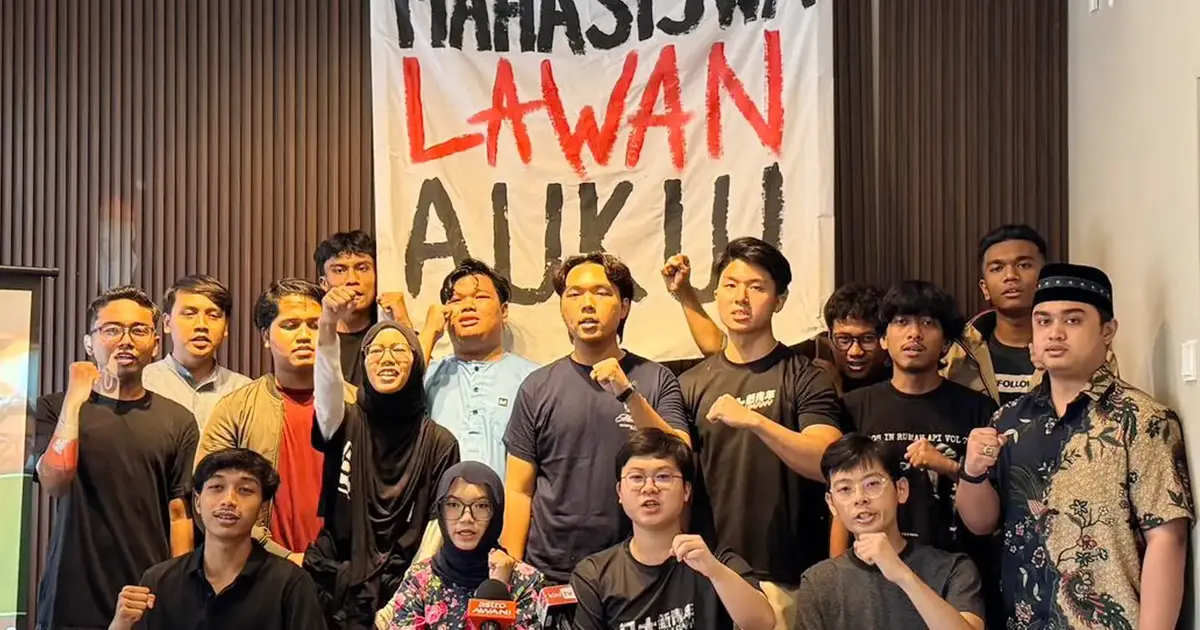
Prime Minister Anwar Ibrahim has confirmed that the government will not pursue new laws designed to specifically restrict student activities, reinforcing his administration's stance on academic freedoms in the aftermath of the AUKU abolition. The commitment reflects a significant policy direction under his leadership, marking a departure from the decades-long regulatory framework that had governed student conduct and political expression on Malaysian campuses.
The AUKU provision, formally known as section 15 of the Universities and University Colleges Act, had served as the primary legislative instrument constraining student movements and political activism within higher education institutions for over three decades. Its removal represents one of the most substantial reforms affecting campus life in modern Malaysian history, yet its abolition alone does not automatically translate to unfettered student activity without supplementary safeguards or regulatory mechanisms.
Anwar's explicit rejection of restrictive student legislation carries particular weight given Malaysia's complex history of campus governance. Student movements have historically been viewed with ambivalence by successive administrations, with periods of relative openness alternating with phases of tight control. The Prime Minister's declaration signals an ideological commitment to allowing greater autonomy within university environments, though questions remain about the practical boundaries of this freedom in practice.
The broader context of educational autonomy has become increasingly relevant to Malaysia's international standing and competitiveness. Universities worldwide operate under varying degrees of student freedom, and Malaysia's reputation as a destination for both domestic and regional students has been influenced by perceptions regarding campus governance. Anwar's position suggests alignment with contemporary global standards that view student engagement and activism as integral components of the university experience rather than institutional threats.
However, the absence of new restrictive legislation does not necessarily signal complete deregulation. Existing institutional policies, general laws applicable to all citizens, and established codes of conduct within universities would continue to apply. The distinction matters considerably: students would remain bound by ordinary criminal law, institutional disciplinary procedures, and administrative regulations that do not specifically target their status as students, rather than facing dedicated restrictive statutes designed for their population specifically.
The policy direction also reflects calculations about institutional sustainability and social cohesion. The former AUKU restrictions had generated persistent friction with student bodies, academic staff, and international observers who viewed such measures as inconsistent with democratic values and open academic inquiry. By foreswearing new restrictive laws, the government positions itself as responsive to contemporary expectations whilst maintaining capacity to enforce standards through existing legal frameworks.
Education sector stakeholders have expressed varied responses to the AUKU abolition and subsequent statements. University administrators have grappled with the practical implications of reduced formal restrictions, requiring them to develop institutional approaches that balance freedom with institutional integrity. Student organisations have welcomed the shift whilst acknowledging that philosophical commitment requires genuine implementation rather than merely legislative gestures.
The Malaysian context differs significantly from many peer nations where student activism operates with minimal formal restrictions. The historical weight of AUKU regulations means that their removal constitutes a genuine liberalisation rather than formalising existing practice. This transition period requires careful navigation to establish new norms and expectations that respect freedoms whilst maintaining institutional order.
Regional implications also merit consideration. Southeast Asian higher education landscapes vary considerably in their approaches to student autonomy, with some countries maintaining substantial restrictions whilst others permit broader expression. Malaysia's trajectory could influence neighbouring jurisdictions' policy conversations and Malaysia's position within regional academic networks where institutional autonomy and student freedom have become increasingly salient issues.
Anwar's commitment must ultimately be evaluated through implementation. Legislation represents one dimension of student regulation, but government influence operates through multiple channels including administrative pressure, resource allocation, and cultural signalling from leadership. The practical manifestation of this anti-restrictive stance will become evident as specific scenarios emerge requiring administrative response.
The stated opposition to new restrictive legislation also acknowledges demographic and structural changes in Malaysian higher education. Student populations have become more diverse, sophisticated, and internationally connected, making governance models based on restriction increasingly difficult to sustain effectively. Contemporary approaches emphasise engagement and institutional legitimacy rather than coercive control.
Looking forward, the challenge for Malaysian policymakers involves establishing equilibrium between expanded student freedoms and institutional functioning. The absence of new restrictive laws creates space for more creative approaches to campus governance that rely on dialogue, transparent policies, and legitimate institutional authority rather than legal restrictions specific to student status. Success depends on genuine commitment to this philosophy permeating throughout government and institutional structures rather than remaining a statement of principle.

