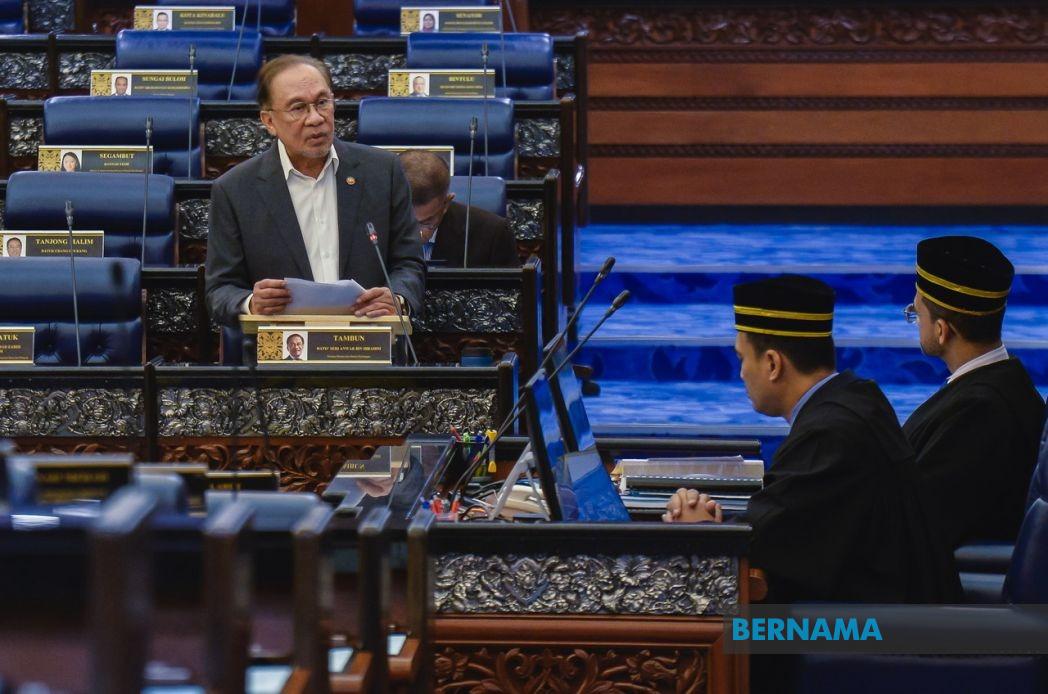
Prime Minister Datuk Seri Anwar Ibrahim moved to dispel concerns about programme restrictions in Federal Land Development Authority (FELDA) settlements, asserting that the federal government has imposed no blanket ban on activities within these communities. His comments, delivered during Minister's Question Time in parliament on June 30, came in response to concerns raised by lawmakers about the cancellation of a planned FELDA Settlers' Day event scheduled for Kluang, Johor, on June 20 and 21.
The distinction Anwar drew centres on a critical legal and administrative boundary: while state governments and other entities retain the freedom to organise programmes within FELDA areas, election law strictly prohibits the deployment of government resources—whether federal or state-level—for campaign activities. This clarification addresses a delicate political balance, particularly relevant in Malaysia's federal system where both national and state authorities interact with FELDA communities that often represent significant political constituencies.
Responding specifically to Datuk Seri Hamzah Zainudin from Perikatan Nasional representing Larut, the Prime Minister categorically denied having issued any directive to cancel the FELDA Settlers' Day programme. The denial was significant given the timing of the alleged cancellation and the proximity to electoral cycles, which frequently heighten sensitivities around government resource allocation. By separating the act of holding events from the manner in which government machinery is deployed, Anwar sought to reframe what could have appeared as a sweeping restriction as a narrowly targeted legal compliance measure.
The government's position reflects a broader commitment to ensuring that public institutions and resources remain insulated from partisan campaign activities. Under Malaysian election law, state governments and elected officials are entitled to conduct developmental and promotional activities—including issuing land titles, launching infrastructure projects, and organising community gatherings—provided such activities do not constitute or facilitate election campaigning. A menteri besar, for instance, may visit a FELDA settlement and hold a programme at his or her own initiative without legal impediment, but cannot mobilise FELDA's administrative apparatus or financial resources to amplify electoral messaging.
This framework carries particular weight for FELDA communities, which have historically served as influential blocs in both federal and state elections. With tens of thousands of settlers distributed across peninsular Malaysia, FELDA settlements represent concentrated populations of organised voters, making them frequent stops for political campaigns and developmental announcements. The clarification thus speaks to anxieties within these communities about political neutrality and fair treatment under the law.
Anwar underscored the MADANI Government's broader development agenda for FELDA areas, which he characterised as having suffered from inadequate attention and management under previous administrations. The government has introduced several initiatives aimed at enhancing quality of life in these settlements, including the establishment of dialysis centres and the expansion of development infrastructure through federal agencies. These measures form part of what the Prime Minister described as an effort to reverse years of neglect and ensure FELDA communities participate more fully in the nation's economic and social progress.
The involvement of Deputy Prime Minister Datuk Seri Dr Ahmad Zahid Hamidi in formulating these initiatives signals executive-level priority attached to FELDA revitalisation. By elevating the issue to the deputy premiership level, the government has signalled that improvements to FELDA settlements constitute a core policy objective rather than a peripheral concern. This positioning may also reflect political calculation: FELDA communities remain battlegrounds in Malaysian politics, with both ruling and opposition coalitions competing intensely for settler support.
The distinction between programme activity and government resource deployment also acknowledges the practical reality that separating state machinery from community events is neither absolute nor easily administered. FELDA settlements depend on government facilities, roads, and administrative infrastructure for any large gathering. The law's intent is to prevent the weaponisation of these facilities for campaign purposes, not to erect impossible barriers to legitimate state activity. State governments therefore retain considerable discretion to hold events in FELDA areas, provided they do not employ government workers, vehicles, or resources in a manner that crosses into partisan territory.
For Malaysian readers, particularly those in FELDA communities, this clarification carries practical implications. It suggests that developmental programmes organised by state governments should proceed unimpeded, while simultaneously reinforcing election law compliance that protects the integrity of democratic processes. The balance reflects Malaysia's attempt to maintain government neutrality during electoral periods whilst enabling state authorities to discharge their developmental responsibilities.
The incident also illustrates the complexity of governance in a federal system where multiple layers of authority operate within shared spaces. FELDA settlements are federal creations governed by a dedicated authority, yet they often fall within state electoral constituencies and benefit from state-level development initiatives. Managing this overlap requires careful legal interpretation and political sensitivity. Anwar's comments suggest the MADANI Government intends to interpret regulations in a manner permissive of state activity while vigilant against partisan misuse of government resources.
Looking forward, the government's emphasis on improving FELDA infrastructure and services may represent a broader strategy to consolidate political support within these communities whilst demonstrating administrative capacity and commitment to rural development. By framing previous neglect as a policy failure of earlier governments and positioning current improvements as evidence of renewed commitment, the administration attempts to reshape the political narrative around FELDA governance and service delivery.

