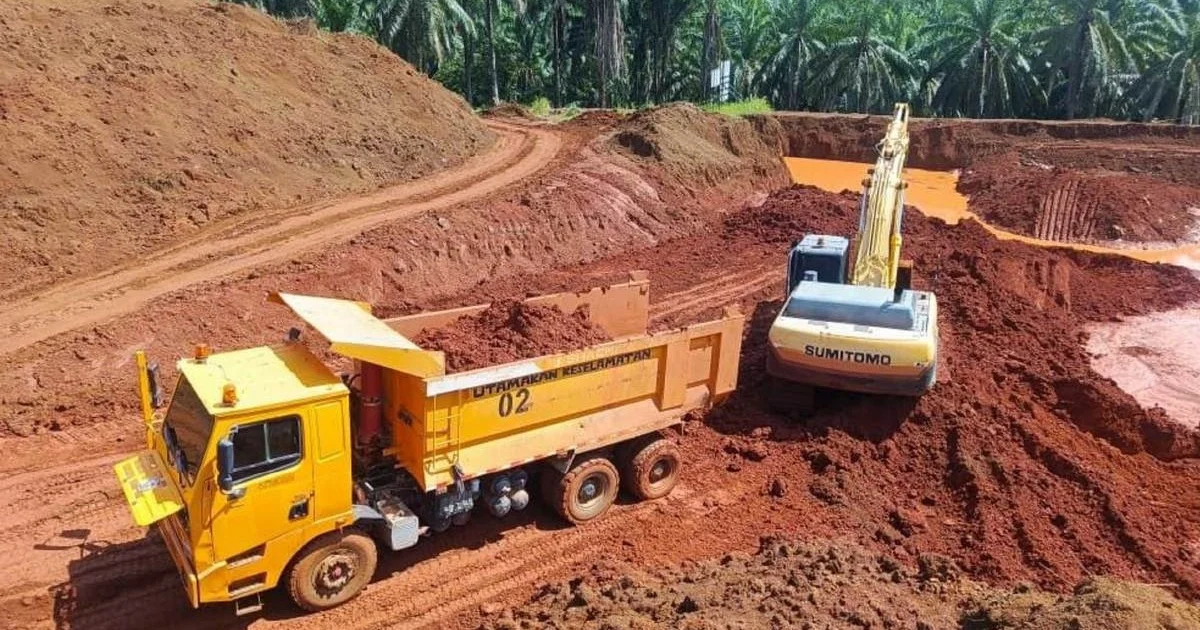
A major crackdown on illegal bauxite extraction has resulted in the arrest of nine individuals at a Felda plantation in Bukit Goh, Kuantan, with enforcement authorities confiscating approximately 10,000 tonnes of bauxite-bearing soil alongside heavy machinery and transport vehicles. The combined value of seized materials and equipment reached RM3.75 million, marking a significant blow to what appears to have been a well-established clandestine mining operation.
The raid underscores the persistent challenge posed by illegal mining activities across Peninsular Malaysia, particularly in Pahang, which has emerged as a hotspot for unauthorised bauxite extraction over recent years. The Bukit Goh location, situated within a Felda settlement area, suggests that operators were exploiting agricultural land under federal development schemes, raising concerns about encroachment into designated agricultural zones and potential harm to livelihoods dependent on these lands.
Barauxite mining in Malaysia has been a contentious issue, balancing economic extraction against environmental degradation and regulatory compliance. The commodity remains valuable for aluminium production and other industrial applications, creating financial incentives for illicit operators who bypass licensing requirements and environmental safeguards. The scale of this particular operation—measured in thousands of tonnes—indicates systematic extraction rather than small-scale opportunistic activity, suggesting organised involvement in the supply chain.
The seizure of heavy machinery and lorries points to sophisticated logistics infrastructure supporting the illegal enterprise. Such equipment typically represents substantial capital investment, and its confiscation disrupts not only the immediate operation but potentially the broader network through which extracted materials reach buyers. Transport vehicles recovered in enforcement actions often provide crucial leads for authorities investigating downstream recipients and intermediate traders in the illegal mineral trade.
Felda plantations, established to provide smallholder agricultural development, operate under specific governance structures and land-use protocols. Illegal mining within these areas constitutes a breach of federal agricultural policy and potentially infringes land rights of resident farmers and development scheme participants. The environmental impact of uncontrolled extraction—including soil degradation, habitat disruption, and water resource contamination—extends beyond the immediate mining site to affect surrounding communities dependent on intact agricultural ecosystems.
The nine arrests suggest coordinated enforcement involving multiple agencies, likely including the Department of Minerals and Geoscience Malaysia, state environmental authorities, and police. Such operations require substantial planning and resources, indicating that authorities have been tracking this particular site for some time. The timing and scale of the raid suggest confidence in building prosecutorial cases against those apprehended.
For Malaysian readers, this enforcement action reflects broader government efforts to combat the shadow mining economy that has flourished due to high international commodity prices and weak border controls on mineral exports. Neighbouring Thailand and Indonesia have similarly grappled with illegal bauxite operations, creating cross-border enforcement challenges as illicit material may transit multiple jurisdictions. Regional mineral trafficking networks often operate with sophisticated knowledge of regulatory loopholes and enforcement capacity constraints.
The RM3.75 million valuation encompasses confiscated equipment and extracted material, though the actual replacement value of industrial machinery may be considerably higher. Asset forfeiture serves both punitive and preventative functions—removing operational capacity while imposing financial consequences on networks supporting illegal activities. However, enforcement experts note that dismantling supply chains proves more challenging than single-site interdiction, as replacement equipment and shifting operational locations remain viable strategies for determined operators.
Stakeholders in legitimate mining, particularly licensed bauxite operators and aluminium processors, face competitive pressure from illegal suppliers undercutting regulated operations through tax avoidance and environmental cost externalisation. This enforcement action provides temporary relief but does not address underlying demand dynamics or inadequate deterrence structures that allow illegal mining to remain financially attractive despite criminal liability.
The location in Pahang is particularly significant, as the state has been identified in previous enforcement reports as a concentration point for illegal bauxite extraction. Factors including proximity to ports facilitating export, available infrastructure, and perceived enforcement gaps have made the region especially vulnerable. Recent focus on this area reflects coordinated strategic targeting rather than opportunistic discoveries.
Authorities have not disclosed details regarding the charges being prepared against the nine detainees, investigation timelines, or whether charges will extend beyond the individuals directly apprehended to include supply-chain intermediaries and buyers. Successful prosecution of organised illegal mining requires establishing not merely operational involvement but intent and participation in the broader criminal enterprise, a complexity that often determines whether cases result in significant convictions or face attenuation through plea arrangements.
Looking forward, this raid demonstrates operational capacity within enforcement agencies but raises questions about sustainable prevention strategies. Systematic illegal mining operations persist partly because profit margins significantly exceed enforcement penalties and incarceration risks. Strengthening deterrence through enhanced penalties, asset recovery mechanisms, and intelligence-led operations targeting command structures rather than field-level workers remains central to reducing such activities. For a resource-dependent economy like Malaysia, transitioning from enforcement-focused approaches toward comprehensive regulatory modernisation and demand-side interventions addressing export channels could yield longer-term results in controlling illegal extraction.

