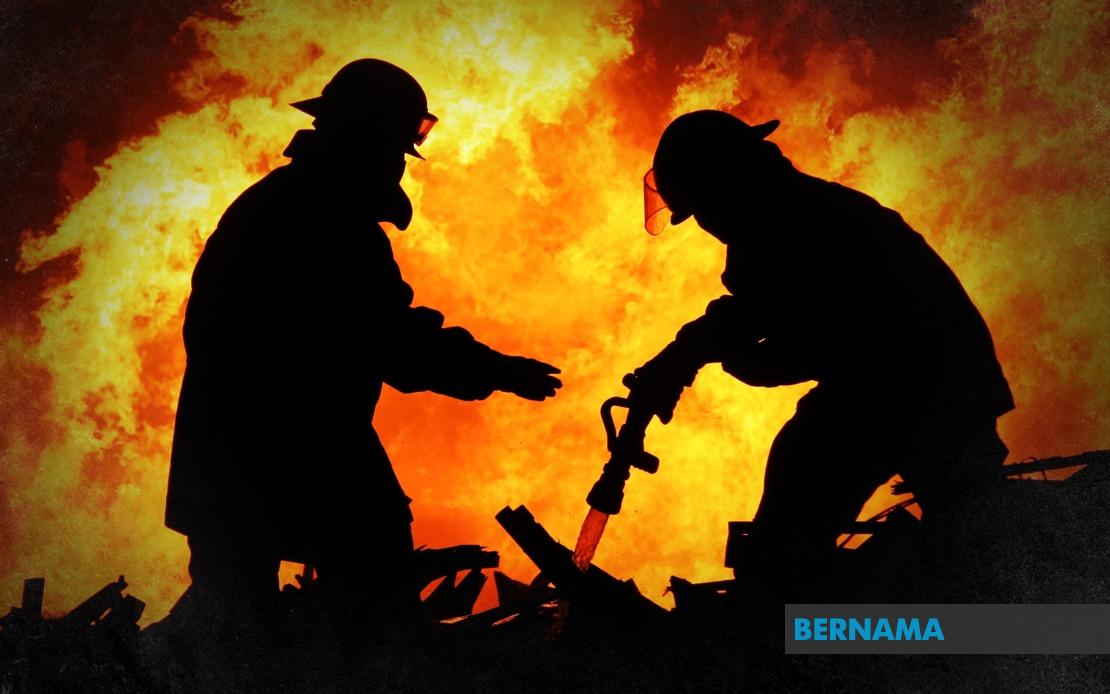
A catastrophic industrial accident unfolded in Gujarat on Saturday when a devastating blast tore through Talent Fireworks, an unlicensed manufacturing facility located in Ahmedabad's Vastral area. The explosion claimed nine lives and left half a dozen workers with serious injuries, marking yet another tragedy in India's notoriously unsafe fireworks industry. Investigators and emergency responders arrived to find the factory partially destroyed, revealing the scale of the disaster that claimed the lives of workers engaged in one of the country's most hazardous manufacturing sectors.
The immediate aftermath saw swift arrests by local police, who detained the factory's proprietor on suspicion of operating the facility without proper government authorisation. The revelation that Talent Fireworks lacked the necessary licensing underscores a persistent challenge across India's informal manufacturing economy, where countless operations function in legal grey zones, evading regulatory oversight and basic safety inspections. This particular establishment appears to have been among the widespread illegal facilities that dot industrial clusters across Gujarat and other regions, prioritising productivity and profit margins over worker protection.
Response from India's central government was expeditious, with Prime Minister Narendra Modi extending formal condolences to the bereaved families. More tangibly, Modi announced immediate financial relief through the Prime Minister's National Relief Fund, allocating 200,000 rupees—roughly RM8,490—to the next of kin of each fatality. This represents the standard compassionate response to major industrial disasters, offering families modest compensation whilst acknowledging the state's duty of care toward affected citizens.
Complementing the federal assistance, Gujarat's Chief Minister Bhupendra Patel pledged additional state-level support, committing 400,000 rupees (approximately RM16,980) per deceased worker's family. Together, the combined packages total 600,000 rupees per victim, providing some financial cushion for families who have lost primary wage earners. However, such compensation, whilst significant by Indian standards, frequently falls short of replacing lost household income and addressing long-term medical expenses for injured survivors.
The Vastral incident reflects an entrenched systemic problem that extends far beyond this single facility. Fireworks manufacturing has persistently ranked among India's most dangerous industrial sectors, characterised by inadequate workspace design, absence of modern safety equipment, and workforces often comprised of migrant or marginalised labourers with limited bargaining power. Manufacturing sites typically operate in cramped, poorly ventilated structures where raw materials—including highly flammable compounds—are stored and processed with minimal separation or containment protocols.
For Malaysian readers, the parallels warrant consideration. While Malaysia's manufacturing regulations and enforcement mechanisms are generally more robust than those in India, sporadic incidents involving informal workshops and unregistered facilities occasionally occur within domestic borders. The Vastral disaster serves as a cautionary reminder of the consequences when regulatory frameworks lack teeth or when economic pressures incentivise circumventing safety requirements. Southeast Asian nations with emerging manufacturing sectors must remain vigilant against similar regression.
The broader context illuminates why such incidents remain recurrent. Fireworks production in India operates within a lucrative industry driven by seasonal demand, particularly surrounding major festivals and celebrations. Economic incentives often override safety considerations, especially where enforcement remains inconsistent and penalties insufficient to deter illegal operations. Workers, many from economically disadvantaged backgrounds, frequently accept hazardous conditions out of desperation for employment, creating a vulnerable labour pool that bears disproportionate risk.
Investigations will likely reveal multiple safety violations at Talent Fireworks—inadequate fire suppression systems, poor ventilation, improper storage of explosives, lack of protective equipment, and absence of evacuation procedures. Such deficiencies are standard among unlicensed facilities, where cost-cutting extends to every operational dimension. The factory owner's arrest signals an attempt to assign individual culpability, yet systemic accountability remains elusive, as broader structural failures enabling such operations persist largely unaddressed.
For the injured survivors, recovery presents significant challenges. Industrial blast injuries frequently result in severe burns, respiratory damage, and traumatic wounds requiring prolonged medical treatment. In India's public healthcare system, managing such cases strains already-limited resources, and workers from informal sectors often lack insurance coverage. The six individuals hurt in this explosion face uncertain rehabilitation prospects and potential permanent disability, adding another layer of tragedy beyond the fatal casualties.
The incident underscores the tension between economic development and worker protection that characterises much of South Asia's industrial landscape. As manufacturing sectors expand to capture global supply chains and meet domestic consumption, regulatory capacity struggles to keep pace. Indonesia, Vietnam, Bangladesh, and other regional economies face comparable pressures, where balancing industry growth against safety enforcement remains perpetually fraught. India's experience demonstrates the human costs of allowing such balance to tilt catastrophically toward production at safety's expense.
Moving forward, authorities face familiar questions about enforcement intensity and deterrence levels. Will the arrest of Talent Fireworks' owner translate into broader crackdowns on unlicensed operations, or will it serve as a temporary gesture before enforcement again lapses? Historical patterns suggest the latter, as limited regulatory capacity and endemic corruption facilitate continued operation of illegal workshops. Without comprehensive reform addressing underlying incentive structures, similar tragedies appear inevitable across India's fireworks manufacturing heartlands.

