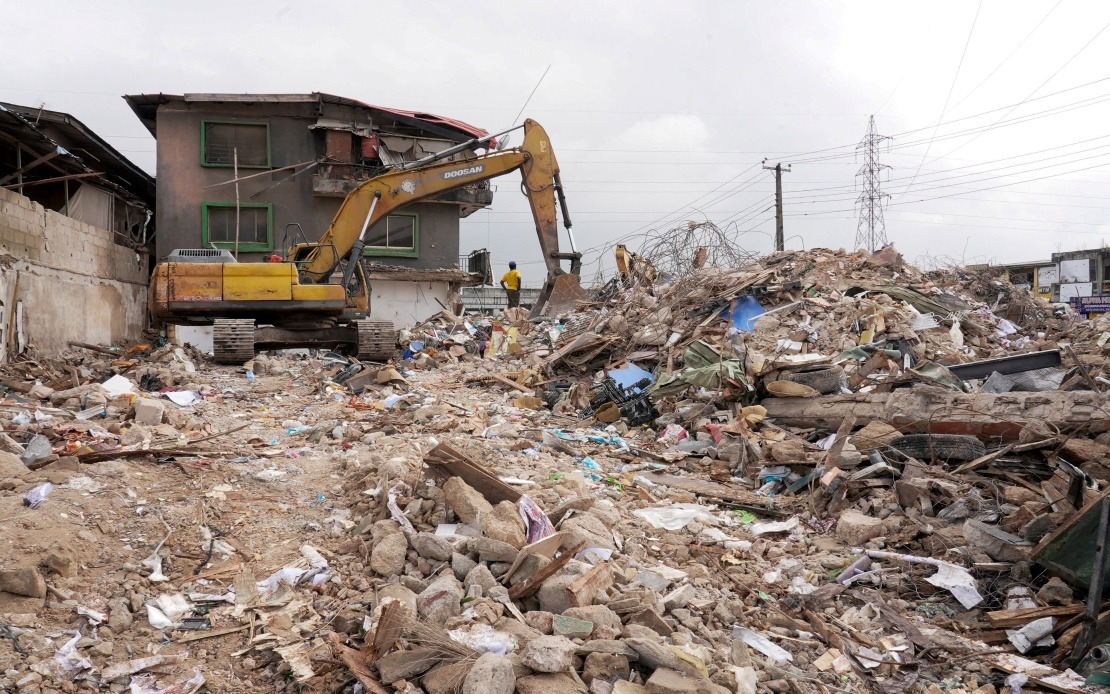
Emergency responders in Nigeria's Lagos state have concluded a intensive overnight rescue operation following the catastrophic failure of a three-storey commercial building in Alakija, a rapidly expanding residential and commercial hub along the Lagos-Badagry Expressway. The building, which housed multiple retail outlets, buckled on Thursday morning, trapping dozens of occupants beneath tonnes of concrete and steel. By Friday morning, rescue teams had recovered nine fatalities and successfully extracted 27 survivors from the debris field.
Olufemi Oke-Osanyintolu, permanent secretary of the Lagos State Emergency Management Agency, confirmed to media that coordinated search and recovery efforts operated continuously throughout Thursday and into early Friday to reach victims trapped in the building's collapsed sections. The survivors, many bearing injuries of varying severity, were transported to medical facilities across Lagos for urgent treatment and stabilisation. Authorities have not yet disclosed details regarding the number of injured or the current medical status of those rescued.
The initial composition of casualties reflected the diverse nature of the building's occupants on the morning of collapse. Shop owners and customers who had commenced their daily commercial activities accounted for most of those trapped, while several residents from adjacent residential areas in the neighbourhood were also caught within the structural failure. The incident occurred during peak business hours, which likely contributed to the higher number of occupants present at the time of the collapse.
Notably, the rescue operation benefited from a multi-agency response that extended beyond conventional emergency services. The China Civil Engineering Construction Corporation, which maintains an active railway development project in the Lagos region, mobilised equipment and personnel to assist in excavation and removal of debris. This collaboration underscores how infrastructure projects operating in proximity to residential areas can provide critical rapid-response capacity during emergencies.
The precise cause of the structural failure remains under investigation by Lagos state authorities, who have not yet released preliminary findings. However, the incident aligns with a troubling pattern of building collapses across Nigeria that engineers and urban development experts have long attributed to multiple interconnected failures. These include the deterioration of older structures that lack proper maintenance programmes, widespread non-compliance with established building codes and construction standards, and the persistent use of substandard or counterfeit building materials by contractors seeking cost reductions.
For regional observers, particularly those monitoring infrastructure safety across West Africa, the Lagos collapse illustrates systemic vulnerabilities in the regulatory oversight of real estate development. Many commercial properties in rapidly urbanising Nigerian cities were constructed during periods when enforcement mechanisms were weaker or when inspection protocols proved inadequate. The ongoing expansion of cities like Lagos creates pressure for accelerated development that occasionally outpaces the capacity of authorities to verify compliance with safety requirements.
The incident carries particular resonance for Malaysian readers and Southeast Asian stakeholders engaged in West African markets or infrastructure partnerships. Building safety standards and regulatory compliance remain cornerstone issues in emerging markets undergoing rapid urbanisation. The Lagos collapse demonstrates how economic growth without corresponding improvements in construction oversight and material quality control can create public safety hazards that erode investor confidence and threaten livelihoods.
Lagos, as Nigeria's commercial nerve centre and a gateway to West African markets, experiences intense pressure from population growth and economic activity concentration. The city's building stock reflects decades of development patterns, some predating contemporary safety protocols. Alakija, where Thursday's collapse occurred, exemplifies the transformation of formerly peripheral areas into mixed-use commercial and residential zones as the city expands outward along major transport corridors.
The involvement of rescue personnel working extended hours under challenging conditions reflects the capabilities that Nigeria's emergency management infrastructure can mobilise. However, the recurrence of such disasters suggests that preventative measures—including mandatory structural inspections, enforcement against non-compliant developments, and public education regarding building standards—warrant strengthened implementation. The economic costs of rescue operations, medical treatment, and lost productivity represent significant drains on public and private resources that could be mitigated through preventative investment in regulatory compliance.
As investigations proceed into the Alakija incident, the findings will likely generate discussions among Nigerian policymakers regarding enforcement mechanisms and penalties for builders who compromise on construction quality. International development partners and regional organisations may also consider whether technical assistance programmes addressing building standards could contribute to risk reduction in West African urban centres. For the families of those who perished and the injured survivors, the collapse represents a tragedy rooted partly in preventable structural deficiencies—a reality that continues to challenge Lagos's trajectory toward becoming a world-class commercial centre.

