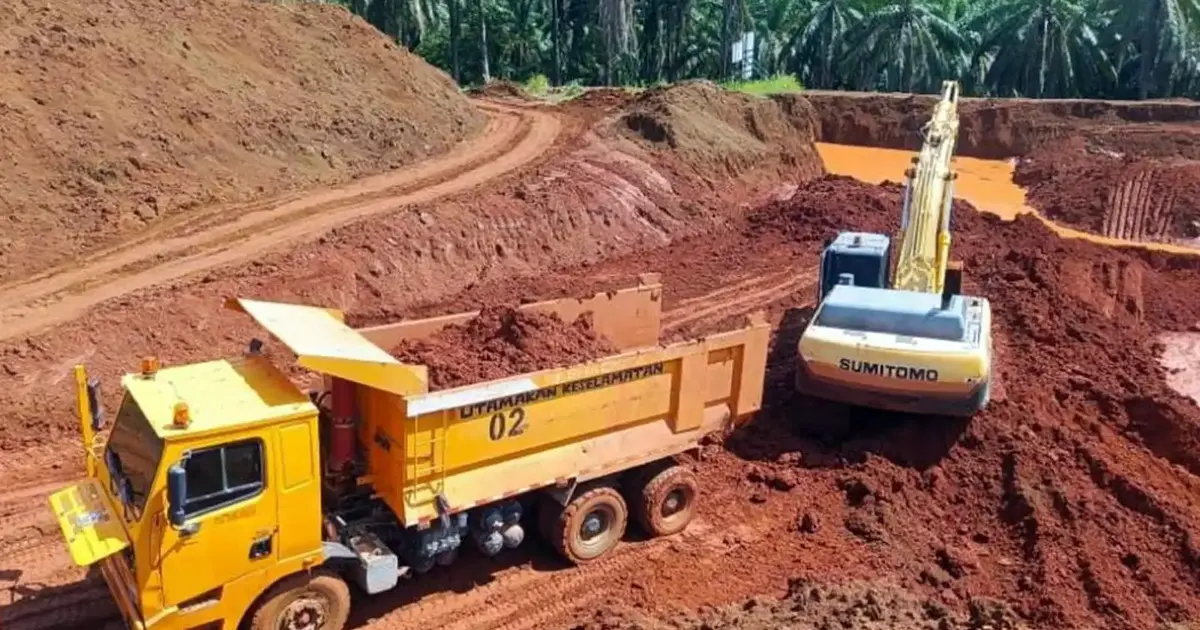
A major enforcement operation targeting illegal mining has resulted in the arrest of nine individuals, predominantly foreign nationals, on a Felda plantation property. The General Operations Force conducted the raid as part of ongoing efforts to combat unauthorised extraction of natural resources from federal agricultural land. The operation yielded the recovery of assets valued at RM3.75 million alongside significant quantities of bauxite ore, signalling the scale of the unauthorised operation that had been operating on the estate.
The arrestees are suspected of orchestrating and participating in systematic illegal bauxite mining activities. Bauxite, the primary ore from which aluminium is derived, remains a valuable natural resource in Malaysia, and its unauthorised extraction represents both an economic loss to the state and potential environmental damage to agricultural and forest areas. The involvement of foreign nationals in the operation suggests a potentially more organised smuggling or extraction network than typical small-scale illegal mining endeavours.
This raid represents an intensification of enforcement against illegal mining on Felda land, which has increasingly become a flashpoint for resource theft across Malaysia. Felda plantations, managed by the Federal Land Development Authority, span vast tracts of land and have proven vulnerable to coordinated exploitation by criminal networks. The concentration of assets seized during this single operation underscores the profitability of such illicit ventures and the financial incentives driving foreign participation in these schemes.
The recovery of RM3.75 million in assets indicates substantial investment in mining equipment, machinery, and infrastructure required to extract, process, and transport bauxite. This level of capitalisation suggests the operation was not ad hoc but rather a structured enterprise with access to significant funding. Such findings raise questions about the financing mechanisms enabling these operations and whether international criminal syndicates are systematising bauxite theft across the region.
Bariter mining activities pose particular challenges for Malaysian authorities given the geographic spread of Felda properties and the relative remoteness of many mining sites, which complicates regular monitoring and enforcement. Criminal groups exploit these geographic realities to establish clandestine operations that can function undetected for extended periods. The successful detection and disruption of this network demonstrates improved intelligence gathering and coordination between enforcement agencies.
The involvement of nine suspects, with most being foreign nationals, highlights the transnational dimension of resource crime in Southeast Asia. Malaysian authorities have increasingly encountered networks involving workers and coordinators from neighbouring countries who are recruited to participate in illegal extraction operations. These individuals often occupy different roles within the criminal hierarchy, from equipment operators to logistics coordinators, creating complex enforcement challenges that require cross-border cooperation.
The timing and execution of this raid reflect strategic shifts in how Malaysian law enforcement approaches resource crime. Rather than reactive responses to individual incidents, authorities are now conducting intelligence-led operations targeting the infrastructure and personnel of organised mining networks. This approach has proven more effective at dismantling operations rather than simply arresting individual miners or equipment operators.
The bauxite seized during the operation represents lost revenue for the state and potential export smuggling. Malaysia's bauxite sector has become increasingly contentious following previous illegal mining scandals and environmental concerns. Strict monitoring of legitimate bauxite extraction has driven some operators toward illegal channels, creating perverse incentives that fuel criminal networks. The confiscated material will likely be inventoried and either legitimately processed or destroyed to prevent black-market recycling.
This enforcement action carries implications for regional supply chains and international aluminium markets. Illegal bauxite extraction destabilises legitimate mining operations and creates price volatility. Malaysian authorities are acutely aware that allowing such operations to proliferate undermines the regulatory frameworks that legitimate mining companies operate within, potentially driving investment away from the formal sector.
The arrests also highlight ongoing friction between development objectives and resource protection on Felda land. Plantation management must balance agricultural productivity with preventing criminal exploitation of estate territory. Improved security protocols, community engagement, and technological surveillance may be necessary to prevent recurrence of similar operations. Felda management will likely review security measures and coordination with law enforcement agencies following this incident.
Future enforcement success against illegal bauxite mining will depend on sustained intelligence operations, adequate funding for enforcement teams, and international cooperation. The recovery of RM3.75 million in assets during a single operation demonstrates that significant resources are deployed in these criminal networks, warranting correspondingly substantial enforcement investment.
Beyond the immediate arrests, this case underscores broader vulnerabilities in Malaysia's natural resource governance. Illegal mining generates criminal profits that may be reinvested into other illicit activities, creating multiplier effects throughout the crime economy. Addressing these networks requires not only enforcement operations but also addressing root causes such as poverty that drives foreign recruitment into dangerous illegal mining work.

