Johor's state election on Saturday is prompting an unprecedented mobilisation of transport resources to ensure voters living outside the state can travel home to cast their ballots. Stesen Pemantauan Rakyat, a non-governmental organisation, has stepped in to address a persistent challenge facing peninsular elections: the logistical hurdle faced by registered voters who have migrated for work or study but retain voting rights in their home constituencies. The initiative reflects growing recognition that electoral participation requires more than just polling booths—it demands genuine infrastructure to overcome the friction of geography.
The NGO's effort centres on deploying six dedicated buses with a combined capacity of 240 passengers, operating from two departure hubs that represent the primary nodes of Johor-based diaspora. Four buses will originate from Kuala Lumpur, where a significant concentration of Johor voters has relocated for employment in the capital's sprawling economic zones. An additional two buses will operate from the Sultan Iskandar Building Customs, Immigration and Quarantine Complex, tapping into cross-border voter flows from Singapore—a crucial consideration given the 1.4 million Malaysians estimated to work or reside in the city-state. This dual-origin approach recognises that Johor's proximity to both Kuala Lumpur and Singapore creates overlapping diaspora populations with distinct departure points and logistical requirements.
The geographic reach of these services underscores the dispersed nature of electoral constituencies within Johor. The buses will service nine distinct destinations: Tangkak, Muar, Batu Pahat, Pekan Nanas, Segamat, Labis, Kluang, Ayer Hitam, and Kulai. This routing strategy suggests the NGO has strategically mapped voter concentrations across Johor's electoral landscape, prioritising constituencies where demand is likely highest. The timing of departures—9 pm Friday from both Kuala Lumpur and the Singapore border crossing, with an additional 9 am Saturday departure from Singapore—reveals careful orchestration designed to minimise travel fatigue while maximising arrival flexibility across Johor's geography. Passengers departing Friday evening will reach their constituencies by early Saturday, while the Saturday morning option accommodates late-deciding voters or those prioritising work commitments.
Representative Yong Shui Wen confirmed that the initiative has evolved into an established electoral ritual, having operated continuously since 2018. This longevity signals institutional maturity and suggests the NGO has refined its logistics through multiple election cycles. Notably, Yong reported that all available seats have been claimed, indicating that demand substantially exceeds supply—a finding with clear implications for understanding electoral participation barriers. The fact that 240 seats filled completely suggests either that awareness campaigns proved effective or that word-of-mouth networks among diaspora communities are sufficiently robust to disseminate information about such initiatives. Either interpretation points to the existence of organised, information-networked voter communities actively seeking mechanisms to exercise their franchise.
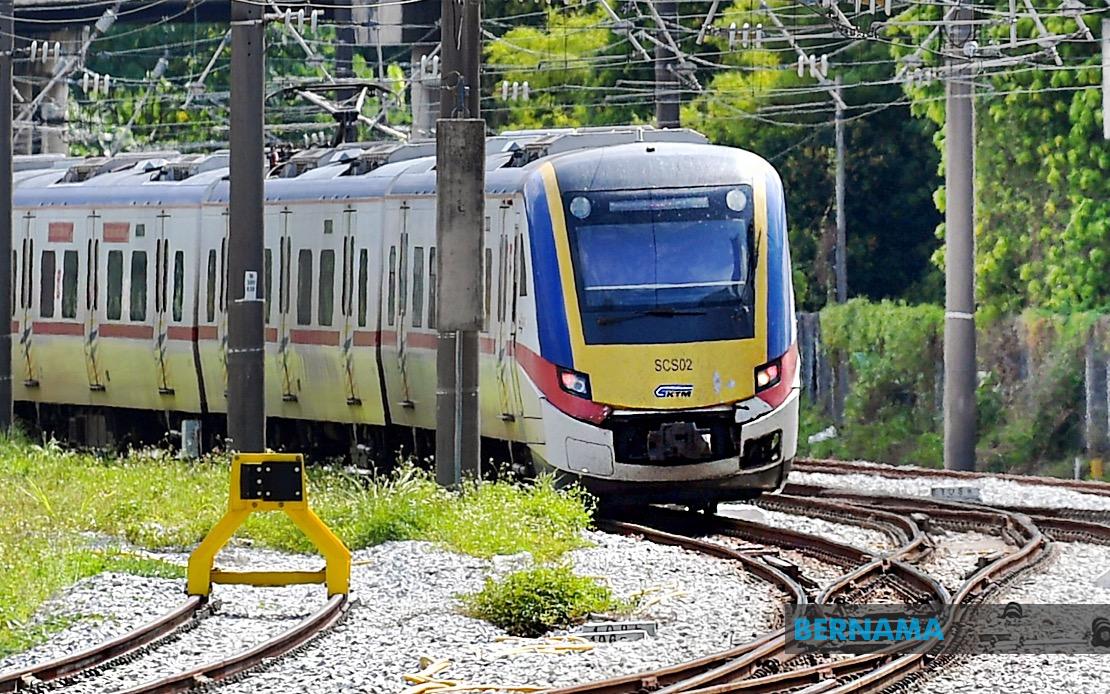
While the NGO addresses grassroots transport provision, Keretapi Tanah Melayu Bhd has deployed institutional resources to respond to election-driven demand surges. KTMB's decision to double seating capacity on its Electric Train Service represents a significant operational commitment, effectively restructuring weekend scheduling to absorb forecast passenger influxes. The primary intervention targets the KL Sentral-JB Sentral-KL Sentral corridor, where an additional 7,560 seats have been introduced, bringing total capacity to 15,120 seats. This represents exactly 100 per cent capacity increase on this commercially critical route—a scale of intervention suggesting either exceptional election demand or pre-existing capacity constraints that the election has prompted KTMB to finally address.
The velocity of ticket sales for this primary route reveals the intensity of voter movement. As of mid-morning on announcement day, KTMB reported that 12,769 seats—representing 84 per cent of total capacity—had already been sold. This leaves only 2,351 seats available on what will presumably become the most congested election-related train journey. The rate of ticketing suggests passengers were actively monitoring availability and purchasing seats within hours of KTMB's capacity expansion, indicative of well-coordinated diaspora voter networks. The near-saturation of capacity before election day itself raises questions about whether even doubled capacity will prove sufficient, potentially indicating that KTMB may need to consider additional interventions on other routes as election day approaches.
KTMB has also intervened on secondary routes serving constituencies beyond Johor Bahru itself. The Gemas-JB Sentral-Gemas route, serving voters from interior Johor and adjacent regions, experienced capacity expansion from 630 to 4,410 seats during the same July 10-12 period. This represents a 600 per cent increase, suggesting either previous severe capacity constraints on this route or KTMB's assessment that election demand on this interior corridor would be substantial. Interestingly, this route's booking pattern diverged significantly from the primary route: as of morning announcement, only 47 per cent or 2,064 seats had been reserved, leaving 2,346 seats available. This differential uptake may reflect geographic variation in diaspora populations or suggest that voters from interior constituencies rely more heavily on alternative transport modes—particularly relevant for constituencies in Segamat, Labis, and Kluang that overlap with the NGO's bus routes.
The KTMB Mobile application has become a critical infrastructure component for election logistics. Monitoring of real-time ticket availability revealed that peak-hour services on Friday and Saturday had achieved near-sold-out status, though the authority advised continued monitoring for last-minute availability. This dynamic ticketing situation reflects the fluid nature of election-driven transport demand, where final-minute decisions by voters can rapidly equilibrate supply and demand. The counsel to continue checking availability suggests KTMB recognises that some passengers may cancel bookings or that minor capacity optimisation remains possible, though the advice may also constitute conservative messaging to prevent consumer frustration when peak services sell out.
The structural context for these initiatives encompasses 172 candidates competing for 56 seats across Johor's 16th state election cycle, with 2,727,926 registered voters eligible to participate. This electorate size positions Johor as a mid-tier state election by Malaysian standards, yet the coordinated response from both NGO and rail operator suggests that diaspora voter participation has become electorally consequential. Previous election analysis in Malaysia has indicated that margin-of-victory in competitive constituencies frequently falls within ranges achievable through organised diaspora mobilisation—suggesting that the apparent logistical generosity of KTMB and Stesen Pemantauan Rakyat may ultimately reflect sophisticated political calculus about where marginal votes can be captured.
The broader significance of these initiatives extends beyond immediate electoral mechanics. The convergence of NGO grassroots transport provision and corporate-scale rail capacity expansion demonstrates how Malaysian electoral participation has become dependent on choreographed logistics that transcend traditional administrative structures. The phenomenon raises questions about equity: while diaspora voters from Kuala Lumpur and Singapore benefit from explicitly organised transport provision, voters from other out-of-state locations, rural constituencies, or those without access to NGO networks or digital ticketing platforms may face substantially higher participation barriers. The near-total utilisation of available transport capacity suggests that unmet demand for such services may exceed what current providers can accommodate, pointing to potential electoral participation constraints that remain unresolved.
Looking forward, these initiatives establish precedents that will likely be refined and replicated across future Malaysian elections. KTMB's proven capacity to rapidly scale rail services suggests this model offers replicable infrastructure for subsequent state and national elections facing similar diaspora participation dynamics. The NGO's sustained commitment since 2018 indicates that voter transport has become recognised as a legitimate electoral support function. Whether these mechanisms prove sufficient to meaningfully reduce participation friction for all diaspora voter categories remains an empirical question, but their emergence signals evolution in Malaysian electoral practice toward active, institutionalised approaches to voter mobilisation that extend well beyond conventional campaign rhetoric.

