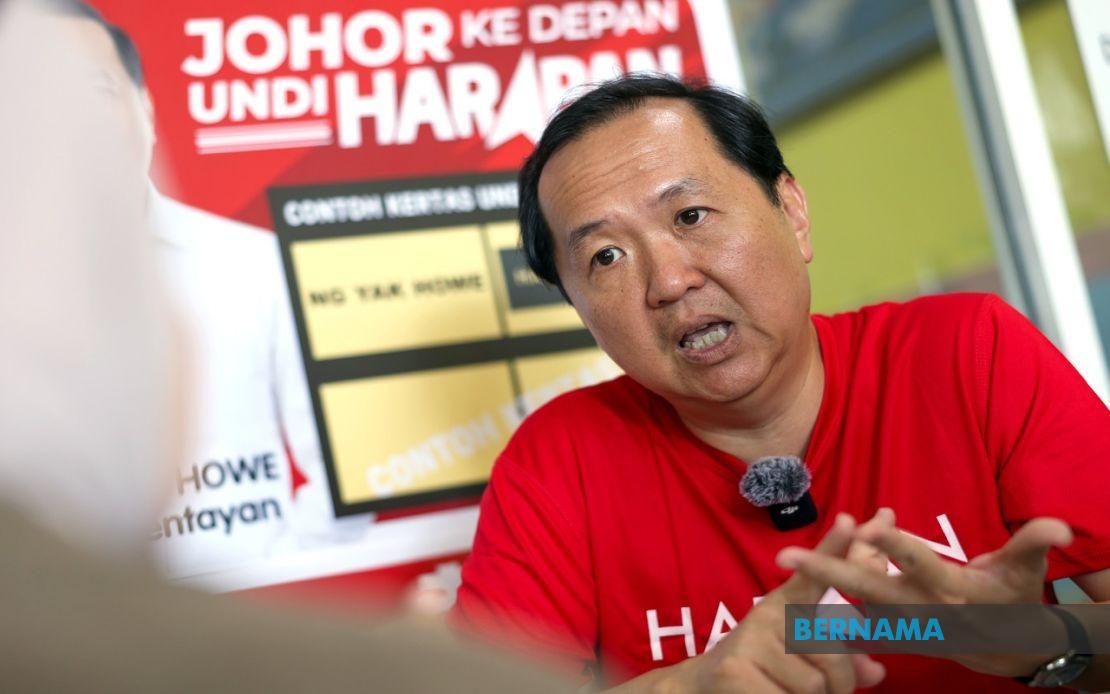
Bentayan assemblyman Ng Yak Howe has placed the revival of Muar town centre at the forefront of his re-election campaign, acknowledging the creeping decline that has characterised the urban core as residents and businesses drift toward the suburbs. The Pakatan Harapan candidate, who is contesting for a third consecutive term, recognises that the constituency encompasses more than fifty percent of the town centre's footprint, positioning him strategically to address a challenge affecting the wider commercial ecosystem and quality of life for those who remain.
The gradual hollowing-out of Muar's downtown reflects a pattern increasingly common across Malaysian regional towns, where suburban expansion and changing retail habits have drained vitality from traditional commercial districts. Ng characterised the problem succinctly: while daytime business activity sustains a veneer of normalcy, the area deteriorates into quietude once office workers depart, leaving storefronts darkened and streets depopulated. This rhythm of use has left approximately eighteen percent of commercial premises vacant, representing both lost economic opportunity and visible evidence of decline that reinforces further exodus.
During recent engagements with local traders and residents, Ng outlined a multifaceted approach centred on attracting younger demographics back into the town centre, betting that social and entertainment activity could complement retail revival. His strategy rests on the premise that if the constituency can generate sufficient foot traffic and community presence during evening and weekend hours, commercial confidence may gradually return and landlords may find tenants for long-vacant spaces. The underlying logic mirrors urban regeneration efforts elsewhere in Southeast Asia, where town centres have been rehabilitated through cultural programming, dining precincts, and mixed-use development.
To operationalise these ambitions, Ng has collaborated with Bakri Member of Parliament Tan Hong Pin on immediate tactical interventions. Cash vouchers and lucky draw campaigns represent conventional but pragmatic tools for stimulating consumer spending at local establishments. These initiatives aim to direct discretionary spending toward town centre merchants rather than allowing it to leak toward suburban shopping malls or online retailers, and they carry the secondary benefit of generating goodwill and demonstrating visible commitment to constituent welfare. Such schemes, while modest in scale, can provide breathing room for struggling businesses to stabilise operations and retain staff.
Ng's professional background lends credibility to his development agenda. His decade-plus experience as a quality assurance engineer suggests familiarity with systems thinking and operational improvement—capabilities potentially applicable to coordinating town centre revitalisation efforts across multiple stakeholders. Added to his quarter-century in politics, this profile positions him as an insider with both technical competence and institutional relationships necessary to navigate bureaucratic processes for infrastructure investment, regulatory reform, or public-private partnerships that might accelerate change.
The Bentayan seat represents a competitive three-cornered dynamic reduced to a straight fight. Ng faces Barisan Nasional's Chua Lee Huat with 34,205 registered voters determining the outcome. In a state where both PH and BN command regional strength, local issues like town centre decay become pivotal differentiators between candidates, allowing voters to assess which representative has delivered tangible improvements to neighbourhood conditions. Muar's economic trajectory—whether it stabilises or continues declining—will likely feature prominently in campaign messaging.
The broader Johor state election context adds pressure to this individual contest. With 172 candidates competing across all seats and polling scheduled for July 11, the election carries implications beyond Bentayan, potentially reshaping the state legislature's composition. Early voting commences July 7, compressing the campaigning window. For Ng and others positioning themselves as agents of urban renewal, the election represents both opportunity and deadline—a chance to secure voter confidence based on a development vision, but also a compressed timeframe in which to demonstrate momentum or secure voter commitments.
Revitalising a declining town centre presents genuine complexity that transcends campaign rhetoric. Successful models typically require sustained investment across multiple years, coordination between local government, business owners, and community organisations, and often necessitate difficult decisions about land use, parking, or traffic patterns that may inconvenience some residents. Quick-fix voucher schemes provide immediate benefit but cannot substitute for fundamental improvements to the built environment, safety perception, or competitive positioning against established suburban destinations.
For Malaysian readers and regional observers, Muar's trajectory holds broader significance. Dozens of regional towns across Malaysia face similar pressures as urban hierarchies shift and consumer behaviour evolves. How local representatives like Ng respond to these challenges—whether through genuine structural interventions or symbolic gestures—will shape community resilience and may influence migration patterns that ripple through the entire peninsula. The July 11 election will provide voters an opportunity to judge which candidates genuinely comprehend these dynamics and possess credible plans to address them.

