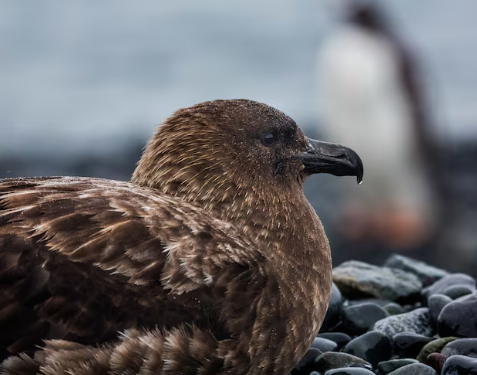
New Zealand has entered the global H5N1 bird flu crisis following the detection of the deadly virus in a migratory seabird discovered on a Wellington beach, Biosecurity Minister Andrew Hoggard announced on Wednesday. The positive case in a brown skua represents a significant milestone for the island nation, which until now had managed to remain free of a pathogen that has devastated bird and mammal populations across multiple continents since 2021. The discovery places New Zealand on alert as authorities brace for potential further detections across its unique wildlife.
The arrival of H5N1 in New Zealand follows a familiar trajectory across the Pacific. Australia, the last major continent to confirm the virus, has now recorded 14 confirmed or presumed positive cases as of the same date. The pattern of spread suggests migratory seabirds have become the primary vector for transporting the infection across vast oceanic distances. Hoggard emphasised that current surveillance has revealed no evidence of widespread wildlife mortality or transmission between wild bird populations domestically, nor have poultry operations reported positive cases. This breathing room, however modest, has allowed New Zealand to implement immediate containment strategies.
The concern in New Zealand differs substantially from other regions due to the nation's extraordinary and irreplaceable biodiversity. The country's native birds evolved in complete isolation from predatory mammals for millions of years, a factor that shaped their biology in profound ways. Without evolutionary pressure to develop sophisticated anti-predator defences, many species became flightless or ground-nesting, characteristics that now render them unusually vulnerable not just to introduced predators like stoats, rats and feral cats, but also to novel diseases. This evolutionary history, while producing some of Earth's most remarkable bird species, has created a conservation paradox: uniqueness and fragility are inextricably linked.
Many of New Zealand's endemic bird species already inhabit the precipice of extinction due to habitat loss and invasive species pressure accumulated over centuries of human settlement. The introduction of H5N1 presents an existential threat to several species that exist only in tiny populations maintained through intensive management programmes. The virus could collapse breeding populations that have taken decades to recover. Scientists and conservation officials recognise that a rapid spread of H5N1 through New Zealand's wild bird populations could trigger cascading extinctions of globally unique species with no equivalents anywhere else on Earth.
In response to this threat, New Zealand health authorities have already mobilised an innovative and ambitious vaccination campaign. Approximately 300 core breeding birds from five of the country's most critically endangered species have been targeted for immunisation. The takahe, a large flightless rail once thought entirely extinct before being rediscovered in 1948, represents one flagship species receiving vaccine protection. The kakapo, a nocturnal flightless parrot of which fewer than 250 individuals remain in the wild, is another priority. These species represent living links to New Zealand's prehistoric past; their loss would represent an irreversible diminishment of global natural heritage.
The vaccination strategy reflects a calculated approach balancing immediate protective measures against the reality of limited resources and uncertain outcomes. By focusing on core breeding populations maintained in closely monitored settings, authorities hope to preserve the genetic and behavioural diversity essential for future species recovery. The programme recognises that once these populations decline below critical thresholds, restoration becomes exponentially harder. Yet the initiative also reveals the desperation inherent in the situation: vaccinating individual birds rather than preventing disease transmission represents a retreat from disease control toward survival management.
Brett Gartrell, a wildlife health specialist at Massey University, articulated the profound anxiety pervading conservation circles in New Zealand. His warning that the nation's birds have never previously encountered a pathogen of H5N1's severity underscores a fundamental vulnerability. Unlike poultry farming in developed nations, which benefits from biosecurity protocols refined through decades of disease management, wild bird populations possess no such defences. Even vaccinated core populations may prove insufficient if the virus establishes itself widely in the broader wild bird ecosystem and mutates faster than protective immunity develops.
New Zealand's preparatory work preceding the first confirmed case now faces a critical test. The country's poultry industry has been developing biosecurity and resilience plans in collaboration with government agencies, establishing protocols that may help prevent transmission from wild to domestic bird populations. However, preventing reverse transmission—from farms back to wild birds—presents a far more challenging epidemiological problem. A single undetected infection in a commercial operation could seed virus transmission throughout integrated wild and managed bird habitats.
The detection in New Zealand arrives at a moment when H5N1's global behaviour continues to surprise scientists. The virus's ability to infect and sicken mammalian species, including dairy farm workers and wild foxes, suggests it has begun adapting beyond its traditional avian reservoir. Each new host population represents an opportunity for the virus to evolve and potentially acquire characteristics enabling easier human transmission. New Zealand's island geography offers some isolation advantage, yet migratory birds and international commerce ensure no complete protection from external threats.
For Southeast Asian readers, New Zealand's situation offers instructive parallels and contrasts. The region's interconnected ecosystems and high-density poultry farming create different but arguably more acute H5N1 risks than those facing island nations. Malaysia, with its extensive wetlands and migratory bird corridors, remains perpetually exposed to H5 introductions. The pandemic's demonstration that wealthy developed nations cannot simply purchase immunity through advanced healthcare systems or technology applies equally to wildlife disease: ecological vulnerability transcends economic classification.
The months ahead will determine whether New Zealand's swift vaccination response and existing biosecurity planning prove adequate to contain H5N1's spread. If the virus remains limited to occasional seabird detections without establishing transmission chains in wild populations, the nation's endemic species may survive this pandemic largely unscathed. Conversely, rapid environmental spread could overtake vaccination efforts, pushing several species toward extinction despite intensive human intervention. The outcome will likely hinge on factors beyond official control—bird migration patterns, virus mutation rates, and the unpredictable interaction between a pathogen and species with no evolutionary experience defending against it.

