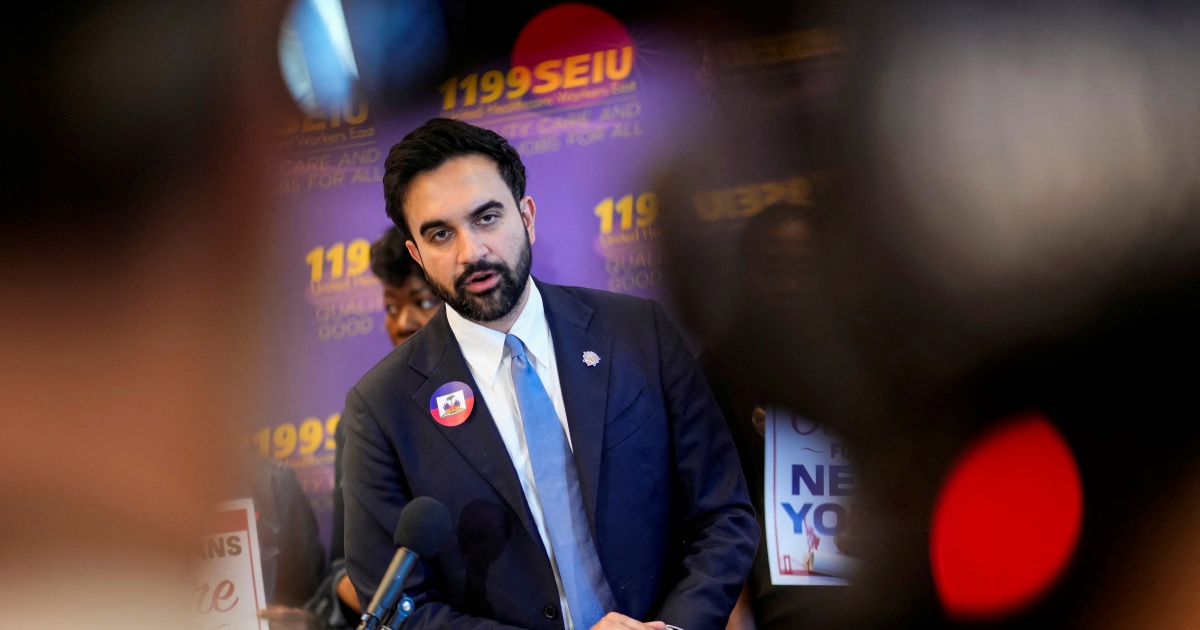
New York Mayor Zohran Mamdani has signalled he is actively considering whether authorities should attempt to apprehend Israeli Prime Minister Benjamin Netanyahu during an impending United Nations General Assembly session, according to remarks published in an interview on Saturday. The possibility has immediately sparked a fierce diplomatic row, with Netanyahu's representatives issuing a strongly-worded response to the New York official's contemplation of such action.
The mayor's public deliberation centres on the International Criminal Court warrant against Netanyahu, which has become a focal point of international legal and political tension. The prospect of a sitting head of government being detained on ICC grounds whilst attending a major international forum raises unprecedented questions about the jurisdiction of host nations, diplomatic immunity, and the enforcement mechanisms of international justice bodies. For Malaysia and other nations that have signalled support for the ICC's mandate, this episode underscores the deepening fault lines between different interpretations of international law and state sovereignty.
Mamdani's willingness to discuss the arrest scenario publicly reflects broader tensions within New York's political landscape, where significant portions of the electorate hold strong views about the Israeli-Palestinian conflict. The Democratic-led city has long been a focal point for both pro-Israeli and pro-Palestinian activism, making it a particularly fraught venue for hosting Netanyahu during the UN session. The mayor's open consideration of enforcement actions signals that some American municipal leaders view the ICC warrant as a matter of genuine legal significance rather than symbolic posturing.
The timing of this discussion proves particularly delicate, as major international forums require careful diplomatic choreography. UN General Assembly sessions bring together leaders from nearly every nation, and the prospect of high-profile arrests could disrupt the carefully managed protocols that allow such gatherings to proceed. The United States, as host nation of the UN headquarters in New York, typically extends certain protections to visiting leaders, though legal scholars debate the exact boundaries of such protections when ICC warrants are involved.
Neither Netanyahu nor his government has ever submitted to ICC jurisdiction, and Israel has long rejected the legitimacy of investigations into Israeli military and state conduct. The prime minister's camp has now responded with characteristic sharpness to Mamdani's remarks, emphasising their view that such actions would constitute unjust persecution and an affront to Israeli sovereignty. This defensive posturing reflects the high stakes both sides perceive in allowing precedents to develop around ICC enforcement in the American context.
For Southeast Asian observers, particularly those in Malaysia where support for Palestinian causes remains significant and where the government has previously engaged with ICC processes, this situation illustrates how the weaponisation of international legal mechanisms generates backlash from powerful states. The incident demonstrates that enthusiasm for international justice frameworks often collides with pragmatic state interests and the protocols required to maintain functional diplomatic relations. When legal processes align with geopolitical conflicts, political leaders must navigate between supporting the rule of law and maintaining working relationships with major powers.
The New York situation also exposes fractures within Western democracies regarding Israel policy. American municipal leaders feeling emboldened to publicly discuss enforcement of ICC warrants represents a notable shift in how some American political figures are approaching the Israeli-Palestinian question. What might have been unthinkable in previous decades—a major American city official discussing the arrest of an Israeli prime minister on ICC grounds—is now openly debated, reflecting evolving constituencies and changing international norms around accountability for military actions.
Neither the mayor's office nor Netanyahu's representatives have provided detailed legal analysis of how such an arrest might actually be executed or what precedents exist for such action. The practical mechanics of arresting a sitting prime minister during a UN session, and the international legal ramifications that would follow, remain murky. Some experts suggest that diplomatic immunity protections might shield Netanyahu from arrest, while others argue that ICC warrants operate in a grey zone where host-nation obligations and international court directives create genuine legal complexity.
The broader context involves ongoing investigations into Israeli military operations, humanitarian conditions in Gaza, and alleged violations that have led to the ICC warrant. Netanyahu and his supporters have characterised such investigations as part of a broader campaign to delegitimise Israel and its security operations, while supporters of the ICC process view it as an essential mechanism for ensuring that no state is above international accountability. This fundamental disagreement about the purpose and legitimacy of the ICC will likely colour all subsequent discussions about enforcement.
For Malaysia and regional nations monitoring developments in international law and geopolitics, this episode suggests that the gap between the stated commitments of countries to international justice mechanisms and their willingness to enforce those mechanisms against powerful allies continues to widen. The incident also raises questions about how host nations should navigate competing obligations when major world figures visit, particularly when international legal instruments come into play.
Mamdani's public rumination about arrest scenarios, while perhaps not resulting in actual enforcement action, signals that political pressure around this issue is intensifying in ways that governments cannot easily ignore. Whether the mayor ultimately pursues such action remains unclear, but the fact that such discussions are now happening in official contexts demonstrates how the Netanyahu ICC warrant has become a legitimate matter of public policy debate rather than remaining confined to international legal circles.

