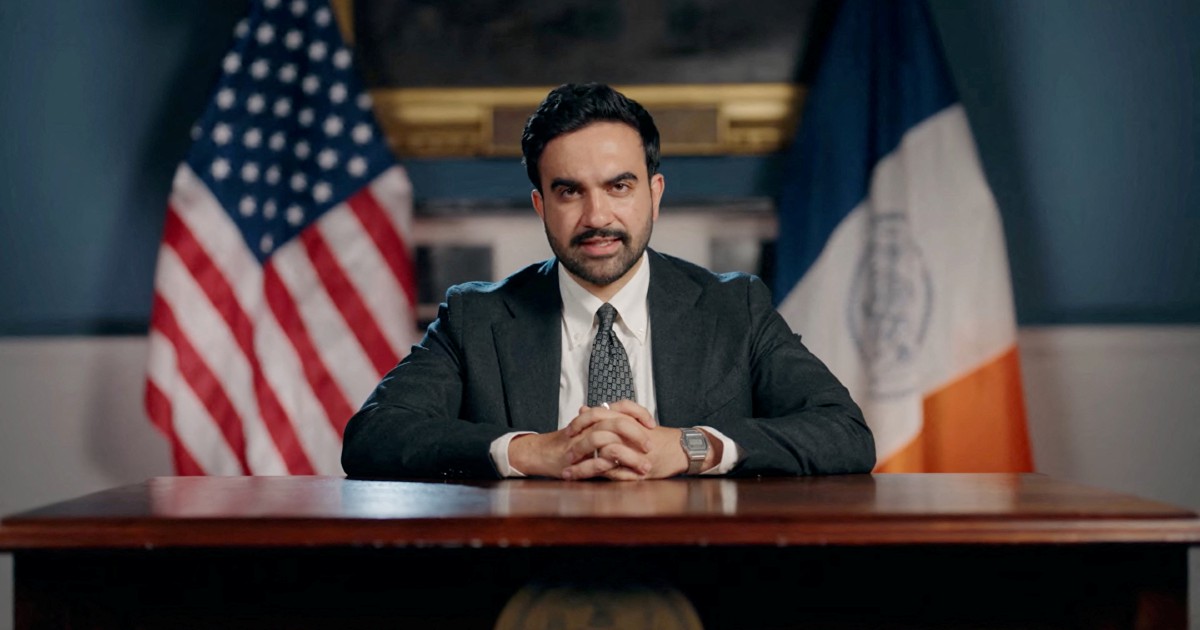
New York Mayor Zohran Mamdani has declared that his city's law enforcement cannot act on the International Criminal Court's warrant for the arrest of Israeli Prime Minister Benjamin Netanyahu, placing responsibility with the United States federal government instead. The statement marks a significant moment in the ongoing tension between international justice mechanisms and domestic legal frameworks within the world's most powerful nation.
The ICC issued arrest warrants earlier this year for Netanyahu and other Israeli and Palestinian officials, citing investigations into alleged war crimes and crimes against humanity. The development created immediate complications for any country with jurisdiction, including the United States, which hosts the United Nations headquarters in New York. International law specialists have long grappled with the practical challenges posed when ICC warrants implicate heads of state or government from major powers.
Mamdani's intervention reflects the reality that arrest warrants issued by The Hague-based international court cannot be executed by local police departments or city governments. Municipal police forces operate under state and federal law, and any attempt to arrest a foreign dignitary would immediately trigger constitutional questions about sovereign immunity, diplomatic protocol, and the separation of powers between local and national governments. The mayor's clarification, while perhaps stating the obvious to legal scholars, addresses public confusion about how international justice mechanisms interact with American governance structures.
The question of whether the United States would honour the ICC warrant has become increasingly fraught. Though the US is not a signatory to the Rome Statute that established the ICC, questions about American obligations under international law have intensified. Federal authorities, including those at the State Department and Department of Justice, hold the actual discretion to determine whether US law would permit or require the arrest of Netanyahu should he enter American territory. This federal responsibility cannot be delegated to cities or states.
For Malaysian and Southeast Asian observers, this situation illuminates broader tensions within the international legal order. Many regional nations, including Malaysia, are ICC member states and have long advocated for universal accountability before international courts. Yet the handling of Netanyahu's warrant—and the apparent reluctance of the world's dominant superpower to enforce it—demonstrates the persistent inequality in how international justice operates. Powerful nations frequently shield their allies from ICC processes, while smaller countries face greater pressure to comply with international warrants.
The diplomatic dimensions are equally complex. Netanyahu's potential visit to the United States for purposes such as addressing Congress, attending the United Nations General Assembly, or conducting bilateral meetings would put federal authorities in an extraordinary position. Should the US executive branch choose to enforce the warrant, it would dramatically worsen relations with Israel, America's closest Middle Eastern ally. Conversely, failing to enforce it would expose the ICC's enforcement mechanisms as fundamentally compromised when powerful states resist cooperation.
Mamdani's statement also reflects the political sensitivities surrounding the Israeli-Palestinian conflict within American cities. New York has witnessed significant pro-Palestinian demonstrations and activism, particularly following recent escalations in Gaza. Local officials must navigate the competing demands of their diverse constituencies—many of whom hold strong views on Israel-Palestine issues—while respecting established diplomatic and legal norms. By clarifying that enforcement falls to federal authorities rather than the city, Mamdani deflects local political pressure while correctly identifying where actual legal authority resides.
The broader question of US compliance with ICC warrants remains unresolved and politically explosive. The United States government has historically maintained an ambivalent relationship with the ICC, declining to join while occasionally cooperating with specific investigations. The Netanyahu warrant forces Washington to confront this contradiction directly. Should federal officials decide the warrant can be honoured under existing US law, they would need to reconcile this with America's traditional resistance to ICC authority and its long-standing protection of Israeli officials from international legal processes.
International legal experts have noted that the status of Netanyahu's warrant also depends on whether he holds sitting head-of-government status when potentially entering US territory. International customary law has long extended immunities to sitting heads of state and government officials, though this principle is increasingly contested. If Netanyahu's government falls and he is no longer prime minister, his legal exposure would change dramatically. Conversely, if he remains in office, arguments for immunity become stronger, even among those who recognize the seriousness of the underlying allegations.
For the Southeast Asian region, this situation offers important lessons about the limitations of international justice mechanisms when great powers choose not to cooperate. Malaysia and other regional nations that have invested in the ICC as a vehicle for accountability must reckon with evidence that such institutions function unevenly. The Netanyahu warrant case demonstrates that international courts depend entirely on member states' willingness to enforce their decisions, leaving powerful non-members and powerful members alike largely beyond reach.
The standoff also illustrates how municipal authorities in major cities increasingly find themselves on the frontlines of international crises despite lacking the constitutional authority to resolve them. New York serves as host to countless international institutions, dignitaries, and legal processes, yet its local government has virtually no power over how the federal system responds to international demands. Mamdani's clarification, while technically accurate, underscores the complex layering of authority in federal systems and the ultimate concentration of foreign policy decision-making at the national level.
As the situation evolves, the world watches to see whether American federal authorities will chart their own course regarding ICC warrants or defer once again to diplomatic considerations. The Netanyahu case will likely establish precedent for how the United States handles future ICC warrants, particularly for allied officials. Until that moment comes, New York's mayor has correctly identified that the decision lies with Washington, not with New York City.

