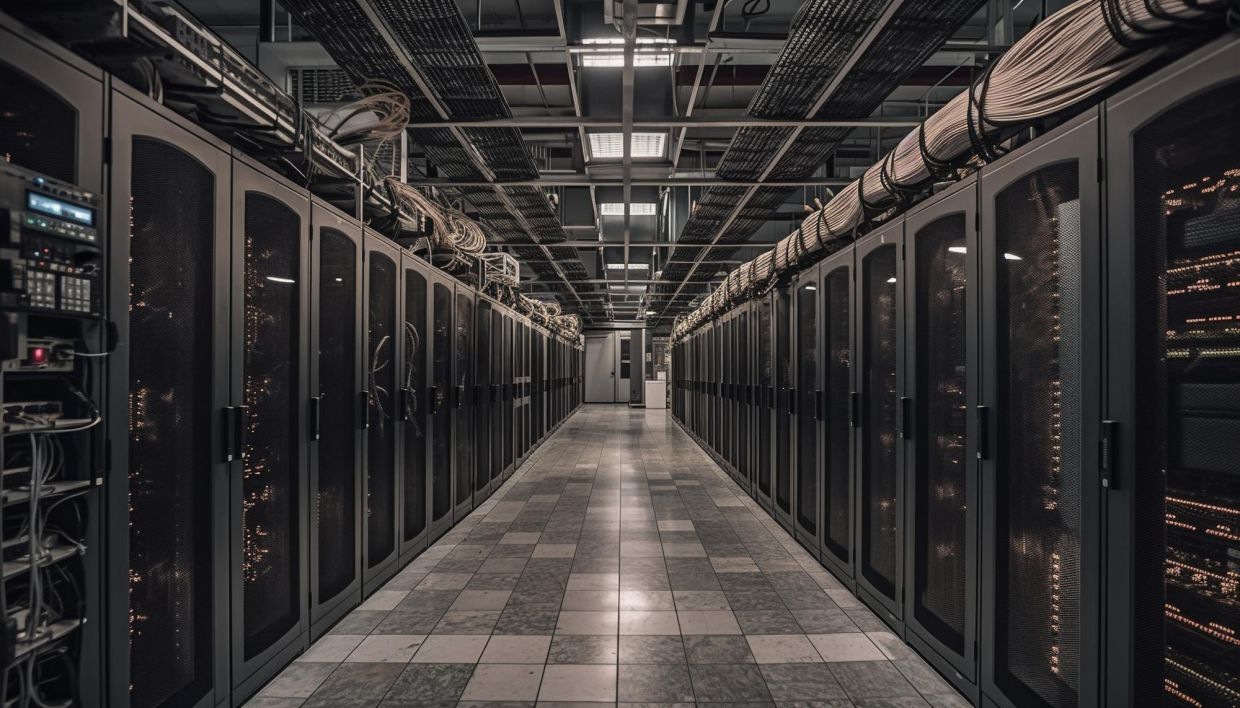
New York has become the first American state to impose a comprehensive pause on new large-scale data centre construction, marking an escalation in the growing tension between technological advancement and environmental stewardship. Governor Kathy Hochul announced the moratorium, which took effect immediately, targeting facilities capable of generating at least 50 megawatts of power—sufficient electricity to sustain tens of thousands of residential households. The suspension provides breathing space for state authorities to establish comprehensive regulatory frameworks governing the rapidly proliferating sector, which has been supercharged by insatiable demand for artificial intelligence infrastructure and applications.
The decision reflects deepening public anxiety about data centres' intensive resource consumption and their localised impacts. Beyond their prodigious appetite for electrical power, which threatens to destabilise regional grids and elevate consumer energy costs, these facilities consume vast quantities of water for cooling systems, generate considerable noise pollution, and paradoxically create surprisingly modest employment opportunities relative to their scale and capital investment. Environmental advocates and concerned residents have increasingly mobilised against proposed projects, recognising that the true costs—measured in depleted aquifers, compromised air quality, and strained infrastructure—fall disproportionately on neighbouring communities whilst profits concentrate among technology corporations.
Governor Hochul articulated the administration's reasoning with explicit clarity, emphasising that New York's historical commitment to fostering innovation must be balanced against ensuring tangible benefits for ordinary citizens. She noted that uncontrolled data centre proliferation threatens to inflate utility expenses for households already confronting cost-of-living pressures, whilst simultaneously threatening critical natural resource sustainability. Her administration intends to position New York as a jurisdiction establishing the most stringent data centre standards anywhere in the nation, ensuring that when major technology corporations leverage the state's advantages to achieve commercial success, the local population shares proportionally in those gains rather than bearing disproportionate environmental and economic burdens.
Beyond the moratorium announcement, Hochul signalled intent to pursue legislative action repealing existing sales tax exemptions benefiting enormous data centre projects. These preferential tax treatments, originally designed to attract technology investment, have increasingly come under scrutiny as awareness grows regarding data centres' environmental footprint and their limited capacity to generate employment compared to other industrial sectors. The revenue implications alone suggest that repealing these exemptions could redirect substantial public funding toward addressing infrastructure strain and environmental remediation in affected areas.
New York's decisive statewide action distinguishes itself from the fragmented patchwork of local restrictions already adopted by numerous American cities and counties operating within less coordinated policy frameworks. While municipal-level prohibitions have provided localized protection, they lack the systemic coherence and enforcement capacity that statewide regulation enables. However, the state legislature itself had previously passed its own moratorium proposal in June featuring a more stringent 20-megawatt threshold, which Hochul declined to sign, with her office indicating the legislation required substantive revisions before executive approval became feasible. The current moratorium, whilst more permissive regarding project scale, nevertheless represents executive leadership on an issue commanding increasing voter attention.
The opposing perspective emanates from technology sector advocates and business interests who contend that construction restrictions ultimately prove counterproductive to broader national prosperity. They argue that blocking data centre development undermines employment creation in communities seeking economic revitalisation, particularly regions experiencing industrial decline. Moreover, proponents maintain that restrictive American policies regarding data centre infrastructure cede competitive advantage to China in the escalating geopolitical competition for artificial intelligence dominance and technological supremacy. This framing presents the debate as fundamentally strategic—characterising environmental caution as national weakness.
US data centre construction investment has accelerated dramatically in recent years, with technology giants channelling tens of billions of dollars into infrastructure expansion meant to satisfy explosive demand for cloud computing services and artificial intelligence computational capacity. This investment surge reflects genuine technological necessity; the computational requirements of modern AI systems far exceed historical norms. Yet this intensity of development has generated corresponding public backlash, particularly in regions where data centre concentration threatens to overwhelm existing utility infrastructure and environmental capacity.
Comparable regulatory tensions have emerged elsewhere. Maine experienced a similar collision between environmental concerns and economic opportunity when the legislature passed a moratorium in April, only to have Democratic Governor Janet Mills veto the measure. Mills' decision reflected sympathy toward a specific community where a proposed data centre represented potential economic salvation following catastrophic mill closure, illustrating how data centre disputes become entangled with legitimate anxieties about economic abandonment and regional inequality.
The environmental implications prove increasingly difficult to dismiss. Research by Allianz Trade calculated that data centres generated 286 million tonnes of carbon dioxide emissions during 2025 alone. More concerning, artificial intelligence workloads already represent between 15% and 20% of total data centre electricity consumption currently, yet projections suggest this proportion could expand to 40% by 2030. This trajectory indicates that data centre energy demand—and associated environmental consequences—will intensify dramatically within coming years unless fundamental efficiency improvements or renewable energy transitions occur simultaneously.
For Southeast Asian observers, New York's approach carries significant implications. The region hosts increasingly important data centre infrastructure serving regional AI and cloud computing markets, with countries including Singapore, Malaysia, and Indonesia competing to attract technology investment. New York's regulatory precedent may influence how regional policymakers calibrate their own incentive structures and environmental standards. Additionally, as global technology companies navigate divergent regulatory environments across jurisdictions, Southeast Asian nations may find themselves competing not merely on cost and geography but on their willingness to accommodate infrastructure needs whilst simultaneously addressing environmental commitments.
The broader trajectory suggests data centre regulation will intensify globally as environmental awareness strengthens and climate commitments become binding policy constraints. Technology companies will increasingly confront the reality that unlimited expansion cannot proceed without addressing underlying sustainability concerns. New York's moratorium, rather than representing an endpoint in policy development, likely signals the beginning of more systematic regulatory architecture emerging across multiple jurisdictions, potentially reshaping investment decisions and infrastructure distribution patterns throughout North America and beyond.

