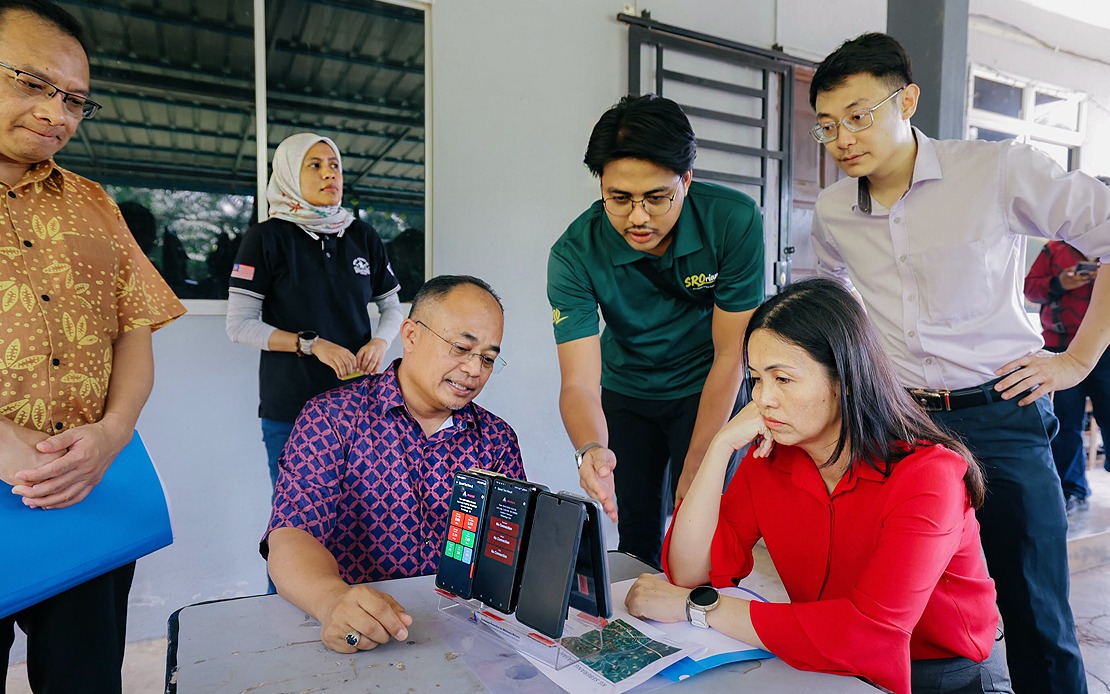
Residents of Kampung Seberang Gajah in Tangkak can expect relief from long-standing internet connectivity problems following confirmation that a dedicated telecommunications tower will be constructed in the locality. The announcement came during a visit by Deputy Communications Minister Teo Nie Ching, who conducted a survey of network performance in the village alongside officials from the Malaysian Communications and Multimedia Commission (MCMC) and representatives from service providers.
The persistent connectivity issues plaguing the community stem from inadequate coverage provided by two existing telecommunications towers situated nearby. Despite their presence, these installations have proven insufficient to meet the communications demands of residents across the surrounding areas, leaving families and businesses struggling with unreliable service that hampers economic activity and access to essential digital services. This situation mirrors challenges faced across rural Malaysia, where infrastructure gaps continue to disadvantage communities outside major urban centres.
To remedy this deficiency, the MCMC has directed telecommunications service providers to establish a new tower specifically designed to serve the Kampung Seberang Gajah locality. The regulator's intervention reflects growing recognition that piecemeal coverage from adjacent installations cannot substitute for dedicated local infrastructure tailored to specific community needs. This approach represents a more targeted response to rural connectivity gaps than relying solely on existing networks to expand their reach.
Teo indicated that planning for the new facility has advanced considerably, with detailed construction specifications already finalised. The telecommunications company responsible for the project is now navigating the permit approval process with relevant local authorities before ground work can commence. This administrative phase, while necessary for ensuring compliance with local regulations and land use requirements, represents a potential bottleneck that could delay deployment to residents eager for service improvements.
Acknowledging the urgency facing the community, Teo explicitly called for acceleration of both the permit approval timeline and subsequent construction activities. Her statement underscores official recognition that delays in infrastructure projects disproportionately harm residents in underserved areas, who have already endured extended periods without adequate service. The Deputy Minister's emphasis on expedited processes suggests ministerial-level attention to preventing bureaucratic delays from further postponing relief to affected families.
The survey conducted by Teo alongside MCMC's Southern Region Office director Rizal Abd Malek and other officials provided on-ground assessment of current network performance conditions. Such visits serve dual purposes: they generate data for regulatory decision-making while demonstrating government commitment to addressing localised service deficits. The presence of State Affairs Sector Head Bukhari Yahya alongside communications officials reflected a whole-of-government approach to the connectivity challenge.
The Kampung Seberang Gajah situation exemplifies broader Malaysian challenges with digital infrastructure equity. While urban centres benefit from dense competitive infrastructure, rural and semi-rural communities often depend on service providers' voluntary coverage decisions. Government intervention through MCMC directives represents necessary counterbalance to market forces that naturally prioritise higher-density, more profitable coverage areas. The regulatory mandate for this new tower demonstrates official willingness to step beyond advisory roles to compel infrastructure investment in underserved zones.
Once operational, the new tower should deliver material improvements to internet stability and speed for residents, enabling fuller participation in digital economy opportunities. Enhanced connectivity facilitates remote work possibilities, improved access to online education resources, digital financial services, and e-commerce participation. For small businesses and entrepreneurs in rural communities, reliable broadband represents transformative infrastructure comparable to historical investments in roads and electricity networks.
The timeline for tower construction remains uncertain pending permit approval, though Teo's public urgency suggests departmental expectations of relatively prompt processing. Typically, such projects require environmental assessment, land coordination, and local authority clearance—processes that can extend several months if procedural bottlenecks emerge. However, official high-level attention may expedite normally lengthy approval cycles in this instance, potentially enabling construction commencement within coming months rather than years.
This development carries implications beyond Kampung Seberang Gajah itself. Successful deployment of the new tower could establish precedent for regulatory intervention in other underserved Malaysian communities facing similar coverage deficits. The MCMC's directive approach and ministerial emphasis on swift implementation suggest potential policy template for addressing digital divide concerns across rural Malaysia. As digital services become increasingly central to education, healthcare access, and economic opportunity, infrastructure equity emerges as critical development priority alongside traditional utilities.
The involvement of multiple telecommunications companies in the survey process indicates recognition that solution requires industry coordination rather than unilateral provider action. Service providers brought together by regulators can collectively address coverage gaps more efficiently than individual companies pursuing separate expansion strategies. This collaborative framework, guided by MCMC oversight, represents modern regulatory approach balancing commercial interests with public service objectives in essential infrastructure sectors.

