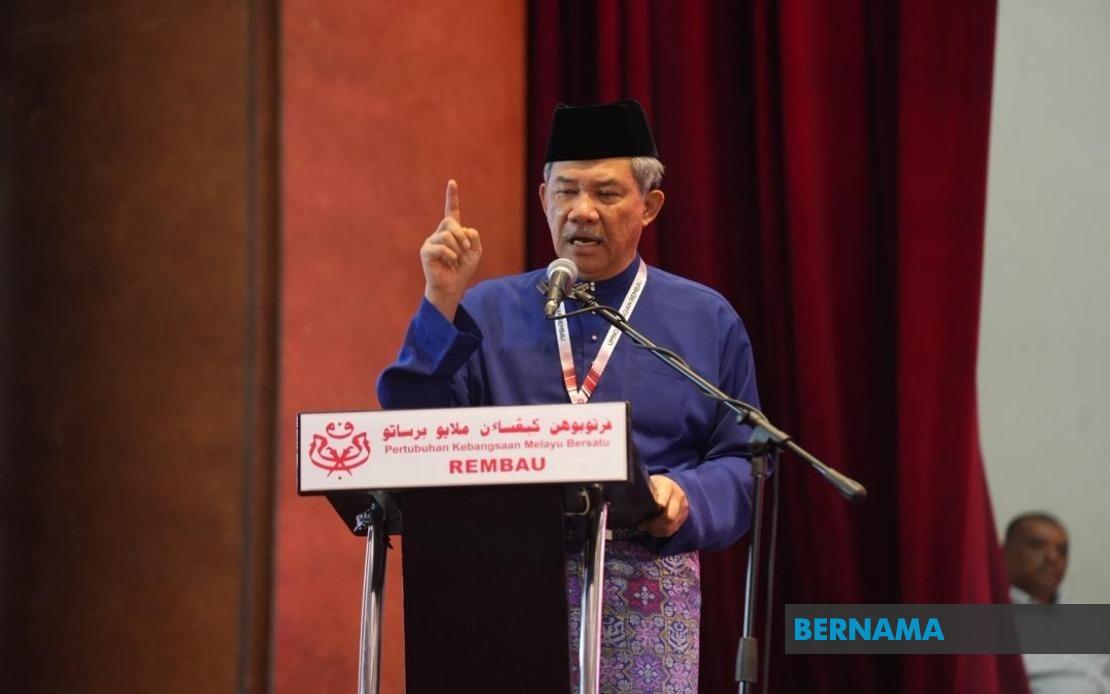
The 10 freshly sworn-in members of Negeri Sembilan's State Executive Council have received the backing of Barisan Nasional Deputy Chairman Datuk Seri Mohamad Hasan, who voiced assurance in their readiness to shoulder the responsibilities of their respective positions. Speaking after the oath-taking ceremony held before Yang Dipertuan Besar Tuanku Muhriz Tuanku Munawir at Istana Besar Seri Menanti, Mohamad stressed that the new officeholders would deliver quality support to the Menteri Besar and execute their mandates with professionalism as they embark on their tenure.
In his remarks to journalists in Seremban, the Rantau State Assemblyman outlined his vision of what effective executive council membership entails. He characterised the role as fundamentally serving as a conduit between the administrative machinery of government and the people themselves—a two-way channel through which policy intent flows outward and community sentiment flows inward. This interpretation reflects the growing emphasis in Malaysian state governance on ensuring that decision-making remains tethered to grassroots realities rather than operating in isolation from public concerns.
Communication forms a critical pillar of the exco member's function, according to Mohamad's assessment. The newly appointed officials must ensure that whenever the state government launches a policy initiative, the rationale, mechanics, and expected benefits are conveyed to the citizenry in language they can comprehend. Without this effort, even well-intentioned programmes risk suffering from poor uptake or public misunderstanding, undermining their effectiveness. The challenge is particularly acute in Negeri Sembilan's mixed urban-rural landscape, where audiences have diverse information needs and access patterns.
Equally important, Mohamad emphasised, is the exco's obligation to harvest feedback from the community. These officials are positioned to gather grievances, ideas, practical suggestions, and broader public sentiment from their respective constituencies and areas of responsibility. This information becomes invaluable intelligence that feeds back into the decision-making cycle, enabling the state administration to refine and enhance its policies with real-world input. In effect, exco members serve as sensors, alerting the government to emerging problems or opportunities that might otherwise remain invisible in Putrajaya or state-level corridors.
The structural architecture underpinning successful portfolio management demands that each exco member develop substantive familiarity with the departments and agencies falling under their charge. Mohamad underscored the necessity for comprehensive briefings that allow the newly appointed officeholders to gain command of the operational details, administrative workflows, and functional mandates of their respective domains. Without this grounding, officials risk making decisions or issuing directives based on incomplete understanding, potentially creating friction or inconsistency in government operations.
Mohamad also identified the maintenance of constructive working relationships between exco members and government departments as essential to smooth policy implementation. The exco does not operate in a vacuum but must coordinate with the permanent administrative apparatus. Where tensions or misalignments develop between elected officeholders and career bureaucrats, implementation falters. His remarks suggest an awareness of institutional friction that can arise and an implicit call for professionalism and goodwill from both sides to ensure the machinery of state governance functions harmoniously.
The formal oath-taking ceremony conducted before the Yang Dipertuan Besar marked the official commencement of the exco members' tenure, lending constitutional legitimacy to their appointment. This ceremonial dimension, rooted in Negeri Sembilan's constitutional framework, reinforces the gravity of the responsibility they are assuming. The invocation of the state's traditional ruler in this process also underscores the subordination of executive authority to the constitutional order that prevails in Malaysia's monarchical system.
During the same engagement with the press, Mohamad addressed speculation surrounding a potential election in Melaka State. He was circumspect in his response, noting that such a decision ultimately rests with the Melaka Chief Minister and whether that official chooses to request the Yang Dipertua Negeri to dissolve the state assembly. His measured tone reflected the sensitivity surrounding premature election discussions and the deference to individual state leadership that characterises the federal structure of Malaysian politics. The non-committal stance also suggests that any such decision remains contingent upon factors that have not yet crystallised.
For Negeri Sembilan specifically, the induction of new exco members represents a refresh of the state's governing team, potentially bringing fresh perspectives to portfolio management. The state, one of Malaysia's smaller and less densely populated entities, nonetheless plays a significant role as a corridor between Kuala Lumpur and the southern regions. Its economic development, infrastructure positioning, and social stability contribute to broader regional dynamics. The capacity and competence of its exco members thus carry implications beyond state borders.
Moreover, the public expressions of confidence from senior BN figures like Mohamad carry both reassuring and cautionary undertones. While designed to project stability and capable governance, such statements also raise the benchmark against which public performance will be measured. Should the exco subsequently encounter criticism or underperformance, these prior declarations of confidence could become liabilities for party leadership, making accountability more acute.
The ecosystem of state-level governance in Malaysia has evolved considerably as administrations have professionalised and public expectations for efficiency have grown. Today's exco members operate in an environment where social media amplifies criticism, where opposition parties mount sustained scrutiny, and where the public is increasingly sophisticated in evaluating government effectiveness. The remarks by Mohamad reflect this reality, emphasising not just the ceremonial aspects of office but the substantive work required to maintain public confidence and deliver tangible improvements in citizens' lives.

