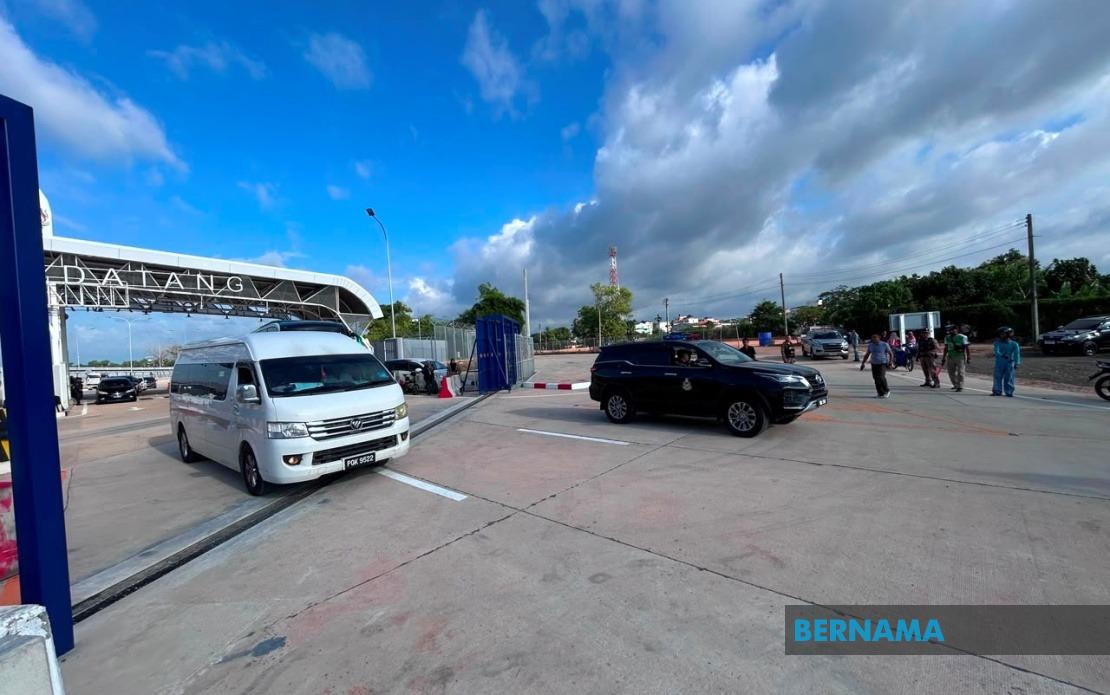
A freshly constructed road connection between Kedah's Bukit Kayu Hitam Immigration, Customs, Quarantine and Security Complex and Thailand's Sadao Customs, Immigration and Quarantine Complex began operations this morning, marking a significant upgrade to one of Southeast Asia's busiest land borders. The route commenced accepting traffic at 6 am, with initial reports confirming smooth vehicular flow and broad acceptance among early users crossing into Thailand.
The infrastructure project represents a strategic initiative to address longstanding congestion challenges that have plagued this critical international gateway, particularly during peak travel periods. Weekend journeys and public holiday migrations have historically created severe bottlenecks at the primary Malaysia-Thailand crossing point, frustrating both leisure travellers and commercial operators. Authorities anticipate the parallel facility will substantially distribute traffic volumes and compress travel intervals for the thousands of daily users who traverse this vital economic corridor.
Prime Minister Datuk Seri Anwar Ibrahim and his Thai counterpart Anutin Charnvirakul jointly ceremonially inaugurated the new connection yesterday, signalling the bilateral commitment to enhancing regional connectivity. The development reflects broader strategic interests in strengthening people-to-people movement and commercial flows between the two neighbouring economies, where cross-border trade, tourism, and labour mobility constitute essential economic components for both nations.
Mohd Faizal Ahmad, a 42-year-old motorist from Penang encountered at the site, described the new arrangement as substantially more organized and convenient for Malaysian travellers heading toward Thailand. He specifically noted that school holiday periods previously generated particularly acute congestion scenarios, and he expressed optimism that the alternative routing would meaningfully reduce travel delays during high-traffic windows. His observations reflect common frustrations among regular cross-border commuters who have endured years of inefficient border infrastructure.
Heavy vehicle operators report particularly significant operational improvements under the new configuration. Wan Muhammad Shahid Wan Mohd Desa, a 28-year-old lorry driver, highlighted that the expanded road accommodates systematic segregation between commercial trucks and passenger vehicles approaching the Thai checkpoint. Previously, goods vehicles departing the Bukit Kayu Hitam complex shared identical routes with standard cars toward the Danok crossing, creating cascading delays throughout the entire cross-border movement system. The separation protocol now implemented promises notably smoother logistics operations for the substantial volume of bilateral commercial traffic.
Thailand-based travellers equally welcomed the enhanced facilities at the upgraded Sadao checkpoint. Mat Li Daman, a 59-year-old Thai national with regular Malaysia-crossing experience, praised the newly constructed complex for its significantly expanded capacity compared to the cramped original installation. Beyond mere physical dimensions, he highlighted operational improvements in documentation processing zones and vehicle entry declaration procedures, which collectively reduce administrative friction for international travellers. His comments underscore how infrastructure quality directly impacts user experience across border checkpoints that process hundreds of thousands of annual crossings.
The Sadao CIQ facility's architectural and operational redesign specifically targets the processing inefficiencies that characterized earlier configurations. Larger declaration areas, improved information systems, and better traffic flow design all contribute to reducing the average border-crossing duration. For frequent cross-border commuters, including workers, traders, and families with relatives across the frontier, even modest time savings translate into substantial cumulative benefits when multiplied across regular journeys.
From a regional economic perspective, this infrastructure enhancement carries implications extending well beyond individual traveller convenience. The Malaysia-Thailand border represents a critical node within broader ASEAN trade networks, with billions of dollars in annual bilateral commerce depending on efficient logistics corridors. Reduced border-crossing delays translate directly into lower operational costs for transport companies, diminished supply-chain disruptions for manufacturers relying on cross-border inputs, and enhanced competitiveness for regional businesses competing in intra-Southeast Asian markets.
Tourism flows similarly benefit from streamlined border procedures and reduced travel friction. Both Malaysia and Thailand depend substantially on cross-border holiday traffic, with significant populations in northern Malaysia regularly visiting Thai destinations, while Thai tourists comprise a major component of Malaysian visitor arrivals. Faster, more predictable border-crossing experiences encourage spontaneous and weekend leisure travel that economically benefits hospitality and retail sectors throughout the borderland regions of both countries.
The road infrastructure also reflects evolving approaches to border management that prioritize facilitation alongside security. Modern checkpoint design balances thorough customs and immigration procedures with efficient throughput, recognizing that unnecessarily burdensome borders ultimately encourage informal crossings and undermine official trade statistics. The Bukit Kayu Hitam-Sadao connection demonstrates how strategic infrastructure investment can enhance both operational efficiency and regulatory compliance simultaneously.
Looking forward, this development potentially catalyzes broader bilateral discussions regarding additional connectivity improvements. Discussions surrounding rail connections, improved telecommunications infrastructure at border zones, and harmonized customs procedures could logically follow this successful road project. Such comprehensive enhancement would position the Malaysia-Thailand border as a model cross-border gateway within ASEAN, attracting intra-regional investment and tourism while reducing operating costs for legitimate commercial activities.
The early positive reception from diverse user categories—commuter drivers, commercial operators, and international travellers—suggests the infrastructure addressing genuine operational constraints rather than theoretical planning assumptions. Sustained monitoring of traffic patterns, travel times, and congestion metrics will provide concrete data regarding the project's actual impact. Such evidence could inform future border infrastructure investments throughout Southeast Asia, where similar congestion challenges affect multiple international crossings requiring modernization and expanded capacity.

