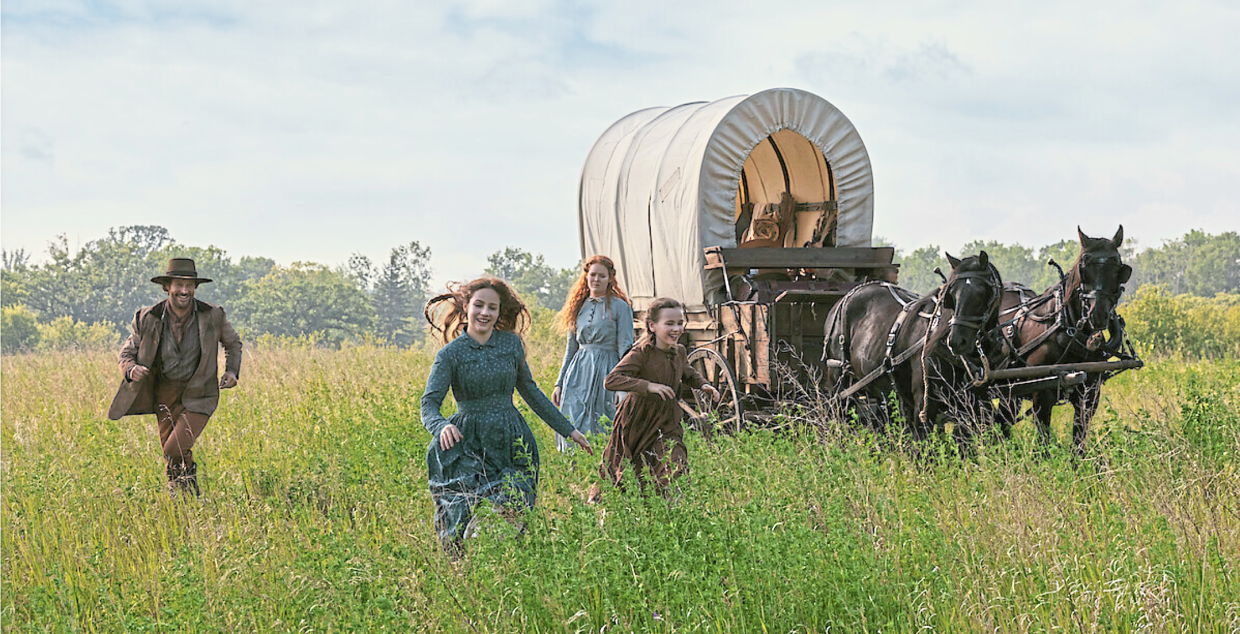
Netflix is breathing new life into one of American literature's most enduring stories with a 2026 adaptation of Little House on the Prairie, the classic 1935 novel that has captivated readers and television audiences for nearly a century. At the heart of this contemporary reimagining is Australian actor Luke Bracey, who takes on the role of Charles Ingalls, the steadfast father figure who guides his family through the unpredictable frontier landscape. The casting represents a significant moment for the beloved narrative, as the streaming giant seeks to introduce the Ingalls family saga to audiences who may have missed the iconic 1970s NBC television series that ran until 1983, while simultaneously updating the storytelling approach for modern sensibilities.
What distinguishes Netflix's version from previous iterations is its deliberate engagement with the complex historical realities underlying the pioneering narrative. Rather than presenting a sanitised account of westward expansion, the production explicitly incorporates both settler-colonial and Indigenous perspectives, acknowledging the multifaceted dimensions of 19th-century American frontier settlement. This thematic expansion reflects broader cultural conversations about how historical stories are told and whose voices are centered in those narratives, making the adaptation particularly relevant for contemporary viewers grappling with questions of historical accuracy and representation.
Bracey's commitment to the material stems from his conviction that the fundamental appeal of the story transcends generational boundaries. Speaking about his interpretation of the patriarch, the actor emphasised that the enduring popularity of the Ingalls family narrative is neither coincidental nor arbitrary. The core strength of the story, according to Bracey, lies in its portrayal of a family unit navigating persistent challenges while maintaining their emotional bonds and mutual devotion. This universal theme of familial resilience in the face of adversity resonates across cultural contexts and time periods, explaining why readers across multiple generations have connected with Laura Ingalls Wilder's original work.
The supporting cast brings additional depth to the ensemble, with the Ingalls household completed by promising young talent. Alice Halsey portrays Laura Ingalls, the central protagonist whose perspective anchors much of the narrative, while Crosby Fitzgerald takes on the role of Caroline Ingalls, the maternal presence who helps hold the family together through trials and triumphs. Skywalker Hughes rounds out the main family unit as Mary, Laura's older sister, whose character provides important counterpoint to Laura's experiences and personality.
Among the cast members, Alice Halsey has reflected thoughtfully on the gender dynamics embedded in the source material, recognising that Laura's experience as a young girl in the 1800s was fundamentally constrained by the social structures and expectations of the era. Halsey observed that the historical record reveals stark disparities in educational and social opportunities between boys and girls, with young women denied access to the same learning resources and life paths available to their male counterparts. The actress acknowledged that had she lived in Laura's historical moment rather than the present day, her own aspirations and possibilities would have been severely circumscribed, unable to pursue many of the professional and personal endeavours that define her contemporary existence.
These reflections on gender inequality are not mere nostalgic observations but rather serve as implicit critiques of historical patriarchal systems, inviting viewers to contemplate how far society has progressed and what work remains unfinished. By foregrounding these conversations about gender through the casting and promotional messaging, Netflix signals that this adaptation will examine not only the superficial details of frontier life but also the underlying power structures that shaped individual opportunities and family dynamics.
The production is steered by Rebecca Sonnenshine, who serves as creator and showrunner, bringing her creative vision to this substantial undertaking. The decision to hand the reins to Sonnenshine suggests a commitment to a particular storytelling approach, one that presumably balances fidelity to the source material with contemporary narrative sensibilities and thematic concerns. Her leadership of the project indicates that the creators view this as more than a straightforward period drama but rather a vehicle for exploring substantive historical and social questions.
Remarkably, Netflix has already greenlit a second season of the adaptation before the first season premiere, a vote of confidence that speaks to the perceived strength of the project and the enduring cultural appetite for this particular story. This renewal decision suggests that executives view the reboot not merely as a tentative experiment but as a potentially significant addition to the streaming platform's prestige television catalogue. The early renewal also provides the creative team with security and continuity, enabling them to construct a longer-term narrative arc rather than compressed storytelling designed to resolve all plot threads within a single season.
Skywalker Hughes, reflecting on the filming experience and the opportunity to continue with the character, expressed enthusiasm about returning to the production to deepen the family's story. The actor's comments about creating meaningful memories during the first season's production and anticipating future seasons suggest a collaborative environment where cast members are invested not only in their individual roles but in the collective project. This sense of ensemble camaraderie often translates into stronger on-screen dynamics and more authentic portrayals of family relationships, which is essential for a narrative so heavily dependent on the emotional authenticity of familial bonds.
For Malaysian viewers and Southeast Asian audiences more broadly, this adaptation arrives at a moment when questions about historical representation, colonial narratives, and diverse storytelling are increasingly prominent in public discourse. The Ingalls family's experience of frontier settlement, reexamined through contemporary lenses that acknowledge Indigenous dispossession and systemic inequality, offers parallels to regional conversations about how histories of colonisation, migration, and settlement shape contemporary societies. The explicit incorporation of these perspectives in a major streaming production signals a meaningful shift in how mainstream entertainment addresses historical complexity, moving beyond simplified heroic narratives toward more nuanced, multifaceted accounts of the past.

