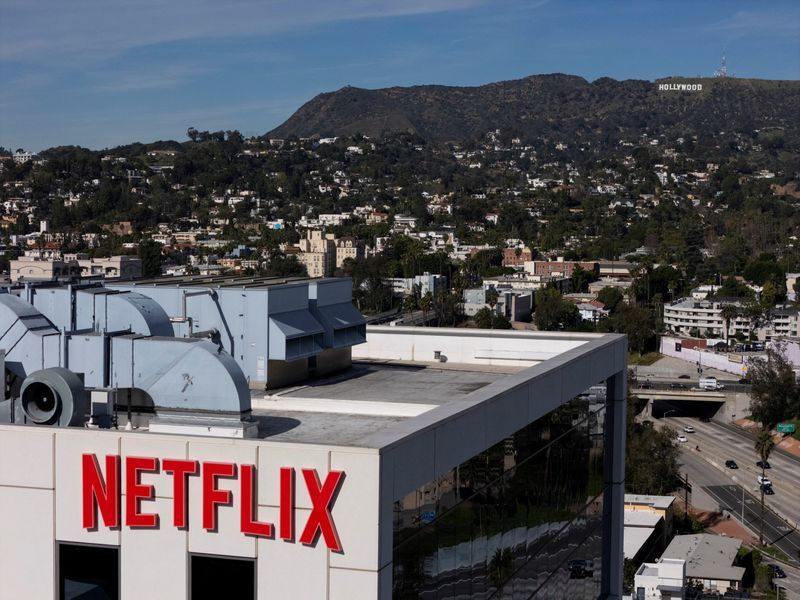
Netflix heads into its second-quarter earnings announcement on Thursday facing one of its most critical moments since the pandemic boom, with investors demanding concrete evidence that the streaming pioneer can navigate a landscape increasingly crowded with competitors and sustain profitability from a massive installed base. The company's market value has contracted by more than 20 percent this year, reflecting deep-seated concerns about the long-term viability of its growth projections at a time when traditional broadcasters, YouTube, and mobile platforms are fragmenting viewer attention across multiple services.
The financial expectations analysts have set for Netflix's quarterly performance paint a picture of deceleration. Revenue is forecast to climb 13.6 percent to $12.59 billion, marking the slowest pace of growth in more than a year, whilst adjusted earnings per share are anticipated at 79 cents. These numbers, whilst still respectable by most standards, underscore the inherent challenges in scaling a platform that has already achieved extraordinary market penetration in developed nations. The question hanging over the company is whether the strategies deployed over recent years—particularly aggressive pricing increases and the controversial crackdown on password sharing—have extracted maximum value from existing subscribers without depressing the overall subscriber base.
Central to Netflix's future outlook is the maturation of its advertising business, which management and investors alike view as essential to reigniting growth once the contribution from pricing actions and subscriber gains begins to plateau. Projections suggest advertising revenue will reach approximately $705.8 million for the quarter, yet this performance has disappointed relative to earlier expectations. Ross Benes, an analyst at Emarketer, recently acknowledged that forecasts for the advertising division have been revised downward, citing slower-than-anticipated adoption and monetisation rates. This shortfall is particularly consequential because Netflix's leadership has repeatedly signalled that advertising represents the primary lever for unlocking incremental revenue without further alienating an increasingly price-sensitive subscriber base.
In response to these headwinds, Netflix has begun diversifying beyond its core streaming and advertising operations into live events and entertainment experiences that can command premium sponsorship and advertising rates. The company has reportedly explored acquiring rights to the FIFA World Cup in the United States for 2030 and 2034, a move that would differentiate its offering and provide a platform for advertisers willing to pay extraordinary sums for access to massive simultaneous audiences. Parallel negotiations regarding the acquisition of Letterboxd, an online film platform beloved by cinephiles and critics, suggest management is considering niche content communities as potential assets capable of attracting and retaining sophisticated viewers who might otherwise churn.
Yet these tactical manoeuvres cannot fully mask a more fundamental challenge that has emerged from recent audience research. Bloomberg News reported this month that Netflix subscribers demonstrate notably weaker inclination to watch subsequent seasons of even wildly popular programmes, with acclaimed series such as The Night Agent and Beef experiencing audience declines of 50 percent or greater between their inaugural and follow-up seasons. This pattern suggests that Netflix's content strategy, despite billions in spending, has produced many one-hit wonders rather than franchises capable of sustaining long-term subscriber engagement and repeat viewing—a critical metric for justifying content expenditure.
Analyst Paolo Pescatore at PP Foresight articulated the broader predicament facing Netflix: the company has transitioned from a disruptive upstart challenging entrenched media incumbents into a dominant incumbent itself, yet dominance from a vastly expanded base introduces entirely different challenges. When Netflix was growing at 30 or 40 percent annually with hundreds of millions of new subscribers yet to be acquired, investor patience with experimentation and efficiency losses was high. Now, with penetration rates in wealthy markets approaching saturation, every percentage point of growth becomes exponentially harder to achieve, and marginal content investments must clear far higher bars for return on investment.
The broader strategic question confronting Netflix involves calibrating the balance between defending its substantial installed base of over 250 million subscribers whilst simultaneously pursuing growth in emerging markets where competition from local and regional players is fierce. This dual imperative has led to tactical inconsistency: maintaining premium pricing in developed markets to fund content production whilst competing on affordability in developing regions, introducing advertising tiers that cannibalise full-price subscriptions, and pursuing acquisitions of platforms and entertainment properties that may or may not integrate meaningfully with core operations.
Speculation has circulated regarding the potential acquisition of Comcast's NBCUniversal spinoff, though some observers expect Netflix to pursue a series of smaller, strategic investments rather than another transformative megadeal. The company's acquisition record presents a mixed picture: whilst its purchase of Millarworld and Skydance Television have contributed niche content, larger acquisitions have often struggled to maintain their cultural distinctiveness or audience loyalty within Netflix's algorithmic ecosystem. This history suggests management may favour smaller, targeted acquisitions that provide specific capabilities or content streams without requiring wholesale integration into the Netflix platform.
For Malaysian viewers and the broader Southeast Asian market, Netflix's earnings and strategic direction carry particular significance. The region represents a substantial growth opportunity but also fierce competition from local players such as iQiyi, Tencent Video, and increasingly aggressive incumbent broadcasters upgrading their streaming capabilities. Netflix's ability to demonstrate sustained growth and advertising momentum will directly influence its willingness to invest in original content tailored to Southeast Asian audiences, localised marketing efforts, and service improvements such as enhanced offline viewing or regional payment options. A prolonged period of investor scepticism and cost-cutting could disproportionately impact the company's expansion in lower-income markets where profitability timelines stretch longer and competitive pressures remain intense.
The earnings call on Thursday will likely feature management attempting to reframe the narrative around growth, emphasizing long-term revenue potential from advertising, the strategic value of live content, and the geographic opportunities in developing markets. Investors, however, will scrutinise specific guidance on subscriber additions, advertising monetisation rates, and capital expenditure plans. The streaming wars have fundamentally shifted from a growth-at-all-costs mentality to demands for demonstrable profitability and sustainable business models. Netflix's ability to thread this needle—delivering growth without sacrificing margins—will determine whether the company can restore investor confidence or continues its trajectory of declining valuation and intensified competitive pressure.

