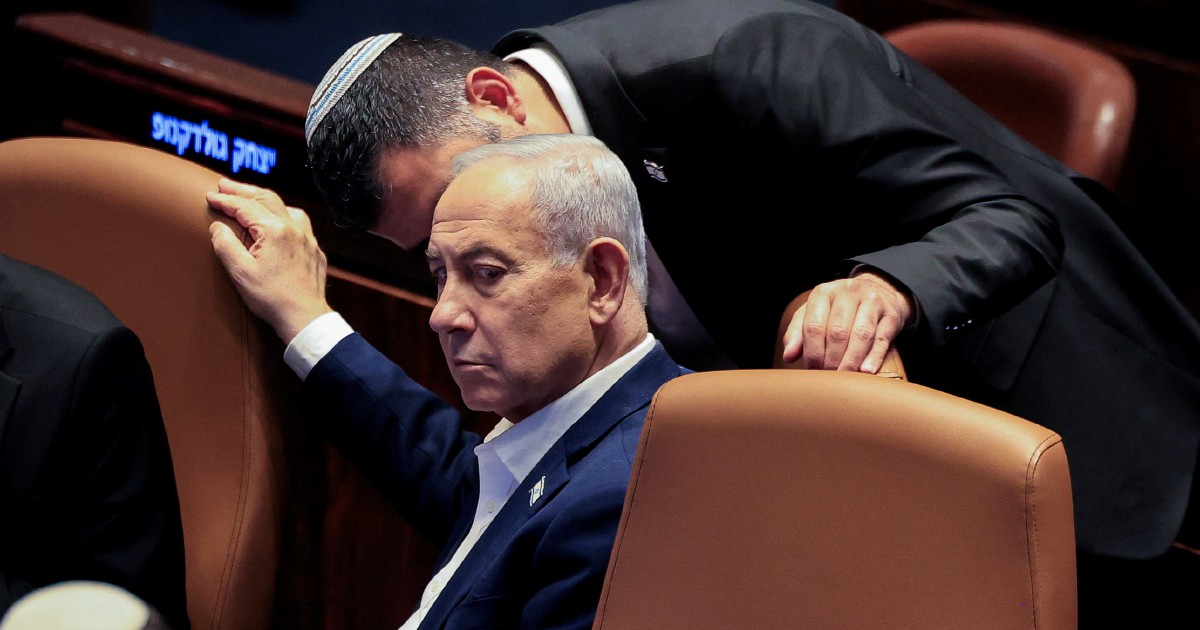
Israeli Prime Minister Benjamin Netanyahu's office launched a fierce rebuke against New York Mayor Zohran Mamdani on Sunday, following controversial remarks from the city leader about potentially detaining the Israeli premier during an upcoming United Nations summit. The statement from Netanyahu's office underscores rising diplomatic tensions surrounding the Israeli leader's planned visit to New York, where he is scheduled to address the international community at the world body's general assembly.
Mamdani's comments, made in the context of discussions about international law and accountability, suggested he was contemplating whether circumstances might warrant taking action against Netanyahu. The remark proved inflammatory enough to draw immediate and forceful pushback from the Israeli government, signalling how fraught such visits have become amid the ongoing Middle East conflict. The timing of the mayor's statement, released ahead of Netanyahu's appearance at the United Nations, appears designed to inject the arrest question directly into diplomatic proceedings in one of the world's most prominent international forums.
The controversy reflects deeper currents within American politics regarding Israel's conduct in Gaza and the occupied territories. Progressive voices in New York City, including within the municipal government, have grown increasingly vocal about calls for international accountability mechanisms to address what they characterize as potential violations of international law. Mamdani's position as New York's chief executive gives his words particular weight, as the city serves as home to the United Nations headquarters and attracts global attention whenever disputes involving international law and diplomatic immunity arise.
Netanyahu's visits to the United States have become flashpoints for political contention in recent years, with American Jewish communities, civil rights organizations, and pro-Palestinian advocacy groups all mobilizing around his appearances. The arrest question touches on a sensitive legal and diplomatic issue: whether sitting heads of government can be detained while on United States soil, particularly when visiting international institutions located within American borders. These questions intersect with longstanding debates about immunity, jurisdiction, and the politicization of international legal mechanisms.
The International Criminal Court has issued arrest warrants for various individuals, and questions about Netanyahu's potential accountability under international law have circulated widely among legal scholars and human rights organizations. However, the United States is not a signatory to the ICC, which complicates any potential enforcement action on American soil. Israel, similarly, does not recognize ICC jurisdiction. These legal technicalities do not necessarily prevent domestic political figures like Mamdani from raising the issue, though doing so risks diplomatic fallout and accusations of overstepping municipal authority into foreign policy matters.
For Malaysian observers and other Southeast Asian readers, this episode illustrates how deeply polarized debates over the Israeli-Palestinian conflict have become within Western democracies, particularly in urban centres with large and politically engaged populations. New York City, as a global hub for finance, media, and culture, amplifies such controversies far beyond its municipal borders. The spectacle of a city mayor publicly contemplating the arrest of a visiting foreign leader—regardless of the legal merits of such action—demonstrates how internal American political divisions increasingly spill into international relations and diplomatic protocol.
The controversy also underscores the challenge facing democratic governments when managing simultaneous obligations: respecting diplomatic immunity and the protocols governing international summits, while responding to domestic constituencies demanding accountability for policies they view as violating international humanitarian law. Netanyahu's office, by pushing back forcefully against Mamdani's remarks, seeks to reinforce the principle that visiting leaders cannot be subjected to arrest for political reasons, and that such suggestions undermine the stability of international diplomacy.
Regionally, the incident carries implications for how Southeast Asian nations approach their own relationships with Israel and with international accountability mechanisms. As growing numbers of countries engage with the ICC and debate the appropriate balance between sovereignty and international justice, the Netanyahu-Mamdani exchange serves as a cautionary tale about the tensions that can emerge. It also highlights how American domestic politics, played out through municipal and federal governance structures, can influence global diplomatic relationships and international law discussions.
The statement from Netanyahu's office did not elaborate extensively on the legal or diplomatic grounds for its condemnation, focusing instead on the apparent violation of norms surrounding visiting dignitaries and international summits. This rhetorical approach aims to reframe Mamdani's comments as aberrant rather than engaging directly with the substantive questions about accountability that underlie the mayor's remarks. Whether Netanyahu ultimately attends the UN summit and how the controversy evolves in the coming days will likely determine whether this becomes a fleeting diplomatic spat or a prolonged confrontation affecting broader US-Israel relations.

