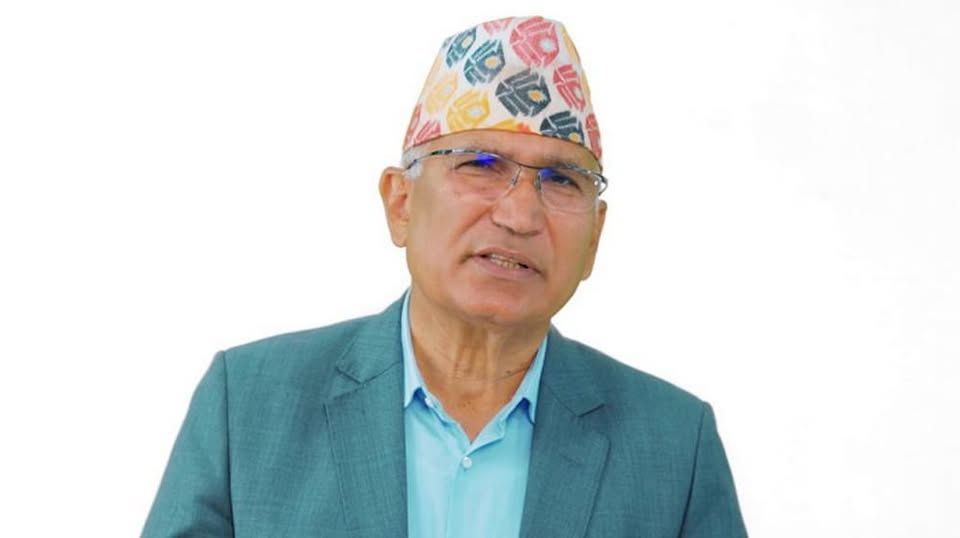
Nepal's police force has detained Bishnu Paudel, a former finance minister and prominent Communist party figure, as part of an ongoing money-laundering investigation. The arrest, confirmed by officers on Tuesday, represents the latest in a series of prosecutions targeting senior officials since public upheaval and anti-corruption sentiment reshaped the country's political landscape. Paudel, who also serves as vice-chair of the Communist CPN-UML party, was taken into custody on Monday, according to Nepal Police spokesman Abhi Narayan Kafle, who indicated that investigators would examine the extent of his involvement in illicit financial activities.
The timing of Paudel's arrest underscores the trajectory of Nepal's political transformation over recent months. Prime Minister Balendra Shah, who rose to prominence as a rapper before entering politics, secured his position in March following electoral success that centred on pledges to combat systemic corruption. His administration has prioritized investigations into misconduct among former officeholders, a commitment that resonates with voters fatigued by decades of governance failures. Yet the aggressive pursuit of charges against opposition figures has generated considerable friction, with critics arguing that the crackdown risks becoming weaponized against political rivals rather than addressing corruption comprehensively.
Opposition leaders have mounted a vigorous defence against what they characterize as selective justice. KP Sharma Oli, the former prime minister whose government collapsed during the 2025 uprising, dismissed Paudel's arrest as a "political stunt" designed to undermine his party's standing. Oli himself experienced detention in March, just one day after Shah assumed office, alongside his former interior minister Ramesh Lekhak. Both men were interrogated regarding their alleged involvement in the government's violent suppression of the 2025 protests, which claimed at least 76 lives and wounded more than 2,500 people. Following roughly two weeks in custody, the pair were released without facing formal charges, though each maintains innocence and attributes responsibility for the bloodshed to circumstances beyond their control.
The Communist CPN-UML party has adopted a measured public posture while signalling deep frustration with what it views as government overreach. Niraj Acharya, the party's publicity chief, stated that party members would respect legal proceedings while simultaneously accusing the Shah administration of discriminatory practices. This careful balancing act reflects the precarious position of Nepal's opposition, which must preserve its credibility as a law-abiding force while mobilizing supporters who perceive injustice in the current administration's approach to accountability. The tension between genuine anti-corruption efforts and partisan score-settling has become a defining feature of Nepal's post-uprising political environment.
The circumstances precipitating the 2025 protests reveal the combustible combination of issues simmering beneath Nepal's surface. What began as public backlash against a temporary social media restriction evolved into a broader eruption of discontent rooted in pervasive corruption and economic stagnation. For years, ordinary Nepalis have witnessed their country's substantial resources dissipate through graft at every administrative level, while living standards deteriorate and opportunities remain scarce. The government's violent response to the uprising, which drew international condemnation, galvanized further anger and catalyzed demands for comprehensive reform. Shah's subsequent electoral victory capitalized on this desire for change, yet his administration's execution of anti-corruption measures has proven contentious.
Beyond the Paudel case, evidence of corruption continues to surface across multiple sectors. Nepal's anti-graft watchdog, the Commission for Investigation of Abuse of Authority, has filed charges against 16 individuals in connection with an alleged $66 million procurement scam centred on the passport department. Suresh Neupane, commission spokesman, described the matter as involving "embezzlement in e-passport procurement," indicating that even supposedly secure government functions have been compromised by criminal misappropriation. Such revelations underscore the pervasiveness of corruption throughout Nepal's bureaucratic structures and suggest that the current crackdown, whatever its political dimensions, addresses genuine systemic malfeasance.
For Southeast Asian observers, Nepal's struggle with anti-corruption governance carries instructive implications. The region encompasses numerous nations attempting to balance accountability demands with political stability, often encountering similar tensions between genuine reform and opportunistic prosecution. Malaysia, Indonesia, and Thailand have each grappled with how to pursue justice against corrupt former officials without appearing vindictive or destabilizing. Nepal's experience illustrates how transitional justice mechanisms, when deployed inconsistently, risk undermining public confidence and generating political recrimination that ultimately weakens democratic institutions. The country's challenge lies in establishing credible, impartial frameworks that prosecute misconduct without regard to political affiliation.
The international dimension of Nepal's anti-corruption efforts should not be overlooked. Global observers, particularly development agencies and governments providing financial assistance, scrutinize how Nepal manages reform commitments. Selective prosecution or perceived political weaponization of anti-corruption authorities can jeopardize foreign investment, bilateral relations, and access to development financing. Nepal's government therefore operates under external as well as internal pressure to demonstrate that its anti-graft initiatives reflect genuine institutional commitment rather than factional advantage. This accountability to international standards may ultimately serve as a constraint on the most egregious forms of political abuse, though it remains insufficient to entirely eliminate such temptations.
The broader implications of Nepal's trajectory extend to questions about state capacity and institutional resilience. A nation emerging from political turbulence faces the difficult task of simultaneously pursuing justice, rebuilding public trust, and establishing functional governance. When anti-corruption mechanisms become entangled with partisan conflict, they often lose effectiveness as instruments of systemic reform. Public cynicism regarding selective prosecution can paradoxically protect guilty parties by delegitimizing the oversight process itself. Nepal's leadership must therefore navigate carefully between demonstrating resolve against genuine malfeasance and preserving the institutional credibility necessary for sustained reform efforts over years or decades.