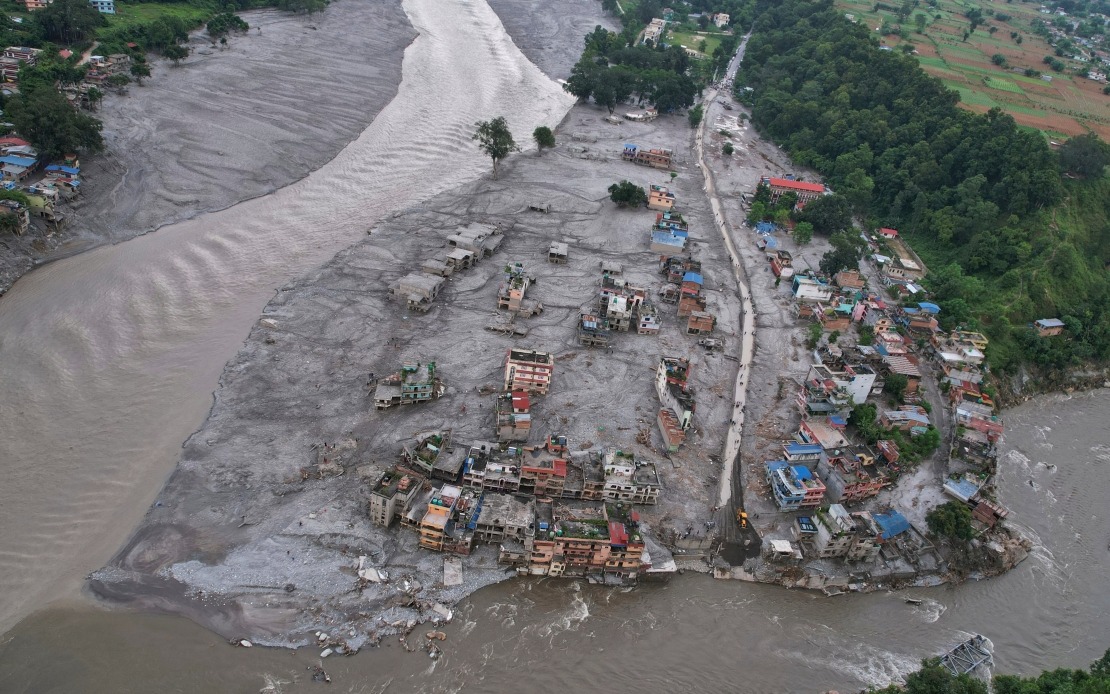
Nepal is taking a cautious approach to international rescue offers in the wake of catastrophic flooding that has devastated its central and northern regions, signalling it will evaluate the ground situation before committing to additional foreign search and rescue operations. The South Asian nation has already accepted assistance from Australia, China, India and South Korea—all countries with personnel stationed at hydroelectric facilities affected by the disaster—but remains noncommittal about broadening this coalition of helpers.
The flooding struck with devastating force on Wednesday morning when the Bhote Koshi and Trishuli rivers burst their banks in Rasuwa district, triggering one of the region's worst natural disasters in recent memory. The initial wave of destruction has since claimed at least 633 lives across Nepal and China, according to media reports emerging over the weekend, while nearly 3,000 individuals remain unaccounted for, a figure that includes hundreds of foreign nationals trapped in the disaster zone.
Among the most pressing concerns is the plight of more than 900 workers employed across 11 hydropower projects, many still under construction, who became trapped in tunnels and underground powerhouses when the floodwaters surged through the valleys. These workers, a significant proportion of whom are foreign nationals, remain largely inaccessible to rescuers, creating an urgent but logistically complex rescue challenge that has prompted neighbouring nations to mobilise their specialist teams.
Malaysia stands among the growing list of countries offering humanitarian assistance to Nepal, with Prime Minister Datuk Seri Anwar Ibrahim previously indicating that Malaysia is actively coordinating aid delivery mechanisms and exploring the possibility of dispatching the Malaysian Special Search and Rescue Team (SMART) to support ongoing operations. The offer reflects the region's growing interdependence and Malaysia's established reputation for rapid humanitarian response in times of crisis across Southeast and South Asia.
However, the Nepalese government is proceeding methodically rather than immediately accepting all offers of external support. According to Mohd Firdaus Azman, the charge d'affaires at the Malaysian Embassy in Kathmandu, Nepal's decision-making process hinges on a comprehensive assessment of current conditions and the actual requirements on the ground. "They informed that they will assess the situation before accepting SAR missions from any other country," he explained to Malaysian media on Saturday, underscoring that Kathmandu wants to ensure any incoming rescue teams complement rather than complicate existing relief operations.
The four nations whose assistance Nepal has already accepted share a common factor: each has significant numbers of nationals working at the affected hydroelectric installations, making their involvement both a practical necessity and a natural extension of their consular responsibilities. This pattern suggests that Nepal may apply similar criteria when evaluating whether to accept support from other nations, potentially prioritising countries with workers or significant economic interests in the flood-affected zones.
The Malaysian Foreign Ministry has been actively tracking the welfare of Malaysian citizens affected by the disaster. As of Saturday evening, 55 Malaysians in Nepal and 36 Malaysians in China remained uncontactable, prompting urgent coordination between Kuala Lumpur's diplomatic missions in the region and Nepalese authorities. The inability to establish contact with these individuals has heightened concern among their families and underscored the communication challenges facing rescue operations in the mountainous terrain devastated by the flooding.
The scale of the humanitarian challenge extends far beyond the missing workers. The destruction wrought by the flooding has rendered entire communities inaccessible, with damaged infrastructure severely hampering both rescue efforts and the delivery of emergency supplies. The mountainous topography of the affected regions in central and northern Nepal, combined with the extent of the environmental damage, means that rescue operations will necessarily be protracted and resource-intensive, requiring precisely coordinated international collaboration.
For Malaysia and other Southeast Asian nations monitoring Nepal's situation, the unfolding disaster underscores the region's shared vulnerability to natural hazards and the importance of maintaining robust frameworks for rapid humanitarian response. Nepal's measured approach to accepting additional assistance, while potentially frustrating to eager donors, reflects a recognition that uncoordinated rescue efforts can sometimes impede rather than assist existing operations—a lesson learned from previous international disaster responses across Asia.
The coming days will be critical in determining whether Nepal's assessment of the situation will result in expanded international participation in search and rescue efforts. Malaysia's SMART team, along with contingents from other nations, remains in a state of readiness, waiting for the green light that would authorise their deployment to Nepal's flood-stricken regions to join the race against time to locate missing persons and prevent further loss of life.

