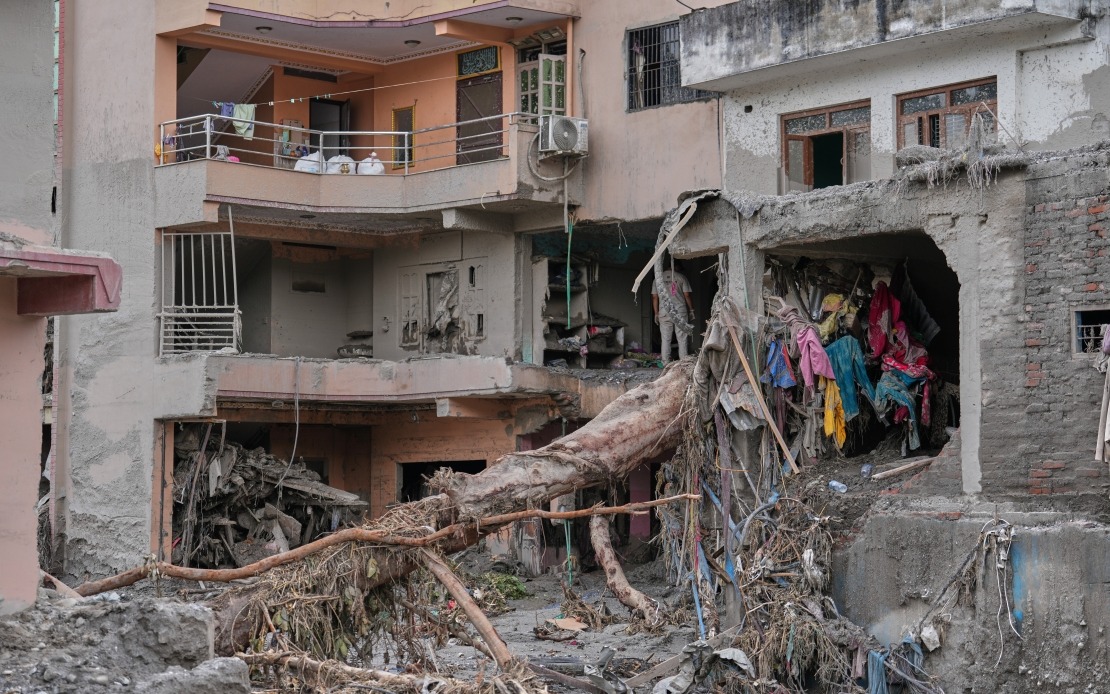
Nepal's government has committed to a careful identification protocol for victims of the devastating floods that struck the Bhotekoshi River on August 26, pledging to preserve DNA and other forensic evidence from bodies that remain unidentified. The decision reflects the magnitude of the disaster and the authorities' recognition that many families may seek confirmation of their loved ones' fates long after the immediate crisis subsides. Prime Minister Balendra Shah outlined this approach in a statement shared on social media, indicating that unidentified remains will be managed by the government only after comprehensive data collection that could facilitate future identification efforts.
The flooding in the Bhotekoshi River corridor has emerged as one of Nepal's most destructive natural disasters in recent years, with the deluge triggering widespread devastation across a sprawling geographic area. The initial inundation, occurring just five days before the government's public statement, unleashed torrential waters that swept through villages and towns with little warning, destroying homes, agricultural land, and critical infrastructure. The impact extended across eight districts, with particularly severe damage reported in Rasuwa, Nuwakot, and Dhading, where the river runs through densely populated valleys vulnerable to flash flooding.
By the time authorities issued their updated statement, recovery operations had yielded a grim toll. Officials confirmed that 675 bodies had been recovered from various locations spanning Rasuwa, Dhading, Nuwakot, Chitwan, Tanahun, Gorkha, Nawalparasi East, and Nawalparasi West. This distribution across eight districts underscores the disaster's extensive reach and the coordination challenges facing search and rescue teams operating across mountainous terrain with compromised roads and communication infrastructure. Many bodies were discovered in remote areas, complicating identification efforts and necessitating transportation to central facilities where proper forensic analysis could be conducted.
The government's decision to preserve DNA samples and ancillary identifying evidence represents a significant departure from traditional burial practices in Nepal, where swift funeral rites according to Hindu and Buddhist customs are culturally important. This modern forensic approach acknowledges that immediate identification is not feasible for all deceased, particularly those whose bodies have been severely damaged by water and debris. By implementing DNA preservation protocols, authorities are establishing a database that can facilitate delayed identifications when family members seek answers or when body recovery continues in subsequent weeks.
The Bhotekoshi River, which runs through some of Nepal's most mountainous terrain, is particularly prone to catastrophic flooding during monsoon season. The August 26 deluge followed what reports indicate was unusually intense rainfall concentrated in a relatively short timeframe, overwhelming the river's capacity and triggering massive secondary landslides that deposited additional debris into residential areas. The narrow river corridors through which communities are built leave little room for flood mitigation, placing villagers in an inherently vulnerable position when water levels surge unexpectedly.
For Malaysian and regional observers, this disaster carries lessons about Southeast Asia's own flood vulnerability. Many areas across Malaysia, Thailand, Cambodia, and Laos face similar geographical and climatic risks, particularly in river valleys subject to monsoon intensification. The coordination challenges Nepal faces in managing mass casualty incidents following natural disasters—particularly in remote areas with limited infrastructure—mirror difficulties that could confront other countries in the region during comparable emergencies. The forensic infrastructure required for mass identification after disasters remains underdeveloped across much of South and Southeast Asia.
The decision to preserve biological evidence also signals Nepal's growing sophistication in disaster management protocols. International organizations and donor agencies have invested significantly in strengthening Nepal's institutional capacity following previous major earthquakes, and those investments appear to be influencing how the country now manages complex humanitarian crises. The DNA preservation approach reflects standards increasingly expected by international humanitarian bodies and bereaved families seeking definitive confirmation of their relatives' fates.
Nepal's announcement occurred amid ongoing search operations, with the expectation that additional bodies would continue to be recovered from debris piles and river channels as waters receded and rescue teams penetrated more remote areas. The government's transparent communication about its procedures appears designed to assure bereaved families that remains would be handled respectfully and with attention to scientific protocols that would preserve the possibility of future identification. This messaging becomes particularly important in a society where families' cultural and religious imperatives to quickly perform final rites may conflict with the need for forensic analysis.
The scale of this disaster—675 confirmed bodies recovered across multiple districts—qualifies it among Nepal's most significant recent catastrophes. The psychological and economic impact on affected communities will persist long after recovery efforts conclude, particularly in agricultural areas where the flooding destroyed crops and livestock essential for family survival. As Nepal coordinates the management of unidentified remains, it is simultaneously confronting the broader humanitarian challenge of providing relief, rehabilitation, and reconstruction support across multiple severely impacted districts.

