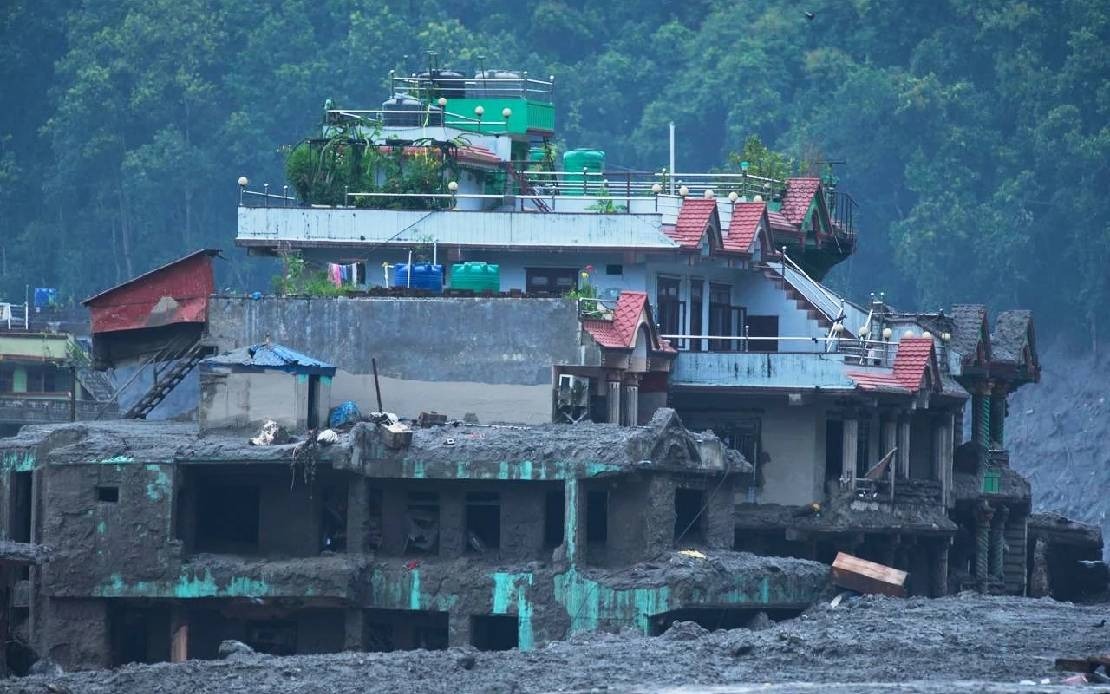
Nepal is confronting one of its most severe natural disasters in recent years following Wednesday's catastrophic flood, which originated from a glacier collapse in the Himalayan frontier bordering Tibet. The impoverished nation of 30 million people, already stretched by infrastructure challenges and limited resources, is now appealing urgently to the international community for both technical expertise and substantial financial assistance to manage the immediate crisis and chart a path toward recovery. Authorities suspended active search and rescue operations on Saturday as inclement weather and low visibility hampered efforts to locate survivors in the affected mountainous terrain.
The scale of destruction remains staggering. The deluge claimed at least 626 lives across Nepal, with seven additional deaths recorded in China's Tibet region. The wall of rock, ice, mud and other debris obliterated critical infrastructure including buildings, bridges and power generation facilities across affected river valleys. What makes this disaster uniquely challenging for Nepali authorities is that nearly 3,000 people remain unaccounted for—approximately 2,426 within Nepal's borders and a minimum of 554 in Tibet's Gyirong County. Among the missing are at least 540 foreign nationals, a substantial proportion of them Hindu pilgrims from India undertaking religious journeys when the disaster struck.
Weather conditions have proven as much an obstacle to recovery as the initial disaster itself. Narendra Pariyar, the senior administrator for Rasuwa district which bore the brunt of the impact, explained that persistent rainfall and dense fog forced authorities to halt ground-based search operations. Instead, officials redirected limited resources toward organising overland transport corridors to evacuate rescued individuals to Kathmandu, the capital, where they can receive medical evaluation and assistance. This logistical challenge underscores how the disaster's secondary effects continue to complicate relief efforts.
The identification and disposition of recovered remains presents another grim dimension to the unfolding tragedy. Because the initial flooding occurred three days prior, many bodies recovered by search teams have undergone significant decomposition, complicating visual identification efforts. Local health authorities have determined that swift burial following essential legal procedures is necessary to mitigate disease transmission risks and forestall potential epidemics in densely populated areas. The Chitwan district administration announced protocols whereby DNA samples would be systematically collected from remains before they are interred in designated open spaces, creating a record for families attempting to locate lost relatives.
In Kathmandu, the human toll manifested in scenes of anguish at Maharajgunj Medical Campus, where recovered bodies were transported. Relatives of the missing congregated at the hospital's gates, studying photographs of remains mounted on walls and boundary structures in desperate attempts to recognise loved ones. Among the 49 bodies initially brought to the facility, medical staff had managed to identify only seven through conventional means. This identification shortfall reflects both the challenges posed by the flood's violence and the absence of systematic disaster-response infrastructure in Nepal.
Another ongoing threat complicated the rescue timeline: a large body of water formed across the Nepal-China border in the immediate aftermath of the flood began overflowing into Nepal's Lhende Khola and Trishuli river systems by Friday. This secondary hazard forced authorities to temporarily halt operations once again. However, by Saturday, Chinese officials reported that satellite imagery indicated the reservoir was gradually draining through natural outflow, diminishing the acute overflow danger. Nevertheless, officials cautioned that two upstream lakes remain under active monitoring, and flood risks will persist until both drainage processes reach completion.
Nepal's Foreign Minister Shisir Khanal articulated the nation's specific requirements when addressing international partners. Rather than requesting general search and rescue reinforcement, he identified critical gaps where Nepal's own capacity proves insufficient: extracting individuals trapped within collapsed tunnels, reopening transportation and communication networks severed by destroyed bridges, conducting forensic identification of remains, performing DNA analysis on a large scale, and managing extended body storage facilities. These specialised requirements demand expertise and equipment that Nepal's government lacks in adequate quantities. Khanal confirmed that formal requests had already been transmitted to willing donor nations.
India has responded decisively to its neighbour's crisis. New Delhi dispatched three flights carrying approximately 60 tonnes of humanitarian supplies including blankets, medicines, food provisions and water purification equipment. Beyond immediate relief materials, India pledged to deploy a specialist tunnel rescue team and medical personnel to address Nepal's identified priorities. The Indian government additionally offered its disaster response force, prefabricated bridge systems and technical teams capable of restoring critical connectivity infrastructure. These commitments reflect both New Delhi's strategic interests and humanitarian obligations toward its culturally intertwined neighbour.
China, whose Tibet region also sustained significant casualties and missing persons, has called for mobilised emergency assistance and coordinated international rescue coordination efforts. However, Beijing has not publicly detailed specific aid commitments or resource deployments to Nepal at this stage. This measured approach possibly reflects the complexity of cross-border disaster coordination and the distinct recovery challenges within Tibet itself.
The financial reconstruction burden facing Nepal appears formidable. Finance Minister Swarnim Wagle disclosed that preliminary government estimates suggest rebuilding requirements falling between US$4 billion and US$5 billion. He cautioned that these figures represent initial approximations pending comprehensive damage assessments currently underway across affected districts. For a nation with limited domestic revenue generation and external debt obligations, mobilising such resources will necessitate substantial international development financing, grants and concessional lending arrangements—adding another layer of complexity to Nepal's recovery trajectory.
The disaster underscores Nepal's acute vulnerability to natural hazards inherent to its Himalayan geography. Climate change impacts on glacier stability, combined with limited infrastructure resilience in remote mountain communities, have created conditions where natural events transform rapidly into humanitarian catastrophes. The flood serves as a stark reminder that South Asian nations' development trajectories remain constrained by geophysical realities and resource limitations that transcend domestic policy choices. For Malaysia and other Southeast Asian nations, Nepal's experience illuminates the imperative for regional cooperation frameworks addressing transboundary disaster risks, technical capacity building and financial mechanisms supporting vulnerable neighbours' resilience development.

