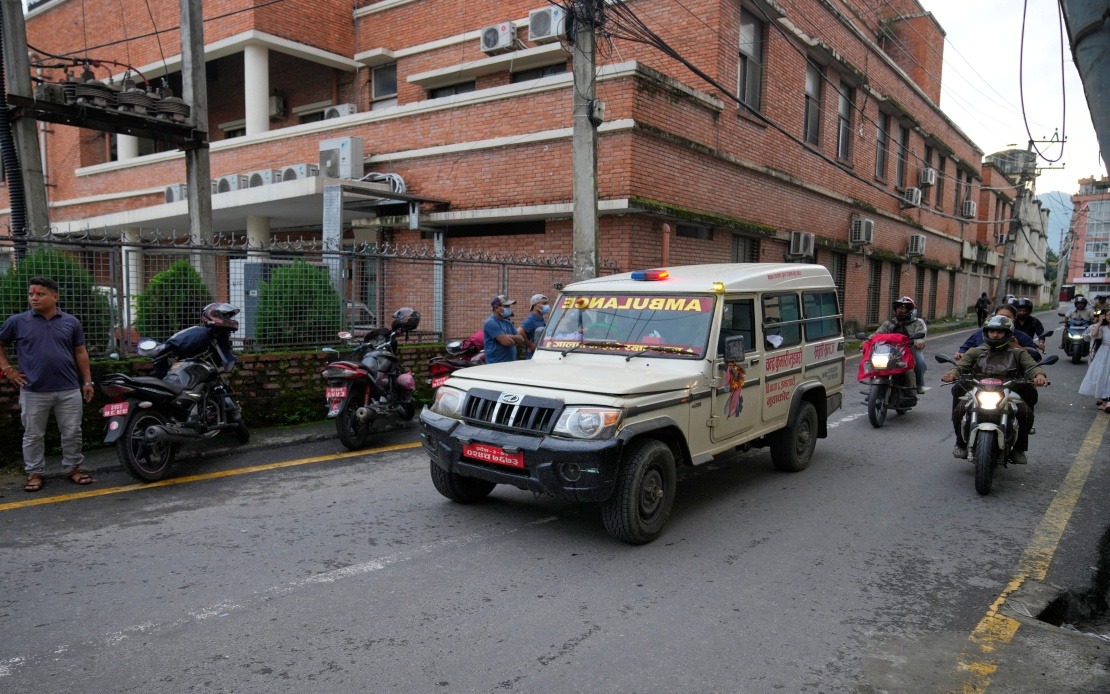
Nepal has successfully extracted 121 foreign nationals from flood-stricken regions following Wednesday's catastrophic inundation of the Bhote Koshi and Trishuli rivers, though the disaster continues claiming lives and displacing communities across the Himalayan region. The toll from the glacial collapse-triggered flooding has risen to approximately 550 deaths, with rescue teams still searching through downstream areas for additional survivors and victims as the scale of devastation becomes clearer.
The rescued foreigners represent considerable international representation in the affected zones, underscoring how the disaster impacted travellers and expatriates navigating Nepal's mountain terrain. According to figures released by Nepal's tourism authority by 5.30 pm local time on Friday, the group comprised 85 Indian nationals, 16 Chinese citizens, nine South Koreans, two Americans, two Russians, two Italians, and single nationals from Belgium, Bulgaria, Portugal, Spain, and Switzerland. The broad geographic distribution of those extracted highlights the region's appeal as a destination for trekkers and adventure tourists from across the globe.
Indian authorities have expressed particular concern about the scale of missing persons from their country, with the Ministry of External Affairs reporting 320 Indian nationals unaccounted for as of Friday. However, among the 63 workers engaged on the Trishuli hydropower project, all were located and confirmed safe, while 21 additional Indian nationals have been transported across the border to India. The situation remains fluid, complicated by the fact that approximately 100 people holding Indian passports but originally from other nations were also missing, many of whom may have been participating in the Kailash Mansarovar pilgrimage through the Xizang region of China when the disaster struck. Approximately 400 Indian nationals in that Chinese border region have been confirmed safe.
Nepal's infrastructure for managing the catastrophe has come under severe strain, particularly regarding the identification of victims and appropriate handling of recovered bodies. Hospitals in the Chitwan and Pokhara districts, which would ordinarily serve as primary response centres, lack the capacity to accommodate the scale of casualties and morgue facilities required for this scale of disaster. Local media reports indicate that identifying deceased individuals has proven extremely challenging, compounding the humanitarian challenge for grieving families seeking information about missing loved ones and the emotional toll across affected communities.
The Nepalese government has mobilised its leadership to coordinate the response, with Prime Minister Balendra Shah convening a Cabinet meeting on Friday specifically to assess the immediate aftermath and chart recovery priorities. In a gesture of solidarity and commitment, Shah and his Cabinet colleagues pledged to contribute one month's salary each to the Prime Minister's Natural Disaster Relief Fund, directing these contributions toward supporting comprehensive flood-relief initiatives across affected districts.
Regional powers have swiftly mobilised assistance, recognising the humanitarian crisis transcends national borders. India has dispatched two substantial consignments of humanitarian aid totalling 47.5 tonnes and arranged for a third aircraft to depart Friday carrying additional relief materials. This coordinated logistics response demonstrates the importance of rapid bilateral cooperation in disaster scenarios affecting shared mountainous geography and interconnected populations. Pakistan's Prime Minister Shehbaz Sharif also engaged directly with his Nepalese counterpart via telephone, conveying condolences and pledging emergency relief assistance, further illustrating the region's recognition of collective responsibility during humanitarian emergencies.
The triggering mechanism—a Himalayan glacial collapse—raises broader concerns about climate-related hazards facing the region. Rapid glacial retreat and instability have become increasingly frequent across the Hindu Kush Himalayan range, presenting emerging risks to communities downstream and to those traversing these mountains. Such events underscore how climate change manifests in geographically concentrated impacts on vulnerable populations, a dynamic particularly relevant for South Asian nations where millions depend on Himalayan water systems and live in valleys subject to sudden flooding from glacial instability.
For Malaysia and Southeast Asia, the Nepal disaster carries practical implications regarding tourism risk management and the welfare of citizens abroad. The nationality diversity among those rescued—including Malaysians potentially among unaccounted tourists—emphasises the importance of maintaining robust emergency communication channels with tourism operators and ensuring Malaysian diplomatic missions can rapidly coordinate with local authorities during regional crises. The incident also highlights vulnerabilities in trekking and adventure tourism operations across the Himalayas, where communications infrastructure may be limited and rescue coordination challenging in mountainous terrain.
The ongoing search and rescue efforts represent an immediate priority even as longer-term reconstruction planning must begin. Teams continue systematically combing downstream areas where floodwaters have receded, recovering bodies and searching for survivors who may have been swept away and stranded in accessible locations. This phase of the response will determine final casualty figures and potentially yield survivors who have sheltered in safer locations, though rescue operations become increasingly difficult as time passes and weather conditions in high-altitude regions deteriorate.
The disaster ultimately reflects the intersection of natural geological processes with human settlement patterns and tourism development in environmentally sensitive mountain zones. While glacial collapses represent rare but devastating natural phenomena beyond immediate human control, the concentration of casualties and economic damage reflects inadequate early warning systems, limited evacuation infrastructure, and insufficient building standards in vulnerable areas. As Nepal and China undertake recovery efforts, regional governments face pressure to invest in improved hazard monitoring technologies, community preparedness training, and infrastructure resilience to mitigate future catastrophes in this geologically active region.

