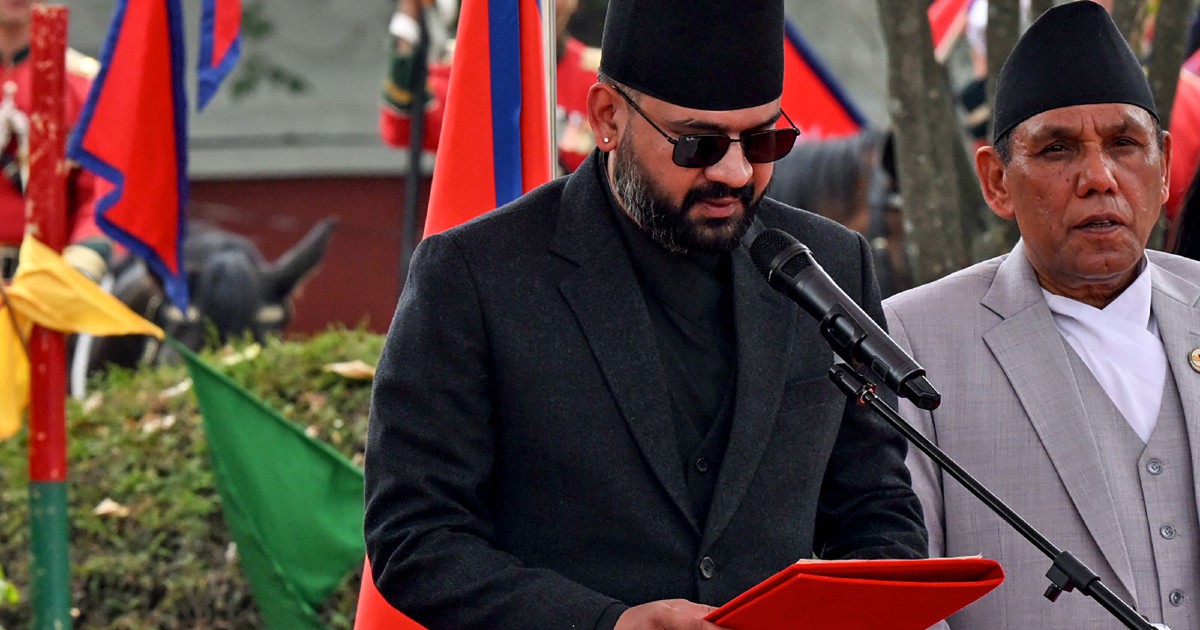
Nepal's Prime Minister Balendra Shah has secured official clearance to continue wearing his instantly recognisable dark sunglasses during parliamentary sessions, marking a rare accommodation of personal attire in the nation's legislature. The authorisation came after a medical examination established legitimate health grounds for the decision, effectively reversing an earlier cautionary stance from the parliament speaker that had discouraged such eyewear within the chamber.
The matter, which emerged as a procedural question within Nepal's legislative institution, highlights the intersection of parliamentary decorum protocols and individual health considerations. Traditionally, many legislatures maintain strict dress codes to ensure formal proceedings, with eyewear often regarded as part of broader appearance standards. Nepal's parliament had similarly conveyed reservations about the practice, prompting an escalation that required medical documentation to resolve.
Shah's distinctive sunglasses have become so closely associated with his public persona that their use has garnered considerable attention beyond mere fashion preference. The dark lenses have become visually synonymous with the Prime Minister across his political career, featuring prominently in media coverage and public appearances. Their removal would have represented a notable departure from the image by which many Nepali citizens recognise their head of government.
The medical justification underlying the authorisation suggests Shah may experience a health condition affecting his eyes that necessitates protection from bright light or glare. Such conditions, ranging from photophobia to various ophthalmological concerns, are not uncommon among public figures who spend extended periods under intense artificial and natural lighting. The parliamentary approval acknowledges that health accommodation supersedes conventional dress code concerns in democratic governance.
This resolution reflects a broader global trend whereby parliaments and formal institutions have increasingly recognised that rigid adherence to appearance standards may conflict with legitimate medical or accessibility requirements. Democratic legislatures worldwide have adapted protocols to accommodate various health-related needs, understanding that functional concerns take precedence over aesthetic expectations in the conduct of official business.
For Nepal's political system, the decision also carries symbolic weight regarding the flexibility and responsiveness of parliamentary procedures. The speaker's initial guidance, while rooted in institutional tradition, gave way to evidence-based accommodation, demonstrating that even parliamentary protocols can evolve when presented with documented medical necessity. This pragmatic approach maintains institutional dignity while remaining responsive to individual circumstances.
The situation gained particular significance in Nepal's contemporary political context, where questions of parliamentary procedure and institutional authority frequently intersect with debates about executive prerogatives. Shah's position as Prime Minister added another dimension to what might otherwise have been a routine personal accommodation, since parliamentary dynamics in Nepal have experienced considerable turbulence in recent years with shifting majorities and coalition arrangements.
Parliamentary observers noted that this accommodation reflects international best practices regarding accessibility and health accommodation in formal governmental settings. Most Westminster-style democracies, including those across South Asia, have increasingly recognised that institutions must balance traditional protocols with practical realities of members' health and wellbeing. Nepal's approach aligns with this evolving standard, suggesting institutional maturity in distinguishing between necessary formality and inflexible rigidity.
The resolution also demonstrates how technical and procedural matters within legislatures can draw unexpected attention in media and public discourse. What began as a speaker's advisory comment evolved into a matter requiring official determination and medical assessment, illustrating how parliamentary norms are sometimes contested and ultimately refined through practical experience. Such processes, though occasionally appearing trivial to outside observers, reflect the dynamic negotiation of institutional culture that occurs continuously within functioning democracies.
For Malaysian and regional observers, Nepal's handling of this relatively minor institutional matter offers insights into how neighbouring democracies navigate the balance between maintaining parliamentary traditions and accommodating individual circumstances. The straightforward resolution through medical documentation provides a useful model for how institutional protocols can remain meaningful while remaining flexible enough to address legitimate exceptions. This approach avoids both the extreme of abandoning all procedural standards and the equally problematic stance of rigid adherence regardless of circumstances.
The outcome also reflects Nepal's broader institutional evolution as it continues consolidating democratic practices following its transition away from monarchy toward a federal democratic republic. Parliamentary institutions remain relatively young in navigating these questions compared to longer-established democracies, yet Nepal has consistently demonstrated willingness to develop protocols that serve democratic function rather than hollow formality. This latest accommodation exemplifies that trajectory.

