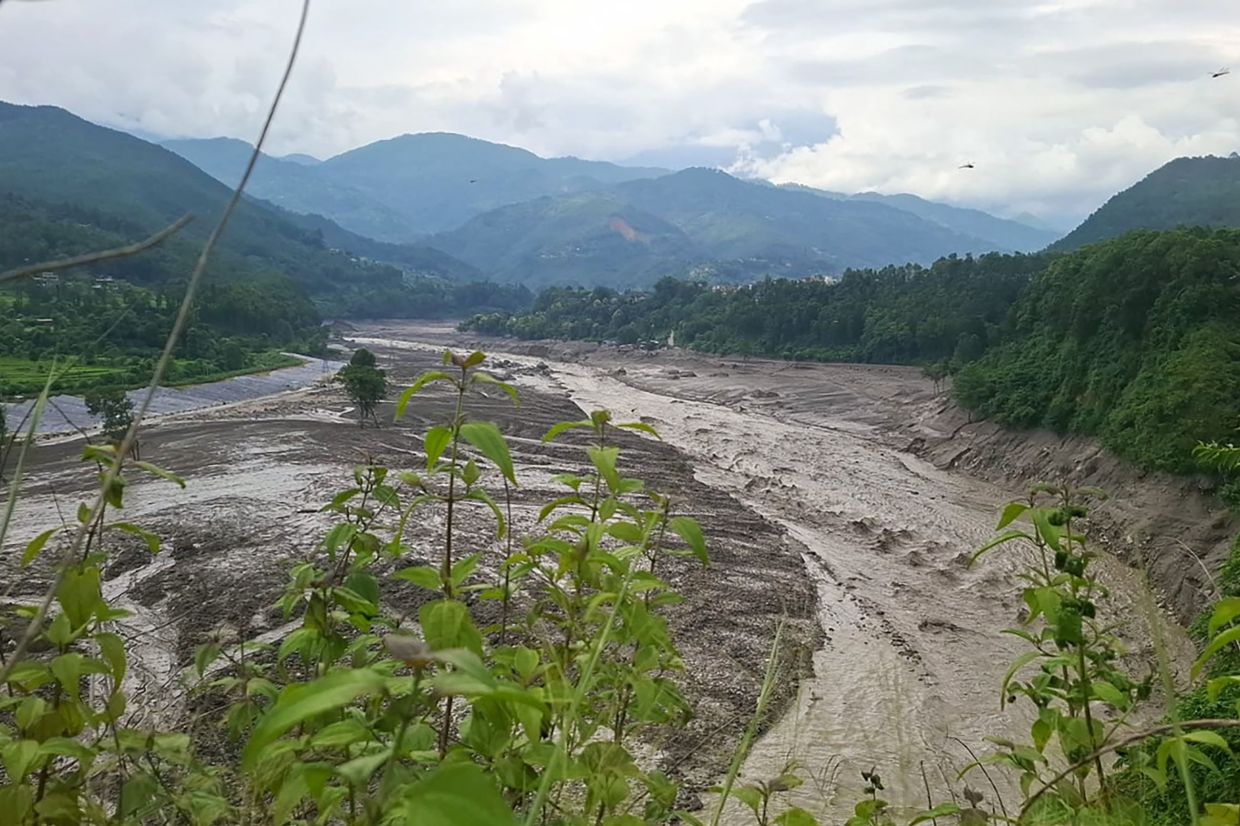
A devastating mudslide and subsequent flash flooding swept through Nepal on Wednesday morning, claiming at least 22 lives and leaving hundreds of people unaccounted for across affected villages and districts. The disaster struck around 9 a.m. local time when the Bhotekoshi River surged violently, demolishing settlements, infrastructure and hydropower installations across several regions. The scale of destruction drew immediate international attention, with authorities from India, China and other nations mobilising rescue operations in one of the deadliest weather-related incidents to hit the Himalayan nation in recent memory.
Among the missing are 384 tourists and workers from multiple countries, creating a complex international rescue coordination challenge. Officials have confirmed that 291 of these missing persons hail from nations including India, the United States, the United Kingdom and Malaysia, highlighting how the disaster struck at a peak tourism season. Nepal's tourism board indicated that many of the missing were pilgrims heading toward Mount Kailash in Tibet, a site of profound spiritual significance for Hindu devotees. The religious journey, which draws thousands annually through Nepal's mountain passes, unexpectedly became a tragedy for participants caught in the calamity.
The Malaysian connection to this disaster carries particular resonance for the region. Malaysia's Foreign Ministry reported that its embassy in Kathmandu has documented contact loss with 11 Malaysian nationals believed to have been in the Rasuwa district at the time of flooding. These individuals, primarily tourists and travelers, represent among the largest contingent of missing persons from any single Southeast Asian nation. The incident has prompted Malaysia's diplomatic presence in Nepal to coordinate closely with local authorities and travel agencies to locate and account for its citizens, underscoring the interconnected nature of tourism and disaster response in the region.
Climate scientists studying the Himalayan region have attributed Wednesday's flooding to an ice and rock avalanche from a glacier that temporarily blocked the Lhende Khola River, a tributary of the Bhotekoshi. The blockage created a natural dam that eventually gave way, releasing a massive surge of water and debris downstream with devastating force. Saswata Sanyal, a disaster risk reduction specialist at the Kathmandu-based International Centre for Integrated Mountain Development, noted this represents the second major flood event in the same Lhende Khola within just fourteen months. This recurring pattern in such a compressed timeframe signals fundamental changes in how Himalayan hydrology and glacial systems are responding to environmental pressures.
The broader climate context underpinning these disasters extends across the entire Hindu Kush Himalayan region, an area spanning Nepal, India and neighbouring countries. Scientific research published earlier this year documented an alarming acceleration in glacier melting throughout this vast mountain system, with ice loss rates having doubled since 2000. The acceleration stems primarily from global temperature increases driven by human-caused climate change, which is warming the Himalayan region faster than most other parts of the world. This amplified warming creates conditions conducive to larger and more frequent glacial instability events, including avalanches and sudden water releases.
The previous year's similar flooding in August highlighted how the region faces recurring vulnerability to such disasters. That earlier event, triggered when a glacial lake overflowed due to elevated mountain temperatures, claimed nine lives and damaged critical infrastructure, including a bridge connecting Nepal and China. The repetition of such events within a short timeframe, combined with their increasing severity, indicates that climate adaptation measures require urgency. Government and scientific institutions across the region have begun emphasizing early warning systems as essential first-line defenses, though implementation challenges remain substantial given the terrain and resource constraints.
International cooperation has mobilized swiftly to address the emergency. Nepal's government spokesperson Sasmit Pokharel indicated that authorities have formally requested rescue assistance from both India and China, reflecting the cross-border nature of the affected region and the scale of the response required. Indian Prime Minister Narendra Modi personally spoke with Nepal's Prime Minister Balendra Shah, offering comprehensive humanitarian support and pledging close coordination between Indian and Nepali rescue teams. Meanwhile, Chinese President Xi Jinping directed authorities to intensify search and rescue operations in the Tibetan border area of Gyirong, with Chinese state broadcaster CCTV reporting large-scale rescue efforts ongoing on the Chinese side of the border.
The humanitarian dimensions of this disaster extend beyond immediate rescue operations. The widespread infrastructure damage, including roads and hydropower facilities, threatens to complicate both rescue access and medium-term recovery. Villages in Nuwakot district suffered particularly severe destruction, with multistoried buildings, commercial vehicles and agricultural land buried under enormous quantities of mud and debris. The South Korean government confirmed that its citizens working on a hydropower construction project in Nepal were among those reported missing, underscoring how development projects can place workers in vulnerable positions during natural disasters.
For Malaysia and other Southeast Asian nations with citizens in Nepal's tourism sector, this disaster presents sobering lessons about climate-related risks in mountainous regions. As climate change intensifies extreme weather events globally, tourists and development workers increasingly face hazards in areas previously considered relatively stable. The Himalayan region's accelerating glacier melt and destabilized hydrology create conditions where disasters may become less anomalous and more routine. Planning for tourism safety, travel insurance and emergency response protocols must evolve to reflect these changing environmental realities.
Government responses have emphasised evacuation and preventive measures as immediate priorities. Authorities have warned residents across multiple Nepali districts to maintain distance from the banks of major rivers including the Bhotekoshi, Trishuli and Narayani, recognizing that flood risks may persist as the landscape adjusts to released water. Chinese officials similarly evacuated at-risk residents from vulnerable areas on their side of the border, demonstrating how coordinated binational action becomes necessary when disasters transcend international boundaries.
The Kathmandu-based climate research community frames this disaster within a broader pattern of accelerating environmental change in the Hindu Kush Himalaya. Researchers emphasize that in a warming Himalayan context, early warning systems and adaptation infrastructure become the primary defenses available to vulnerable communities. However, such systems require sustained investment, technical capacity building and international cooperation across borders and political jurisdictions. The scale of scientific evidence documenting glacier melt acceleration leaves little doubt that communities in this region will face increasing climate-related hazards in coming decades, necessitating proactive rather than merely reactive policy responses.

