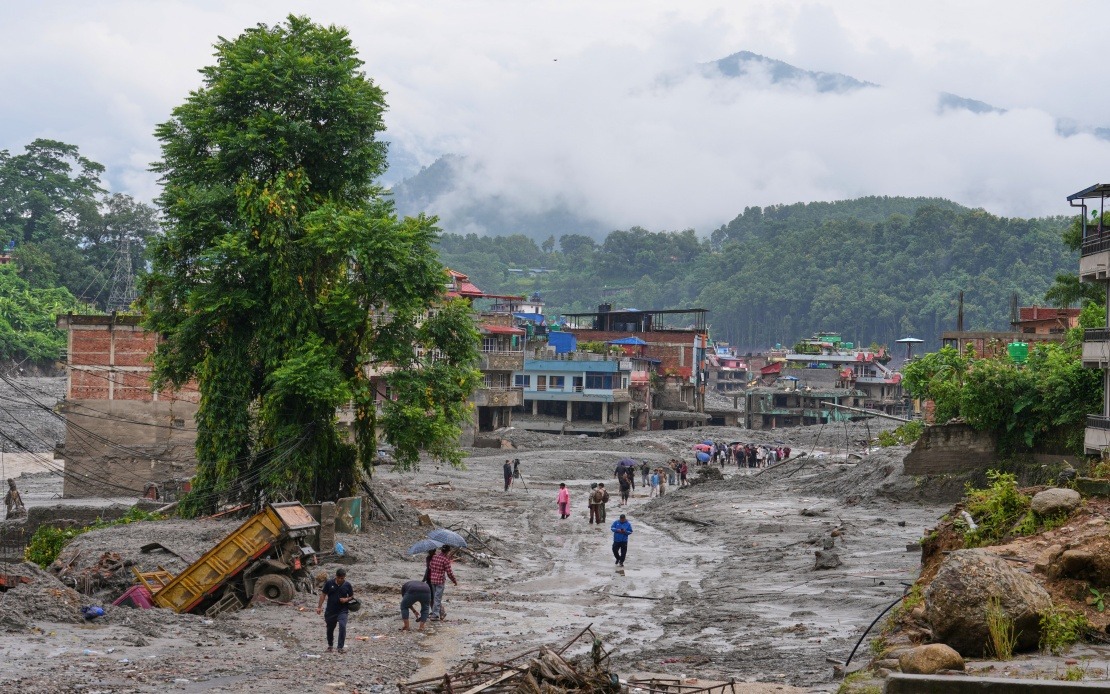
Nepal's catastrophic mudslide disaster has claimed at least 675 lives, according to the National Disaster Risk Reduction and Management Authority, with nearly 2,500 individuals still unaccounted for across affected regions. The grim toll emerged as rescue teams scrambled to reach remote mountain communities devastated by the natural calamity, highlighting the vulnerability of Nepal's steep terrain to earth movements during monsoon season.
The scale of the humanitarian emergency became apparent through official tallies released on Saturday evening, when authorities documented the staggering human cost across three severely impacted districts. The figures represent the deadliest mudslide event in Nepal in recent memory, underscoring how rapidly geological hazards can transform into mass casualties in mountainous terrain with limited infrastructure. Rescue coordination centres reported working against worsening weather conditions, with ongoing precipitation threatening to trigger additional slides in destabilized areas.
The tourism sector faced particular disruption, with the Department of Tourism reporting that 753 visitors had lost contact with their base camps and hotels by Saturday afternoon. Among the missing travellers, 589 were foreign nationals from various countries, many of whom had been trekking or mountaineering in the region when the disaster struck. This figure underscores how international tourists are frequently caught in natural disasters in Nepal, a destination that attracts hundreds of thousands of climbers and hikers annually to its high-altitude routes and scenic valleys.
The three most severely affected districts—Rasuwa, Nuwakot, and Dhading—form part of Nepal's central mountainous belt, where communities often sit in steep valleys and river gorges particularly susceptible to mudflow events. These regions are home to thousands of residents whose livelihoods depend on subsistence agriculture, livestock herding, and increasingly, tourism-related activities. The disaster has severed transport links and damaged local infrastructure, making it extraordinarily difficult for rescue teams to access remote settlements where survivors may still require urgent assistance.
For Malaysian readers, the Nepal crisis serves as a sobering reminder of the serious hazards posed by monsoon-season weather in the broader South Asian region. Southeast Asia and the Indian subcontinent share similar climatic patterns and geological vulnerabilities, and monsoon-triggered landslides and floods remain an annual concern across multiple nations. The mudslide catastrophe illustrates how rapidly weather events can overwhelm local emergency response capacity, particularly in rural and mountainous terrain where access remains inherently limited regardless of preparedness planning.
The Kathmandu District Administrative Office has launched an urgent appeal for relief supplies, calling on businesses, civil society organizations, and individual donors throughout the capital to contribute essential materials for distribution to affected communities. This coordinated approach to mobilizing resources reflects the magnitude of the immediate humanitarian need, as survivors in remote mountain settlements lack access to basic provisions, medical supplies, and temporary shelter. The relief operation will likely require weeks to fully establish supply chains to all affected populations across multiple districts.
The missing persons figure of 2,498 raises profound questions about the final death toll, as many of these individuals may be presumed dead but remain unrecovered due to the treacherous terrain. Mudslides frequently bury entire sections of villages and agricultural land under metres of mud and debris, making recovery operations extraordinarily time-consuming and physically demanding. Rescue workers must carefully excavate affected zones to avoid triggering additional slides or encountering unstable ground conditions that could endanger rescue personnel themselves.
Nepal's tourism industry, which generates crucial foreign exchange earnings and employment for hundreds of thousands, faces significant reputational challenges following the disaster. International media coverage highlighting the death of foreign trekkers typically influences traveller decisions for months or years afterward, potentially impacting bookings for the upcoming trekking season. The government and tourism operators will face pressure to demonstrate improved safety protocols and disaster preparedness measures to rebuild confidence among international visitors.
The timing of the mudslide during peak monsoon season reflects a predictable seasonal pattern in Nepal, where heavy rainfall destabilizes mountainsides throughout June through September. Climate scientists have noted that monsoon intensity appears to be increasing in some years, potentially amplifying the frequency and severity of landslide events across South Asia. This long-term trend poses significant challenges for infrastructure development and settlement planning in mountainous regions throughout the Himalayas.
Search and rescue operations are expected to continue for several weeks, with international assistance potentially being requested if Nepali authorities determine that additional expertise or equipment would accelerate recovery efforts. The coordination challenge extends beyond emergency response to encompassing victim identification, family notification, and the eventual reconstruction of affected communities. Previous major disasters in Nepal have required years of sustained rehabilitation efforts, indicating that the full recovery from this mudslide will extend far beyond the immediate headlines.

