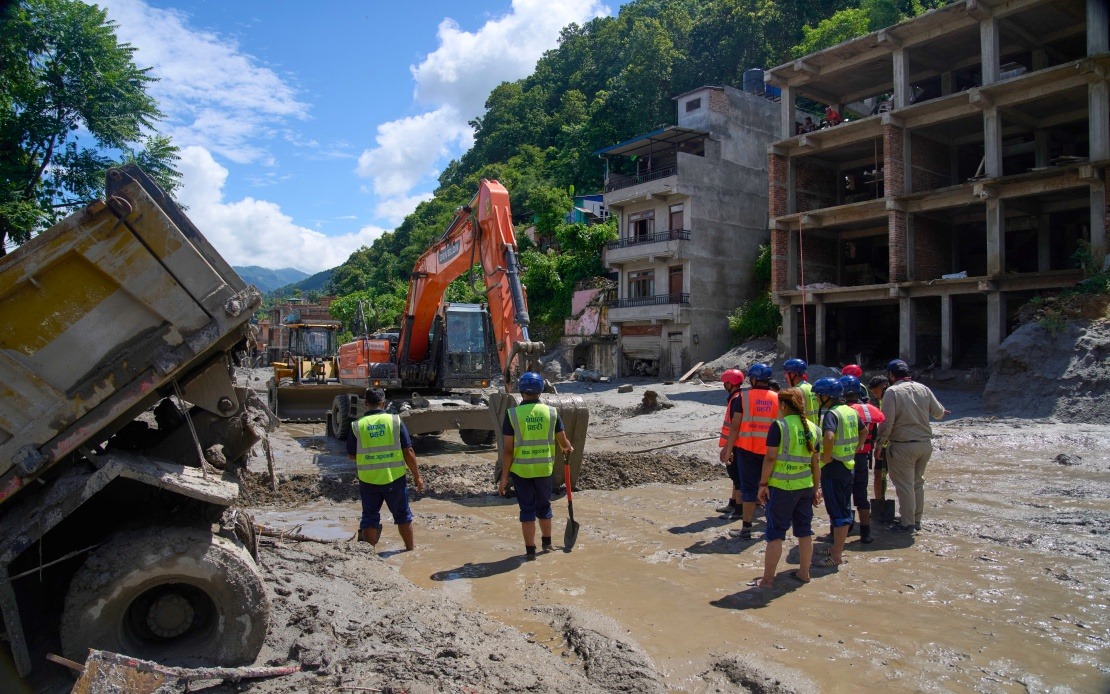
In response to one of the region's deadliest natural disasters this year, Nepal's Foreign Ministry has mobilised an Emergency Response Team to orchestrate rescue and recovery efforts following catastrophic flooding in the Rasuwa district. The dedicated unit will serve as a hub for verifying information about missing persons, liaising with international partners, and delivering consular support to affected foreign nationals. This coordinated approach reflects the scale of the humanitarian challenge facing the landlocked nation, which continues to grapple with the aftermath of Wednesday's devastating floods.
The Bhotekoshi River, which flows through a popular trekking region frequented by international adventurers, burst its banks with little warning, transforming a scenic mountain landscape into a churning torrent. By Thursday evening, confirmed fatalities had reached 359, with authorities warning that the death toll may climb as recovery operations advance and remote mountain villages are reached. The speed and ferocity of the flooding caught many communities and tourists off-guard, creating a cascading humanitarian crisis that has stretched Nepal's emergency response capacities.
The Emergency Response Team's mandate extends beyond immediate search operations. The unit will systematically compile data on foreign nationals caught in the disaster, cross-reference reports from diplomatic missions and families across multiple countries, and maintain communication channels with international rescue teams. This information-gathering function proves critical in a region where communications infrastructure has been damaged, families across borders are seeking answers, and conflicting reports can hinder coordinated rescue efforts. By centralising verified intelligence, Nepal aims to reduce duplication of search efforts and direct limited resources more effectively.
Nepal has publicised multiple contact channels to facilitate information sharing. Diplomatic missions, international organisations, families, and members of the public can report sightings or information about missing persons through dedicated phone lines and WhatsApp services at +977-9744441227 or +977-9744441228, or by submitting details via email to [email protected]. This multi-channel approach acknowledges that crucial information may come from diverse sources—from fellow tourists sheltering in villages to local communities who witnessed the floods' path.
Among the missing are hundreds of international tourists, predominantly from India and Nepal, who were in the region for trekking and tourism activities. At least 31 people have been rescued thus far, a modest figure that underscores the difficulty of operations in mountainous terrain where access roads have been washed away and search teams must navigate treacherous conditions. More than 800 individuals remain unaccounted for, creating an unprecedented challenge for Nepal's search and rescue infrastructure and its diplomatic corps managing inquiries from numerous foreign governments.
Malaysia is among the countries closely monitoring the situation. Malaysia's Foreign Minister Datuk Seri Mohamad Hasan indicated that the exact number of Malaysian nationals missing in the disaster has not yet been confirmed by Nepali authorities. This uncertainty reflects the broader challenges facing rescue coordinators: tourist movements are fluid, documentation systems in disaster zones become compromised, and initial casualty figures often change substantially as information clarifies. For Malaysian families awaiting news, this verification process represents both hope and prolonged anxiety.
The formation of Nepal's Emergency Response Team underscores how natural disasters in the Himalayan region rapidly acquire regional and international dimensions. Trekking in Nepal attracts visitors from across Asia and beyond, meaning a single environmental catastrophe can trigger diplomatic responses from multiple governments simultaneously. The team's coordination function therefore serves both humanitarian and diplomatic purposes, helping Nepal manage inquiries from foreign governments while maintaining focus on rescue operations.
This disaster arrives at a time when climate change is intensifying rainfall patterns across the Hindu Kush-Himalayan region, making such flash-flood events increasingly common. The 2023 Pakistan floods, the 2022 Gujarat flooding, and previous Nepal disasters have established a grim pattern: concentrated precipitation, inadequate early-warning systems in remote areas, and fragile mountain infrastructure combine to create mass casualty events. For Southeast Asian nations with similar geographic vulnerabilities, Nepal's response mechanisms offer both lessons and reminders of the scale of preparedness required.
The Emergency Response Team's effectiveness will depend partly on international cooperation. Indian authorities, whose nationals comprise the largest contingent of missing tourists, have likely already engaged with their Nepali counterparts. Regional organisations and development banks with programmes in Nepal may facilitate resource-sharing for rescue operations. The team's success will be measured not only in lives saved but in how transparent and timely information flows to anxious governments and families awaiting answers about their loved ones.

