Nepal's former finance minister Bishnu Prasad Paudel was taken into custody late Monday on money laundering charges, marking another significant step in the country's increasingly aggressive pursuit of corruption cases centred on past administrations. The arrest, confirmed by police authorities, signals the current government's determination to hold previous officeholders accountable for alleged financial crimes that may have occurred during their tenure in power.
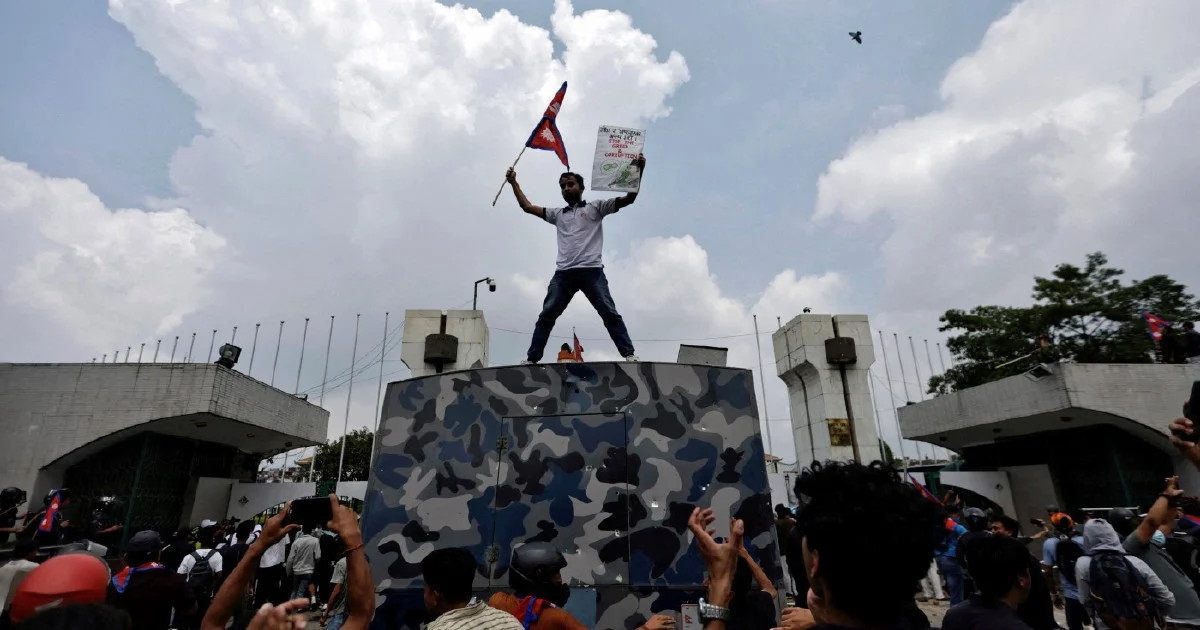
The detention of Paudel arrives at a pivotal moment for Nepal's political landscape, where a relatively young, Gen Z-influenced government has prioritised anti-corruption efforts as a cornerstone of its legitimacy and governance agenda. Unlike previous administrations that often faced accusations of selective prosecution or political vendettas, this current push appears aimed at systematically investigating financial irregularities across multiple former ministers and government officials. The charges against Paudel specifically relate to allegations that he facilitated the movement of funds through irregular channels, a practice broadly categorised as money laundering under Nepali law.
Money laundering investigations in Nepal have historically been complicated by weak institutional capacity, limited inter-agency coordination, and the challenge of tracking capital flows through informal banking networks common across South Asia. The arrest demonstrates a shift towards greater institutional resolve in tackling these systemic issues, though observers note that success will depend on the thoroughness of investigations and the ability of Nepal's judicial system to withstand political pressure throughout the legal process. The Financial Investigation Bureau and related authorities will now oversee the case development.
For regional observers, Nepal's anti-corruption campaign carries implications beyond Kathmandu. Southeast Asian and South Asian nations grappling with similar challenges of institutional corruption and capital flight are watching how Nepal handles these high-profile cases. The precedent set by prosecuting former finance ministers could encourage or deter comparable efforts in neighbouring countries, particularly in Bangladesh, Pakistan, and Sri Lanka, where comparable governance challenges persist. Malaysia and other regional economies with more mature anti-corruption frameworks have established detailed money laundering investigation protocols that Nepal may study to strengthen its own processes.
The timing of Paudel's arrest also reflects broader geopolitical shifts within Nepal. The current administration's coalition includes younger politicians and civil society figures who campaigned on promises of institutional reform and transparency. By visibly moving against former officials, the government aims to consolidate support among voters fatigued by decades of perceived impunity among the political elite. However, this approach carries risks, including accusations that prosecutions serve political rather than purely legal purposes—a concern that already haunts corruption investigations across South Asia.
Bishnu Prasad Paudel's tenure as finance minister, though now shadowed by these allegations, occurred during a period of significant economic transition for Nepal. His portfolio would have involved decisions regarding foreign aid management, domestic taxation, and public expenditure oversight—all areas where opportunities for financial impropriety have historically emerged. The specific nature of the money laundering allegations against him will become clearer as investigators present evidence before Nepal's courts, though media access to investigation details remains limited in the early stages.
Money laundering within Nepal's context typically involves channelling unaccounted wealth through legitimate-appearing businesses, real estate transactions, or informal remittance systems. Given Nepal's reliance on remittances from overseas workers—with annual inflows exceeding USD 8 billion—distinguishing between legitimate foreign transfers and illicit fund movements presents considerable investigative challenges. If Paudel's case involves the misuse of government mechanisms to facilitate such transfers, it would represent a particularly grave breach of public trust given the finance minister's central role in overseeing these flows.
The broader anti-corruption drive by Nepal's current government has already resulted in investigations into numerous former officials across multiple administrations spanning the past decade. Each case contributes to a growing institutional record of prosecutions, even as questions linger about whether investigations target individuals proportionally or selectively based on political affiliation. International observers, including agencies monitoring governance trends in South Asia, will scrutinise how Nepal's courts handle the Paudel case to assess whether the country's judicial system can deliver verdicts perceived as fair and evidence-based.
Looking ahead, Paudel's detention may prompt other former government officials to cooperate with investigators voluntarily, hoping to secure lenient treatment, or alternatively, it could entrench defensive postures among the political establishment. Previous cycles of corruption investigations in Nepal have sometimes resulted in negotiated settlements or dismissed charges due to evidentiary gaps or political compromises. Whether the current momentum can sustain rigorous prosecution through Nepal's sometimes-glacial judicial processes remains uncertain, but the arrest itself signals that accountability, once seemingly absent from Nepali governance, now carries tangible consequences for even senior figures.