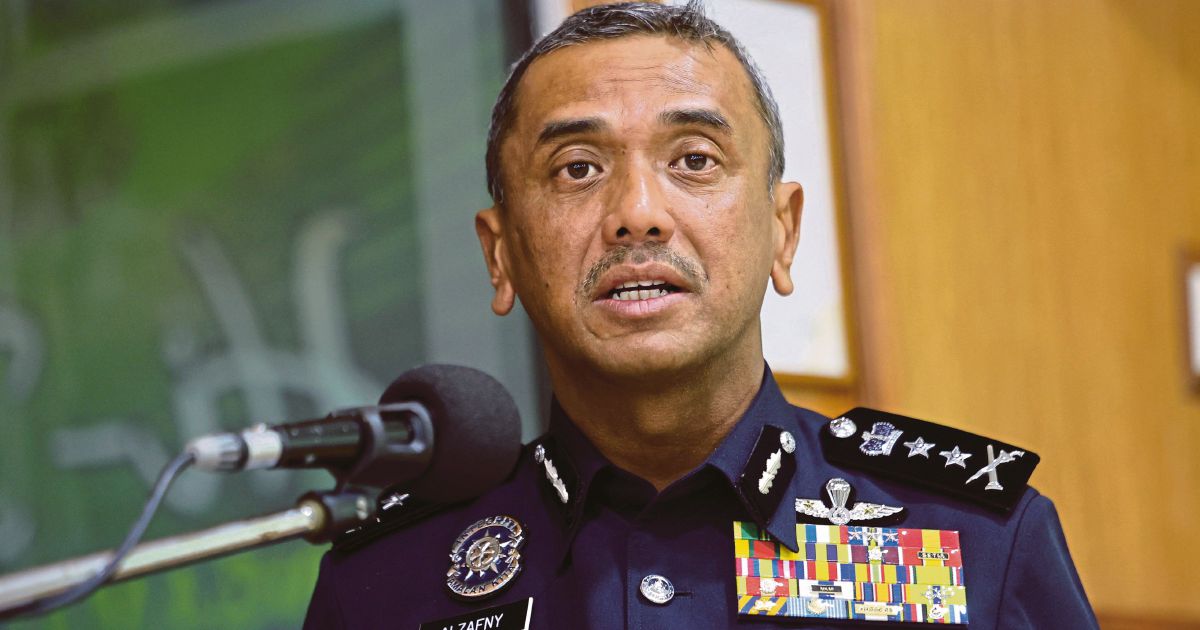
Police in Negri Sembilan have issued a formal reminder to all political parties contesting the upcoming state election to refrain from raising divisive topics centred on religion, royalty, and race during the campaign period. The advisory, delivered in Port Dickson, reflects law enforcement's determination to maintain public order and social harmony as the state heads toward the polls.
The warning underscores the sensitive nature of these three intertwined issues in Malaysia's political landscape. Religion, the institution of the monarchy, and questions of ethnicity have historically served as flashpoints in electoral campaigns, capable of inflaming communal tensions and undermining the cohesive fabric that holds multiethnic societies together. By explicitly naming these areas, police are signalling that campaign discourse will be closely monitored and evaluated against existing legislation that protects these domains from inflammatory rhetoric.
Negri Sembilan's electoral cycle carries particular significance within Malaysia's broader political context. As one of the country's constituent states, its election results often foreshadow national sentiment and can shift the balance of power in regional governance. The police intervention suggests that authorities view this contest as a potential flashpoint for divisive messaging, particularly given Malaysia's history of communal sensitivities around these three pillars.
The invocation of the "3R" framework—religion, royalty, and race—references established legal and social boundaries that govern public discourse in Malaysia. The Federal Constitution itself contains provisions protecting the status of Islam, the position of the Malay Sultans, and the special position of Malays and indigenous peoples. Any campaign messaging that transgresses these constitutional safeguards risks not merely police warnings but potential legal consequences under laws such as the Sedition Act and the Penal Code.
For political candidates and party strategists, the police warning represents both a constraint and a clarification. It narrows the permissible scope of campaign messaging while simultaneously providing explicit guidance about where authorities draw the line. Parties must craft their electoral pitches around socioeconomic grievances, development promises, governance competence, and policy differences—areas where legitimate political competition can flourish without touching constitutional red lines.
The timing of such warnings during campaign periods has become increasingly routine in Malaysian elections. Police and electoral authorities issue these reminders to preempt potential violations and to establish that enforcement mechanisms are in place. For voters, these cautionary statements serve as confirmation that authorities take the protection of sensitive national issues seriously and will not tolerate their weaponization for electoral advantage.
Negri Sembilan's multicommunal composition makes the state particularly relevant to this concern. The presence of significant Malay-Muslim, Chinese, and Indian communities within the state means that campaigns addressing religion, royalty, or race issues could resonate differentially across demographic lines, potentially exacerbating communal cleavages rather than bridging them. By discouraging such messaging, police are attempting to ensure that electoral competition remains focused on issues of common concern rather than on identities that divide.
The enforcement of such restrictions also reflects international best practices around election management in diverse societies. Many democracies with significant ethnic or religious heterogeneity implement codes of conduct for candidates that discourage divisive identity politics. Malaysia's approach, rooted in its constitutional framework, aims to channel political competition toward substantive policy debate rather than toward mobilization based on ascriptive characteristics.
For Southeast Asian observers, Negri Sembilan's election illustrates the ongoing tension between free political expression and the need to preserve social cohesion in multiethnic states. Malaysia's explicit approach—warning parties away from religion, royalty, and race—differs from the more implicit approaches used in some neighbouring democracies, yet serves a similar purpose: maintaining bounds around acceptable electoral discourse.
Candidates must now navigate a campaign landscape where their messaging will be assessed not only by voters but also by law enforcement agencies with the authority to investigate and prosecute violations. This dynamic creates incentives for campaigns to focus on tangible governance issues: economic opportunity, infrastructure development, education quality, and healthcare access. These domains offer ample material for differentiation without venturing into constitutionally protected territory.
The police warning also carries implications for media covering the election. News organizations must exercise editorial judgment in reporting campaign statements, ensuring that amplifying potentially inflammatory remarks does not constitute inadvertent participation in violations of the established boundaries. Malaysian media outlets regularly grapple with this tension between reporting newsworthy campaign developments and upholding journalistic responsibility within the nation's legal and constitutional framework.
As voting day approaches in Negri Sembilan, the police advisory will likely persist as a reference point for all stakeholders—candidates, parties, media, and voters. It establishes the ground rules for acceptable campaign conduct while making clear that authorities will remain vigilant throughout the electoral process. For political contestants, the challenge lies in generating enthusiasm and distinguishing themselves from rivals while remaining scrupulously attentive to the boundaries laid out by law enforcement and enshrined in Malaysia's foundational legal documents.

