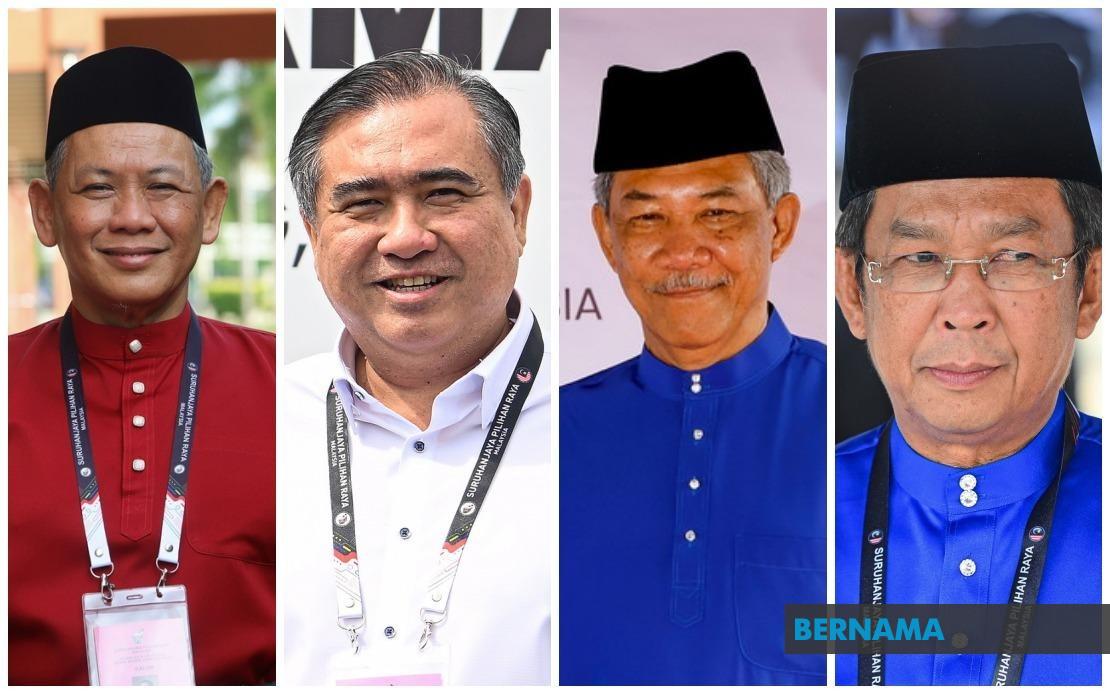
The 16th Negeri Sembilan state election has upended conventional expectations, with prominent party figures finding themselves locked in genuinely competitive struggles rather than enjoying the customary advantages of incumbency or party machinery. The contest has produced an unusually crowded and unpredictable political landscape, forcing some of the nation's most experienced legislators to campaign with uncommon intensity for their survival.
Among those facing genuine electoral jeopardy is Datuk Seri Aminuddin Harun, the caretaker Menteri Besar and Pakatan Harapan chairman for Negeri Sembilan, whose Linggi seat has become a three-way battleground. Aminuddin, who holds the additional position of PKR vice-president, confronts incumbent Datuk Mohd Faizal Ramli from Barisan Nasional and Bersatu's Datuk Zamri Md Said. This fragmentation reflects the fractured political environment that has characterised Malaysian politics since the 2022 general election, where traditional two-way contests have given way to multi-cornered clashes that fundamentally alter campaign dynamics and candidate viability.
The Transport Minister and DAP secretary-general Anthony Loke faces a different but equally significant challenge in Chennah, a constituency the party has controlled since 2013. His opponent, Siow Kong Choon, represents Barisan Nasional's MCA Youth wing and embodies the coalition's determination to reclaim ground lost in previous elections. Chennah's status as a long-held DAP fortress makes any successful challenge there particularly symbolically significant, potentially signalling broader shifts in voter sentiment across the state.
Particularly intriguing is the Rantau contest, where Datuk Seri Mohamad Hasan, simultaneously serving as Foreign Minister and UMNO deputy president, encounters Dr Azizul Hakim Mahdi representing Pakatan Harapan. The generational contrast—Mohamad at 70 against his significantly younger challenger—extends beyond mere age, reflecting evolving voter preferences and the difficulty long-serving representatives experience when confronting fresh political energies. Mohamad, locally known as Tok Mat, has represented Rantau continuously since 2004, and his potential loss would represent a substantial symbolic defeat for Barisan Nasional's established leadership structure.
The Pertang constituency presents a three-way collision between Datuk Seri Jalaluddin Alias of Barisan Nasional, who has held the seat since 2013, Pakatan Harapan's Mohd Umry Abdul Khois, and Bersatu's Mohd Faizal Fadli Mohd Idrus. This competition exemplifies how Bersatu's persistent presence across multiple constituencies fragments opposition unity while simultaneously challenging the ruling coalition's traditional strongholds. The party's strategic positioning allows it to function simultaneously as a spoiler and a genuine electoral alternative, creating unpredictable outcomes across numerous constituencies.
Nilai presents an even more complex political equation through its five-cornered contest. Incumbent J. Arul Kumar, the DAP national deputy chairman fielded by Pakatan Harapan, must navigate competition from Datuk Lai Chien Kong (Barisan Nasional), Datuk V. Saravana Kumar (Bersatu), Berjasa's Zamani Ibrahim, and independent candidate Omar Mohd Isa. Such fragmented contests fundamentally alter campaign strategy, as candidates must pursue victory through plurality rather than majority support, reducing the predictability of electoral outcomes and rewarding campaigns capable of mobilising core supporters efficiently.
Sri Tanjung demonstrates the election's emphasis on competitive dynamism through another five-way battle featuring incumbent Dr G. Rajassekaran of Pakatan Harapan against A. Achutan of Barisan Nasional, two independent candidates including Saravanan Arumugam and Islah Wahyudi Zainudin, and Bersatu's Leevineshwaraan Murugan. Notably, Murugan at 23 represents the youngest candidate competing across the entire state election, potentially appealing to younger voters seeking generational change and fresh perspectives unburdened by established factional alignments.
The nomination process concluded on July 18, establishing a 14-day campaign period extending through July 31. The Election Commission scheduled early voting for July 28 and general polling for August 1, providing compressed timeframes for candidates to consolidate support and articulate electoral platforms. This compressed schedule particularly disadvantages lesser-known candidates lacking established party machinery and media prominence.
The overall candidate distribution reveals Pakatan Harapan's numerical advantage with all 36 available seats contested by their nominees, followed by Barisan Nasional's 25 candidates, Bersatu's 24, and Perikatan Nasional's 11. Smaller parties including Berjasa, ASLI, and PSM each field single candidates, while four independent candidates complete the 103-candidate total vying for 36 constituencies. This distribution suggests Pakatan Harapan maintains organisational confidence, whereas Barisan Nasional's selective candidate deployment potentially reflects either strategic restraint or resource constraints in certain constituencies.
For Malaysian political observers, Negeri Sembilan assumes particular significance as a potential bellwether of broader national sentiment. The state's competitive dynamics, featuring genuine contests rather than predetermined outcomes, provide genuine indications of voter preferences across different demographic segments and constituencies. Results potentially forecast broader patterns relevant to future national elections, particularly regarding Pakatan Harapan's capacity to consolidate support against Barisan Nasional's revival efforts and Bersatu's persistent role as an unpredictable electoral variable.
The state election ultimately transcends local significance, reflecting fundamental transformations within Malaysian electoral politics where established coalitions no longer guarantee comfortable victories and where relatively unknown candidates possess genuine pathways to elected office through strategic positioning and authentic constituency engagement. These developments suggest Malaysia's political competition has genuinely intensified, with fewer guaranteed outcomes and substantially elevated stakes for all participants.

