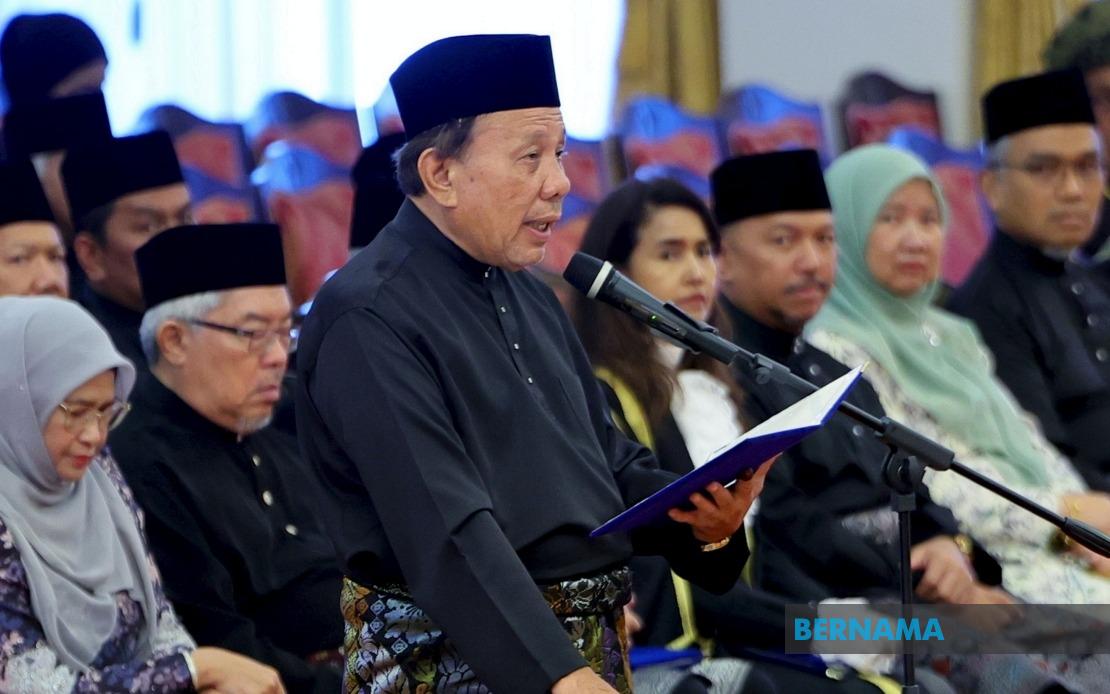
Datuk Ismail Lasim took the oath of office as Negeri Sembilan's Menteri Besar at the Istana Besar Seri Menanti in Kuala Pilah on Friday, following the state's 16th election held the previous day. Before Yang Dipertuan Besar Tuanku Muhriz Tuanku Munawir, Ismail made formal pledges to govern the state with fairness, transparency and effectiveness, framing his election mandate as a serious responsibility rather than merely a political achievement. The swearing-in ceremony marked a transition in state leadership as the incoming administration outlined its vision for Negeri Sembilan's future development and governance standards.
In his oath address, Ismail emphasised that public trust represents far more than an honour—it constitutes an active mandate requiring the government to demonstrate genuine commitment through daily administrative practice. He stressed that listening to citizens' concerns, delivering on responsibilities with integrity, and maintaining transparent decision-making processes would form the foundation of his tenure. The newly sworn-in Menteri Besar framed these principles not as abstract ideals but as operational commitments that would shape government conduct across all state ministries and agencies.
Ismail further committed himself to upholding the constitutional framework that underpins Malaysia's political system, pledging to respect the Yang Dipertuan Besar's guidance, constitutional authority and the institutional dignity of the royal house. He promised to ground all state administration within the principles of Constitutional Monarchy and Parliamentary Democracy, ensuring that executive decisions remain aligned with royal counsel and constitutional boundaries. This emphasis on institutional respect reflects broader Malaysian governance expectations regarding the proper relationship between elected officials and hereditary monarchy.
A significant portion of Ismail's address focused on preserving Negeri Sembilan's distinctive cultural heritage, particularly the Adat Perpatih system that governs social and administrative customs throughout the state. He committed to ensuring that this unique customary framework—grounded in consensus, justice, unity and wisdom—would be maintained for future generations and actively integrated into state policy formulation. This pledge carries particular weight in Negeri Sembilan, where Adat Perpatih traditions remain deeply embedded in the state's identity and institutional operations in ways less prominent elsewhere in Malaysia.
On economic and development priorities, Ismail outlined an ambitious agenda encompassing infrastructure advancement, strategic investment attraction, employment generation and sustained improvements to living standards. He committed to developing education, healthcare, housing, agriculture and social welfare services while ensuring that growth benefits reach both urban and rural populations equitably. The breadth of these commitments suggests the new administration intends to balance modernisation with inclusive development, acknowledging that prosperity must be broadly distributed to maintain social cohesion.
Ismail articulated a nuanced understanding of development success, arguing that true progress encompasses social harmony, institutional strength and public confidence alongside conventional economic metrics and infrastructure projects. This perspective suggests recognition that infrastructure-only development strategies often fail to address deeper governance challenges or citizen satisfaction. By elevating the importance of institutional trust, civil service professionalism and social well-being, Ismail positioned his administration as focused on sustainable, human-centred advancement rather than purely quantitative growth targets.
The new Menteri Besar pledged to maintain high standards within the state civil service, emphasising that government effectiveness depends on professional, dedicated and responsible public sector performance. He committed to fostering collaborative relationships across government agencies, the private sector, community organisations and the broader populace, recognising that state development requires integrated coordination among multiple stakeholders. This multi-stakeholder approach reflects contemporary governance understanding that fragmented institutional efforts produce suboptimal outcomes.
In acknowledging his predecessor Datuk Seri Aminuddin Harun, Ismail recognised the importance of administrative continuity while signalling respect for previous governance efforts. By framing Aminuddin's development work as a foundation for continued progress rather than dismissing prior achievements, Ismail adopted a conciliatory tone that may help maintain institutional momentum and civil service confidence during leadership transitions. This approach contrasts with confrontational transitions that sometimes undermine administrative coherence when new leaders reject previous initiatives.
For Malaysian readers, Ismail's swearing-in represents the establishment of yet another state-level administration within the country's decentralised federal structure. Negeri Sembilan's particular emphasis on Adat Perpatih governance systems makes this leadership transition distinctive, as the new Menteri Besar must balance contemporary administrative practices with distinctive customary traditions. His commitments regarding transparency, economic development and institutional respect align with broader Malaysian governance expectations while acknowledging the state's specific cultural and constitutional context that distinguishes it from other Malaysian states.

