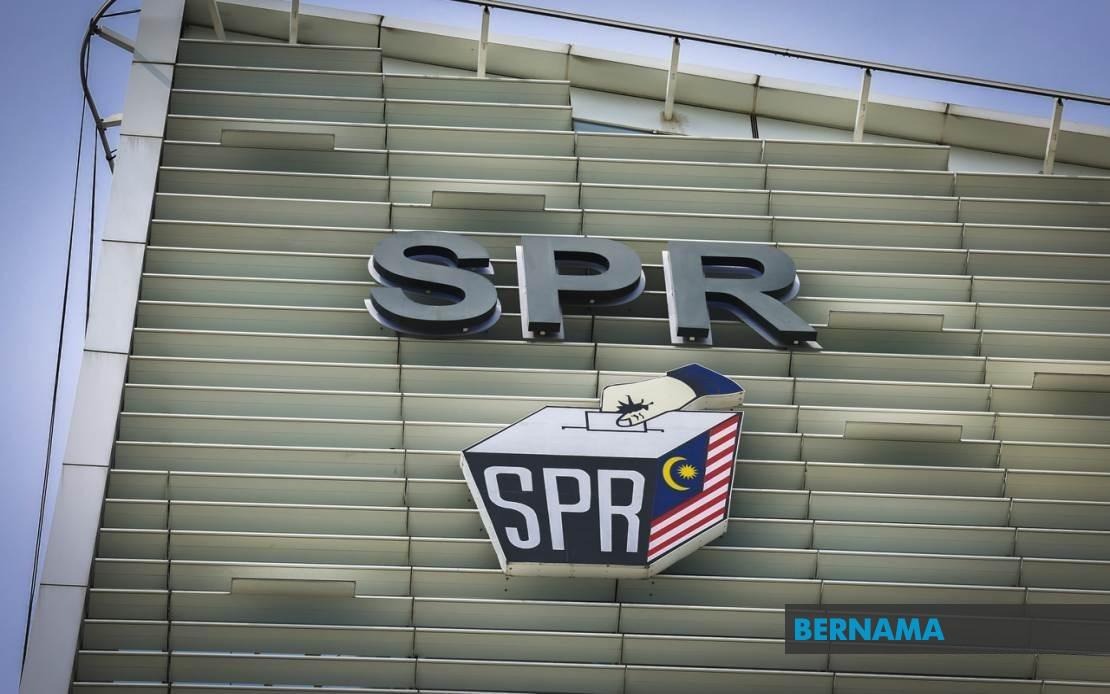
The countdown to Negeri Sembilan's 16th state election officially starts tomorrow when the state moves into its nomination phase, setting in motion a two-week campaign race that will determine which coalition controls the 36 legislative seats. The Electoral Commission has orchestrated the entire process carefully, with nomination centres operating across eight locations throughout the state between 9 am and 10 am tomorrow, where candidates must formally lodge their papers before returning officers verify their eligibility and announce the final contestant roster.
The electoral framework reveals a state with substantial voting power. Across Negeri Sembilan, 889,490 individuals have registered to participate in the election, encompassing 867,151 general voters alongside 16,884 military personnel and their family members, plus 5,455 police officers and their spouses. This diverse electorate reflects the state's demographic composition and underscores the significance of the contest ahead. The Electoral Commission has designated August 1 as the official polling date, though voters will have an earlier opportunity to cast ballots through the early voting mechanism scheduled for July 28, a measure designed to accommodate those unable to participate on the main election day.
Pakatan Harapan approaches this election with comprehensive ambition, declaring candidates for all 36 seats and distributing representation among its three constituent parties according to established power-sharing arrangements. The coalition deploys 16 candidates from PKR, 11 from DAP, and nine from Amanah, presenting a broad front against competing coalitions. This full-slate strategy reflects the coalition's confidence following its 2023 performance, when it secured 17 seats and emerged as the leading political force in the state, though falling short of the 19-seat majority needed for outright control.
Barisan Nasional, the traditional establishment coalition, has charted a more selective path by contesting just 25 of the 36 seats, signalling either strategic retrenchment or tactical ceding of certain constituencies deemed unwinnable. The coalition's composition reflects historical patterns, with UMNO contributing 16 candidates, MCA fielding seven, and MIC two. This approach contrasts with Pakatan Harapan's blanket coverage and suggests a recalibration of BN's electoral calculations in a state where it historically held dominance. In the previous 2023 election, BN secured 14 seats, positioning it as the second-largest faction in the assembly despite having governed the state for decades prior.
Perikatan Nasional's participation in the Negeri Sembilan contest demonstrates the coalition's internal complexity and reveals notable shifts in its composition. The bloc is contesting 11 seats with an unconventional lineup that includes five PAS candidates, individual representatives from Gerakan and MIPP, alongside four candidates from Parti Wawasan Negara, which is making its inaugural electoral appearance under the PN banner. This fragmented representation highlights tensions within the coalition. Simultaneously, Bersatu, nominally a PN member party, has announced its intention to contest independently using its own party symbol rather than the PN logo, underscoring organizational divisions and suggesting internal disagreements over electoral strategy that extend beyond surface-level coordination.
The electoral canvas has become further complicated by the entry of several smaller and newer political entities. Parti Orang Asli Malaysia and Parti Sosialis Malaysia are each fielding single candidates, representing niche political interests and identity-based politics. Parti Barisan Jemaah Islamiah Se-Malaysia is preparing to contest seven seats, attempting to carve out space in the Islamist political spectrum. Notably absent from the contest are MUDA, Pejuang, and Bersama, three parties that have explicitly confirmed non-participation, suggesting they either lack organizational capacity in the state or have made strategic calculations that competing would prove counterproductive.
The nomination process itself carries procedural importance that extends beyond mere formality. The Electoral Commission has actively encouraged prospective candidates to conduct advance verification of their nomination documents with returning officers to prevent last-minute rejections or procedural irregularities that could exclude qualified candidates from contesting. Additionally, the Commission has advised candidates to settle their election deposits ahead of time, bringing payment receipts to the nomination centres to expedite the submission process. These administrative preparations reflect lessons learned from previous elections and demonstrate institutional efforts to ensure smooth, transparent electoral administration.
Weather considerations have entered the electoral equation, with the Malaysian Meteorological Department issuing forecasts predicting generally fine conditions across most of Negeri Sembilan on Saturday morning, the nomination day itself. However, localized rainfall is anticipated in Port Dickson and Seremban, and afternoon thunderstorms are expected throughout the state. Such meteorological patterns, while seemingly minor, can influence candidate movements and voter engagement during the crucial early campaign phase when parties are mobilizing supporters and conducting initial outreach activities.
The electoral context cannot be divorced from recent institutional developments. The Negeri Sembilan State Legislative Assembly was dissolved on June 5 following approval from Tuanku Muhriz Tuanku Munawir, the Yang Dipertuan Besar, setting the timeline for the current election cycle. This dissolution came against the backdrop of 2023's outcome, where Pakatan Harapan's 17 seats fell two seats short of the 19-seat majority required for exclusive control of the assembly. The resulting hung parliament situation created political uncertainty that dissolution ultimately resolved through the electoral process.
For Malaysian and Southeast Asian observers, the Negeri Sembilan contest represents a critical test of whether 2023's voting patterns will solidify into durable political realignment. The state offers a microcosm of Malaysia's broader coalition politics, where established powers face pressure from resurgent opposition blocs and fragmented newcomers compete for relevance. The formation of Parti Wawasan Negara and its electoral debut under PN colours suggests ongoing coalition reorganization at the national level. Additionally, Bersatu's decision to contest independently rather than maintain PN unity signals that tensions within the Perikatan coalition remain unresolved, potentially affecting calculations for future national-level contests.
The two-week campaign period beginning tomorrow will test which coalition can effectively mobilize its constituency base and articulate compelling policy agendas in a state economy shaped by manufacturing, agriculture, and services sectors. For Pakatan Harapan, consolidating and building upon 2023's gains offers a pathway to stable majority governance. For Barisan Nasional, preventing further territorial losses while attempting selective gains represents a holding operation against continued marginalization. For Perikatan Nasional, the contest provides an opportunity to demonstrate coherence as a coalition despite internal fissures. The August 1 polling date will ultimately reveal whether recent electoral patterns represent permanent shifts in Malaysian politics or temporary fluctuations reversible through effective campaigning.

