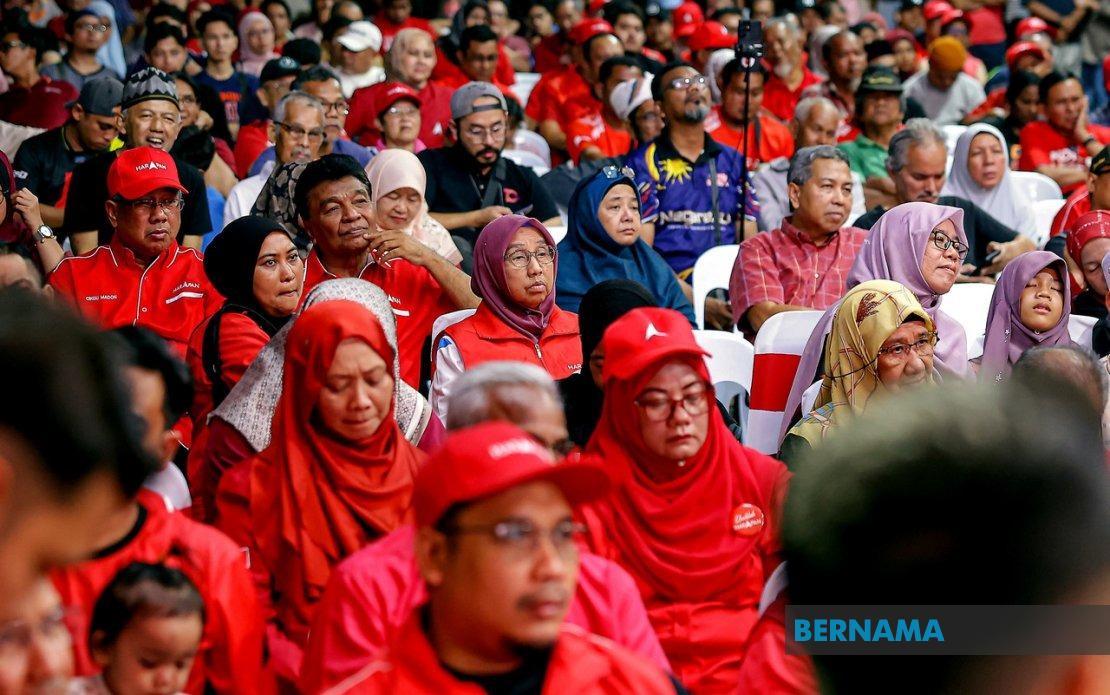
The campaign trail in Negeri Sembilan is crystallising a fundamental voter demand: political representatives must combine genuine accessibility with tangible ability to deliver on ground-level issues. With the state election campaign in full swing and polling day set for August 1, a survey conducted during the campaign period has captured the electorate's clearest priorities, painting a portrait of voters who are exhausted by rhetoric and hungry for real, practical change.
The sentiment emerging from conversations across the state reveals that constituents are less interested in party labels or political tradition than in whether their chosen candidates can genuinely connect with them and translate that connection into action. This represents a subtle but significant shift in voter expectations, suggesting that the old calculus of local credentials and party machinery may no longer guarantee electoral success. Candidates who demonstrate authentic engagement with their communities, coupled with a demonstrable capacity to solve problems, appear to be positioning themselves as more attractive options than entrenched incumbents who may have lost touch with residents' actual concerns.
Retired teacher Kamarulzaman Ab Aziz, aged 64, articulates this reorientation plainly: a candidate's ability to be approachable and genuinely involved in community affairs matters far more than whether they grew up in the constituency. This perspective suggests voters are willing to embrace outsiders if those candidates prove themselves warm, accessible, and truly committed to understanding local challenges. The inverse logic carries equal weight—a hometown candidate who proves difficult to reach or unresponsive loses the inherent advantage of local knowledge.
Cost of living pressures dominate the economic anxieties expressed by working people across the state. Nurulainee Hamidon, a 37-year-old trader from Port Dickson's Linggi area, speaks from direct commercial experience about how successive price increases are squeezing both consumer purchasing power and business viability. Small traders face a grinding squeeze: their own input costs rise continuously, forcing them to raise retail prices, which then alienates customers already struggling with their household budgets. This creates a vicious cycle where business owners absorb margin pressure rather than passing full costs to consumers, eroding profitability. For the incoming state government, this constituency group represents both an economic barometer and a political bellwether—their frustration could translate into electoral punishment if relief measures do not materialize quickly.
Rural and estate communities in Negeri Sembilan have expressed concern about being marginalised in development planning and resource allocation. Housewife M. Manisha, 38, underscores how peripheral communities risk being overlooked when new state initiatives roll out, creating a two-tier system where urban areas capture most infrastructure investment and development opportunities. This concern reflects a broader regional pattern across Malaysia where rubber and palm oil estates, historically significant but economically marginalised, fear becoming neglected areas if political attention and budgetary priorities shift elsewhere. Ensuring equitable access to facilities and meaningful development prospects across all communities is therefore presented as essential for inclusive governance.
First-time voters bring their own distinct policy preferences to the election. Mohammad Najmi Aiman, 22, a college student contesting in Paroi, identifies comprehensive employment opportunities and wage alignment with qualifications as priorities for his cohort. Young Malaysians increasingly expect that educational investment should translate into commensurate employment prospects and competitive wages reflective of their training—a expectation that previous governments have struggled to satisfy, particularly in states outside the Klang Valley and Penang.
The broader electoral environment also reflects voter fatigue with antagonistic campaign tactics. Private sector employee Lim Kian, 43, appeals for campaign civility and constructive political competition, warning against the corrosive effects of personal attacks and character assassination among competing parties and their supporters. This call for maturity speaks to genuine concern that political divisions are widening unnecessarily and that campaigning has become needlessly toxic. Voters appear to recognise that regardless of which party wins, the victor must subsequently govern for all residents; therefore, maintaining social cohesion during campaigns serves everyone's interests.
The electoral mathematics for Negeri Sembilan's 16th state election reflect a substantial franchise. The Election Commission has registered 889,490 eligible voters, comprising 867,151 regular voters alongside 16,884 military personnel and their spouses, and 5,455 police officers and their spouses. A total of 103 candidates are competing across 36 state seats, indicating moderately intense competition in many constituencies and suggesting that seat-by-seat outcomes may reflect these localised voter sentiments quite sharply.
The electoral calendar provides limited time for candidates to demonstrate responsiveness. Early voting occurs on July 28, with the main polling day on August 1, giving campaigners just over a week to solidify voter impressions. This condensed timeframe paradoxically amplifies the importance of accessibility and ground-level engagement—candidates with existing community networks and reputation for responsiveness enjoy significant advantage, while those attempting to build connection during the campaign period face steeper challenges.
For Malaysia's broader political trajectory, the Negeri Sembilan election serves as a useful indicator of voter sentiment beyond federal politics. If candidates emphasising cost-of-living solutions, inclusive development, and genuine community engagement perform strongly, it suggests that state-level politics are increasingly driven by bread-and-butter economic concerns rather than federal political realignments. Conversely, if traditional party machinery continues delivering results despite voter surveys highlighting demand for change, it would indicate that voting behaviour remains substantially disconnected from stated preferences—a significant consideration for any party planning state-level campaigning strategy.
The convergence of these voter priorities around accessibility, economic relief, equitable development, and campaign civility creates a template against which Negeri Sembilan's political outcome can be interpreted. Whether the incoming state government addresses these concerns with genuine urgency will largely determine whether the electorate views the election outcome as a mandate for transformation or merely a routine change of personnel maintaining existing governance patterns.

