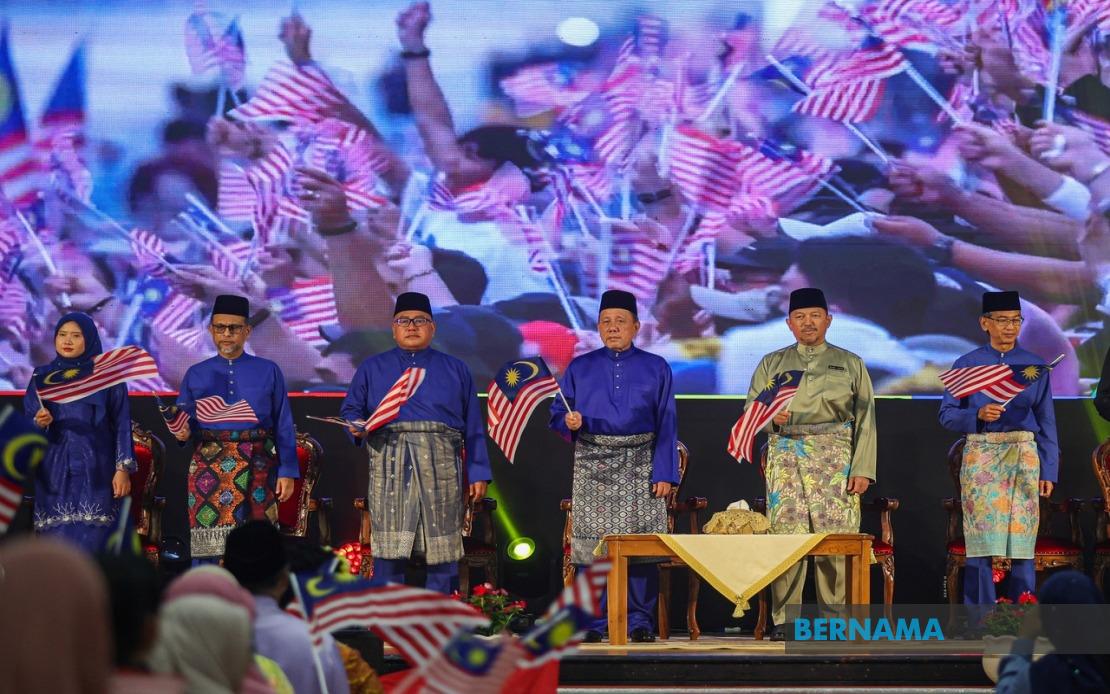
Negeri Sembilan's new leadership is charting an ambitious course centred on three interconnected development pillars as it seeks to transform the state into a competitive investment destination while raising living standards across its 1.2 million residents. Menteri Besar Datuk Ismail Lasim articulated this vision during the Negeri Sembilan State-Level Public Servants Assembly in Seremban, framing stability, progress and prosperity as the foundational commitments guiding policy decisions and administrative execution across all state departments and agencies.
The stability pillar extends beyond maintaining political momentum in the State Legislative Assembly, addressing instead the deeper institutional architecture that underpins effective governance. Ismail emphasised that institutional resilience, administrative integrity and political consistency form the bedrock upon which public confidence is constructed, particularly vital for projecting reliability to domestic and international investors evaluating the state as a business location. By anchoring the state administration in institutional strength rather than relying solely on narrow parliamentary majorities, the leadership signals a commitment to predictable, rules-based governance that transcends electoral cycles.
Constitutional safeguards and custodianship of Negeri Sembilan's unique monarchical traditions feature prominently in this stability framework. The Menteri Besar positioned these institutional and cultural pillars as protective umbrellas sheltering the state's governance ecosystem, suggesting that respect for constitutional frameworks and preservation of customary practices strengthen rather than inhibit contemporary development initiatives. This framing proves particularly significant for a state with deep-rooted historical governance structures, where bridging traditional institutional identity with modern administrative demands requires careful philosophical articulation.
Progress, in the leadership's conception, transcends narrow economic metrics and encompasses job creation, investment quality and equitable geographic distribution of development opportunities. The state recorded gross domestic product of RM55.8 billion in the previous year, representing 2.6 per cent growth from RM54.3 billion, with momentum sustained through expansion in services and manufacturing sectors. However, Ismail's emphasis on balanced development signals concern that rapid growth concentrated in major urban centres may exacerbate rural-urban disparities, a challenge affecting multiple Malaysian states grappling with uneven development trajectories.
Rural advancement, particularly within Felda settlements scattered across Negeri Sembilan's landscape, receives explicit attention as integral to the state's prosperity agenda rather than peripheral welfare concern. This reflects growing recognition that marginalised rural communities left behind during growth spurts become sources of social instability and demographic challenges as younger residents migrate cityward seeking economic opportunities. By integrating rural development into the core progress narrative, the administration positions agricultural and traditional economic sectors not as backward remnants requiring rescue but as integral components of a diversified state economy.
Financial projections demonstrate concrete ambition undergirding these philosophical commitments. State revenue currently stands at RM522.4 million, with the administration targeting RM1 billion by 2030, a doubling within seven years that would require sustained investment attraction and revenue diversification. This target assumes continued economic growth, successful implementation of new development projects, and enhanced collection efficiency across revenue-generating agencies. For Malaysian states benchmarking their development trajectories, such revenue targets carry symbolic weight, signalling confidence in underlying economic fundamentals while establishing measurable accountability metrics.
The newly constituted State Executive Council brings convergent expertise and generational diversity to these development objectives, according to the Menteri Besar's assessment. The Exco structure apparently reflects deliberate composition balancing experienced administrators with fresh perspectives, positioning the collective body as capable of navigating both institutional continuity and necessary innovation. This composition sends implicit signals to investor communities about leadership stability and succession planning, factors increasingly weighing on foreign direct investment decisions for mid-tier Malaysian states competing against regional alternatives.
Youth opportunity creation emerges as a critical strand within the prosperity pillar, reflecting broader Malaysian demographic and employment challenges. As the state administration prioritises investment attraction and economic diversification, capacity to absorb young professionals into quality employment rather than forcing emigration to Kuala Lumpur or Selangor becomes a crucial retention metric. Agricultural modernisation and rural economic strengthening specifically receive attention as potential youth-attractive sectors if positioned as technology-enabled, innovation-driven opportunities rather than subsistence-level traditional livelihoods.
The newly launched Kibar Jalur Gemilang campaign accompanying the policy announcement extends the stability and unity messaging into the public sphere, mobilising schools, businesses, local authorities and private citizens to display the national flag during National Day celebrations. This grassroots participation dimension suggests the leadership recognises that institutional and administrative commitments require public buy-in and visible civic engagement to translate into tangible governance improvements. Collective national symbolism becomes practical tool for building social cohesion underlying economic productivity.
For Malaysian observers and investors evaluating Negeri Sembilan's positioning within the competitive federation of states, the articulation of these three pillars provides clarity regarding the administration's strategic direction and underlying governance philosophy. The emphasis on institutional stability rather than personalised leadership, balanced geographic development rather than concentrated growth, and inclusive prosperity rather than elite wealth accumulation positions Negeri Sembilan within an increasingly popular Malaysian governance narrative emphasising sustainability and social cohesion alongside economic expansion. Whether the new administration successfully translates these aspirational frameworks into measurable institutional improvements and tangible living standard enhancements over coming years will determine whether this philosophical outline matures into consequential state-building achievement.

