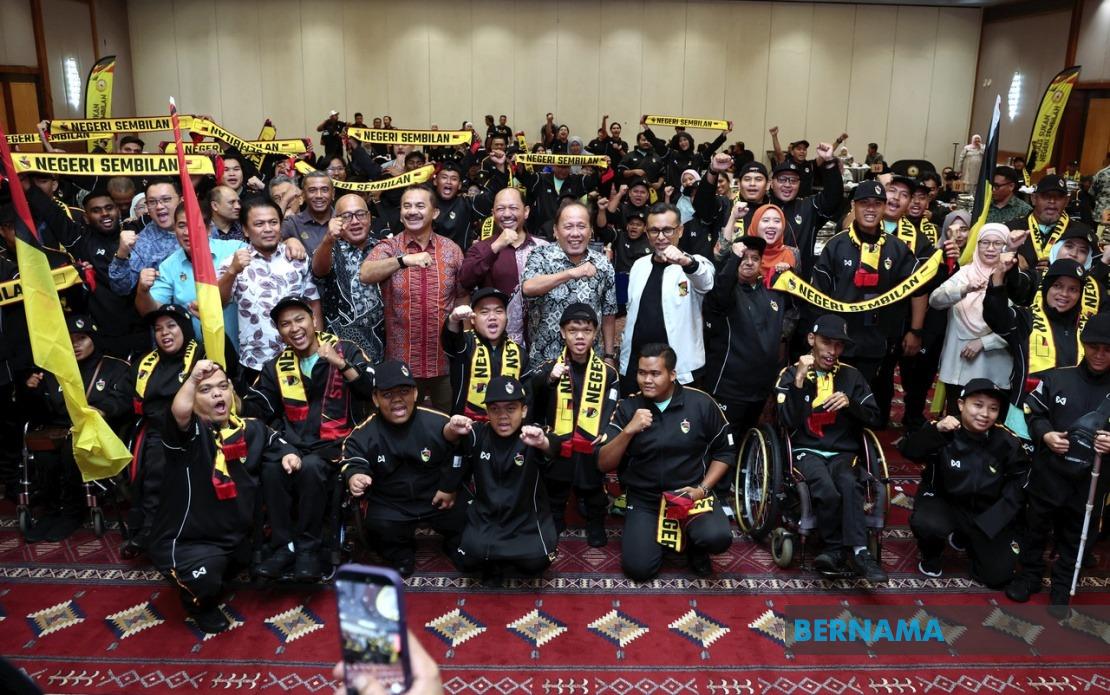
Negeri Sembilan has set an ambitious objective to secure 12 gold medals at the forthcoming 2026 Para Malaysia Games in Selangor, with the event scheduled to commence on September 5. The state will deploy 80 para-athletes in pursuit of this target, according to Menteri Besar Datuk Ismail Lasim, who unveiled the medal hopes during the ceremonial flag handover to the Chef de Mission and Team Managers.
The goal carries particular significance for Negeri Sembilan as the state seeks to reverse fortunes following a disappointing campaign at the recently concluded SUKMA 2026 Games. The regular contingent's performance fell markedly short of expectations, winning only seven gold medals from a total of 48 medals—a stark decline from the 19 gold medals and 56 total medals achieved at the same biennial competition two years prior. This represents a substantial drop in performance that has prompted the state leadership to focus renewed energy on the Para SUKMA platform as an avenue for restoring pride and momentum.
Datuk Ismail framed the 12-gold target not merely as an arbitrary numerical goal but as a reflection of the rigorous preparation, mental discipline and physical conditioning that athletes have undertaken throughout their training regime. He expressed confidence that the objective represents an achievable benchmark, contingent upon each para-athlete demonstrating their full potential and commitment. The Menteri Besar's emphasis on the holistic nature of medal pursuit—connecting athletic performance directly to months of dedicated preparation—underscores the comprehensive approach Negeri Sembilan is adopting as it seeks competitive parity with other states.
In remarks to assembled media, the Menteri Besar highlighted the distinctive character of para-athletes, characterising them as individuals possessed of an exceptional competitive spirit and determination that transcends conventional athletic parameters. He suggested that Negeri Sembilan's para contingent possesses the psychological resilience and physical capabilities necessary not only to meet the gold medal target but to elevate the state's broader sporting reputation through an impressive showing at the Selangor-hosted Games. This framing positions the Para SUKMA campaign as carrying symbolic weight extending beyond competition results.
Negeri Sembilan's previous performance at the 2024 Para SUKMA Games in Sarawak provides a relevant benchmark for assessing current ambitions. At that competition, the state's para-athletes accumulated 14 gold medals alongside 19 silver and 20 bronze medals, indicating a substantial medal-winning capacity. The current target of 12 golds thus represents a modestly conservative adjustment from that baseline, suggesting realistic calibration rather than aspirational overreach. The slight reduction in the gold medal target may reflect acknowledgement of heightened competitive intensity or strategic resource allocation decisions.
Monetary incentives will feature prominently in Negeri Sembilan's athlete support structure, with medal-winning performances at the Para SUKMA Games to be recognised through financial rewards. Such incentive schemes serve dual purposes: they provide tangible recognition of achievement while simultaneously addressing practical economic concerns many para-athletes face. This financial commitment demonstrates that the state government views the Games not merely as a sporting occasion but as an investment in athlete welfare and performance motivation.
The presence of State Youth and Sports Development Action Committee chairman Datuk Mustapha Nagoor and Negeri Sembilan Sports Council director Marhizah Abdul Razak at the flag handover ceremony underscores the multi-institutional coordination required to support a competitive contingent. The gathering represented symbolic unity across government entities responsible for youth development, sports administration and policy coordination—institutions whose collaborative effort shapes athlete development pathways and competition preparation.
For Malaysian readers and regional observers, Negeri Sembilan's positioning at the Para SUKMA Games reflects broader trends within Southeast Asia regarding the development of parasport infrastructure and competitive opportunities. The Para Malaysia Games themselves have become an increasingly significant platform for showcasing athletic talent among para-athletes and promoting inclusive sports participation across the nation. Negeri Sembilan's strategic focus on this competition signifies recognition that para-sport represents both a legitimate competitive avenue and an instrument for inclusive national development.
The September 5 commencement date provides participating states with several weeks to finalise logistical arrangements, conduct final training sessions and coordinate athlete welfare provisions. For Negeri Sembilan specifically, this timeline offers opportunity to build collective momentum and psychological cohesion within the contingent following the disappointment of the regular SUKMA campaign. Whether the 12-gold medal target materialises will likely influence public perception of the state's sporting capabilities and potentially shape resource allocation decisions for upcoming competitive cycles.
The contrast between Negeri Sembilan's SUKMA 2026 performance and its Para SUKMA ambitions highlights an important distinction within Malaysian sports governance: the varying competitive trajectories and preparation requirements across able-bodied and parasport disciplines. While SUKMA 2026 yielded disappointing results, the state's investment in para-athlete development appears to have generated more optimistic projections. This divergence suggests that Negeri Sembilan recognises particular competitive advantages within the para-sport arena and is strategically concentrating resources accordingly to maximise medal prospects.

