The 16th Negeri Sembilan State Election scheduled for August 1 is shaping up to be one of the country's most fragmented electoral contests in recent years, reflecting a broader realignment in Malaysian politics and the growing influence of newer political coalitions. The composition of contested seats reveals a fundamental shift in the competitive landscape, with traditional two-sided battles giving way to multi-party scrambles that will challenge voters and campaign strategies alike.
Amongst the 36 state legislative assembly seats available, the dramatic contraction of straight fights—from 27 in the previous 2023 state election to just 11 this time—signals a splintering of voter preferences and the strategic repositioning of political forces across the state. Meanwhile, three-cornered contests have surged from a mere seven to twenty-one seats, representing a threefold increase that fundamentally reshapes how campaigns will be fought and won. The emergence of two four-cornered and two five-cornered contests adds further complexity to an already fragmented electoral environment, marking the first instance in Negeri Sembilan's electoral history that constituencies have witnessed five-way contests.
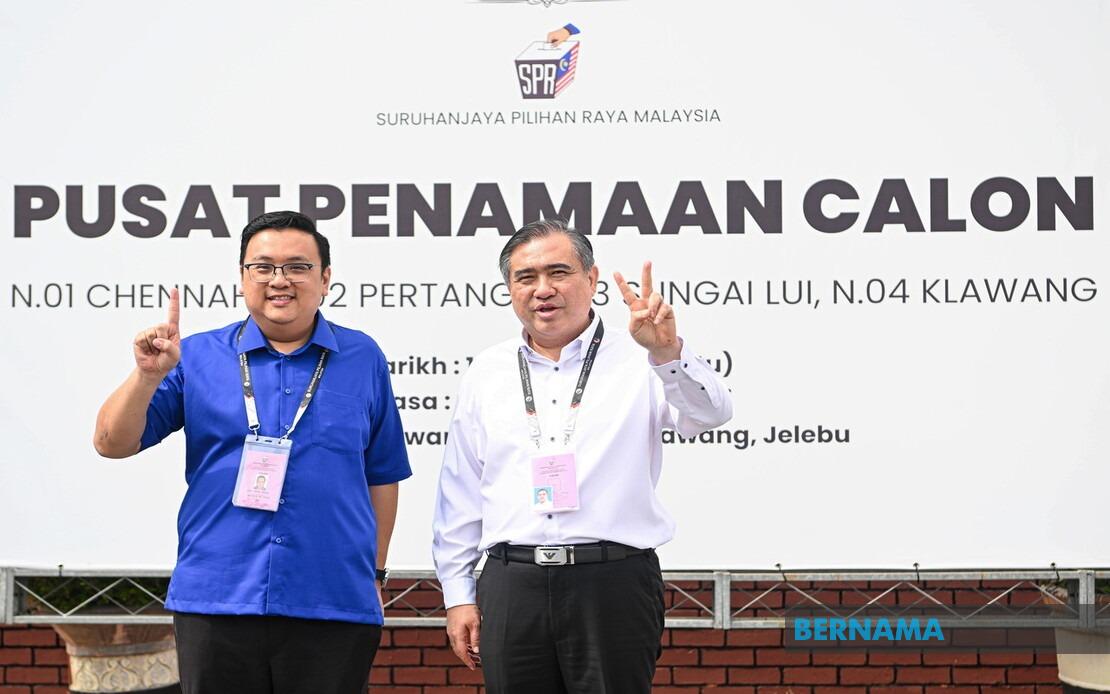
Several straight fights will feature Malaysia's most recognisable political personalities, lending national significance to local contests. Transport Minister and DAP secretary-general Anthony Loke will represent Pakatan Harapan in Chennah against Barisan Nasional's Siow Kong Choon, whilst Foreign Minister Mohamad Hasan will defend his Rantau seat for UMNO against Pakatan Harapan's Dr Azizul Hakim Mahdi. These contests encapsulate the broader ideological and political divisions animating national politics, with implications that extend well beyond Negeri Sembilan's boundaries.
The proliferation of three-cornered contests demonstrates the increasing electoral competitiveness of Bersatu and Perikatan Nasional in the state, challenging the traditional duopoly held by Pakatan Harapan and Barisan Nasional. In Linggi, PKR vice-president and state Menteri Besar Datuk Seri Aminuddin Harun faces not only a Barisan Nasional challenger but also Bersatu's Zamri Md Said, indicating that the incumbent's position, though strong, cannot be taken for granted. Similarly, in Pertang, Negeri Sembilan UMNO's Datuk Seri Jalaluddin Alias must contend with both Pakatan Harapan and Bersatu candidates, whilst Klawang presents an intriguing three-way battle involving Perikatan Nasional's Danni Rais—son of veteran Tan Sri Rais Yatim—against the incumbent and a Bersatu competitor.
The four-cornered contests introduce a new layer of unpredictability to the election dynamics. In Jeram Padang, incumbent Datuk Mohd Zaidy Abdul Kadir must navigate challenges not only from Pakatan Harapan and Bersatu but also from Parti Orang Asli Malaysia, reflecting the growing role of community-based and single-issue parties in Malaysian electoral politics. Rahang's four-way battle similarly demonstrates this trend, featuring Parti Sosialis Malaysia alongside the traditional major coalitions, suggesting that voters are increasingly willing to consider alternatives beyond mainstream political blocs.
The two five-cornered contests in Nilai and Sri Tanjung represent unprecedented complexity in Negeri Sembilan's electoral history. Nilai's contest pits incumbent J. Arul Kumar of Pakatan Harapan against candidates from Barisan Nasional, Bersatu, the newly registered Berjasa, and an independent candidate, whilst Sri Tanjung sees incumbent Datuk Dr G. Rajasekaran facing five opponents including two independents. These scenarios underline the profound fragmentation of the Malaysian political landscape and the challenge such contests pose to voters seeking clarity on policy directions and governance competence.
The participation of smaller and identity-based parties reflects broader democratic dynamism within Malaysia's electoral system. The emergence of Parti Orang Asli Malaysia in Jeram Padang and Berjasa in Nilai indicates that grassroots concerns regarding indigenous representation and Islamic governance are gaining electoral traction. Similarly, Parti Sosialis Malaysia's presence in Rahang suggests that alternative economic and social policy perspectives continue to attract candidates and voters dissatisfied with mainstream offerings. For Southeast Asian observers, these developments illustrate how even consolidated democracies experience periodic realignments as new interests and coalitions assert themselves.
The electoral commission has scheduled early voting for July 28, with polling day fixed for August 1, providing voters and candidates with a compressed campaign period in which to mobilise. A total of 889,490 electors are eligible to vote, comprising 867,151 ordinary voters, 16,884 military personnel and their spouses, and 5,455 police officers, representing a substantial franchise that will ultimately determine which political forces gain or lose ground in the state assembly.
The proliferation of multi-cornered contests carries significant implications for Malaysian governance and coalition politics. Should voters split their support across multiple candidates, slim or unclear mandates could result, potentially complicating post-election coalition formation and legislative stability. Conversely, the expansion of electoral competition may invigorate voter participation by offering genuine ideological and policy choices beyond the conventional Pakatan Harapan-Barisan Nasional binary. For regional analysts, the Negeri Sembilan election will serve as a crucial barometer of how Malaysian voters are responding to the political fragmentation that has characterised the nation since the collapse of the Barisan Nasional's long dominance.
The strategic implications for Pakatan Harapan are particularly noteworthy, as the state government must defend its Menteri Besar and numerous sitting assemblymen against a resurgent Bersatu presence aligned with Perikatan Nasional. Barisan Nasional, meanwhile, will seek to recover ground lost in recent electoral cycles, though its traditional strongholds appear increasingly contested. The uncertainty generated by multi-cornered contests works to the advantage of challengers and outsiders, potentially benefiting Bersatu and Perikatan Nasional, which have invested heavily in expanding their presence beyond their core constituencies.
For Malaysian politics more broadly, Negeri Sembilan's electoral configuration foreshadows the possibility that future elections—particularly the next general election—may feature similarly fragmented contests. This trend reflects voters' declining attachment to traditional party structures and their willingness to explore alternatives, a phenomenon documented across democracies experiencing dealignment. The state election thus constitutes a microcosm of larger shifts reshaping Malaysian democracy and offers valuable insights into evolving voter behaviour and the durability of established political coalitions.

