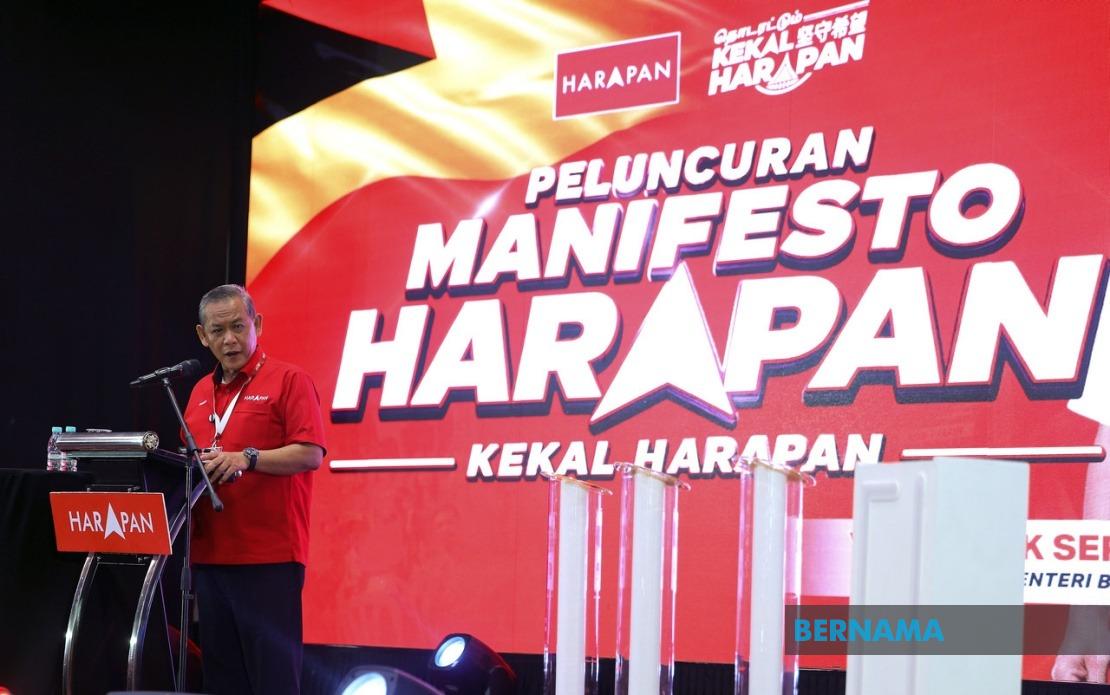
Pakatan Harapan has launched its campaign blueprint for the 16th Negeri Sembilan state election, presenting voters with a comprehensive 10-point programme under the banner 'Negeri Sembilan Kekal Harapan' (Negeri Sembilan Stays With Harapan). The manifesto, unveiled by Negeri Sembilan PH chairman and Menteri Besar Datuk Seri Aminuddin Harun in Seremban, articulates the coalition's vision for steering the state through a fresh electoral mandate while consolidating support among key voter demographics across the peninsula's central region.
The coalition has positioned governance quality as its foundational pledge, emphasising the delivery of stable, transparent and citizen-focused administration as the cornerstone of its re-election bid. This framing reflects PH's strategy to leverage its incumbent status and track record while addressing persistent concerns about institutional integrity and responsiveness that resonate across Malaysian constituencies, particularly in states where governance performance directly influences electoral outcomes.
Amongst the manifesto's substantive economic pillars, PH commits to generating 30,000 high-income employment opportunities, a pledge that speaks directly to youth anxieties about career progression and wage adequacy. In a state where manufacturing and services remain significant employment drivers, this jobs agenda carries particular weight for first-time voters and professionals seeking alternatives to migration. The commitment to building a competitive economy suggests prioritising sectoral diversification and productivity improvements rather than relying on traditional resource extraction or low-value manufacturing.
Housing affordability emerges as a critical social commitment, with the coalition pledging to construct 20,000 affordable residential units whilst simultaneously tackling longstanding land disputes that have frustrated homebuyers and rural communities. Negeri Sembilan, like much of Malaysia, faces mounting pressure on housing accessibility as property prices outpace wage growth, making this pledge potentially decisive among middle and lower-income households weighing competing party platforms.
Educational access and quality feature prominently within the manifesto's social policy framework. By guaranteeing quality schooling for all children, PH addresses parental concerns about educational outcomes, school infrastructure, and equitable resource distribution across urban and rural settings. This commitment carries regional significance given ongoing debates about vernacular education, examination standards, and skills alignment with labour market demands across Southeast Asia's emerging economies.
The manifesto dedicates substantial attention to the People's Wellbeing Scheme (Skim Sejahtera Rakyat), indicating PH's intention to deepen and expand existing welfare infrastructure. Strengthening this programme suggests enhanced targeted assistance for vulnerable populations, potentially through improved benefit mechanisms, expanded eligibility criteria, or better integration with other social safety nets. In Malaysia's context, where cost-of-living pressures intensify annually, welfare programme enhancement represents a tangible policy lever for addressing household financial strain.
Youth empowerment, women's advancement, and family support constitute a third thematic cluster within the 10 commitments. These pledges recognise shifting demographic priorities and evolving social expectations regarding gender equality and intergenerational opportunity. For Negeri Sembilan's electorate, such commitments signal openness to progressive social policies whilst maintaining family-centric welfare philosophies that retain broad appeal across diverse constituencies.
Tourism and cultural heritage development features as an economic diversification strategy with particular relevance for Negeri Sembilan, a state with distinctive historical sites, traditional Minangkabau architecture, and cultural attractions. Investing in these sectors offers employment diversification away from manufacturing whilst positioning the state as a regional tourism destination, potentially capturing visitor flows and generating ancillary economic activity throughout local communities.
Agriculture modernisation and food security represent forward-looking infrastructure commitments acknowledging Malaysia's vulnerability to global supply chain disruptions and the sector's importance for rural livelihoods. By combining technological advancement with security-focused objectives, PH signals awareness of climate risks, farmland conversion pressures, and the need for sustainable production methods that balance productivity with environmental stewardship.
The Felda Development Plan implementation reflects PH's engagement with settler communities and historical land schemes that remain politically significant in rural Negeri Sembilan. Renewed commitment to Felda schemes addresses concerns within these constituencies about scheme viability, settler profitability, and institutional modernisation in response to changing agricultural economics.
Strategic infrastructure and healthcare service delivery commitments address mobility, access and public health outcomes—issues affecting rural and urban constituencies differently but universally. These pledges suggest PH's intention to reduce urban-rural divides through targeted investment in connectivity and medical facilities, responding to documented disparities in healthcare availability and quality across peninsular Malaysia.
Interfaith unity features as the manifesto's final commitment, reflecting Malaysia's multi-religious composition and ongoing significance of religious harmony within electoral politics. By explicitly foregrounding this pledge, PH positions itself as guardian of Malaysia's pluralistic social contract at a moment when religious polarisation concerns periodically surface during electoral campaigns across the country.
Collectively, these 10 commitments project a cross-cutting strategy addressing economic opportunity, social welfare, infrastructure modernisation, and social cohesion. For Malaysian voters, the manifesto represents a comprehensive policy response to multiple governance domains, though ultimate electoral impact will depend on perceived implementation credibility, competitive differentiation from opposing coalitions, and ground-level campaign effectiveness across Negeri Sembilan's diverse constituencies.

