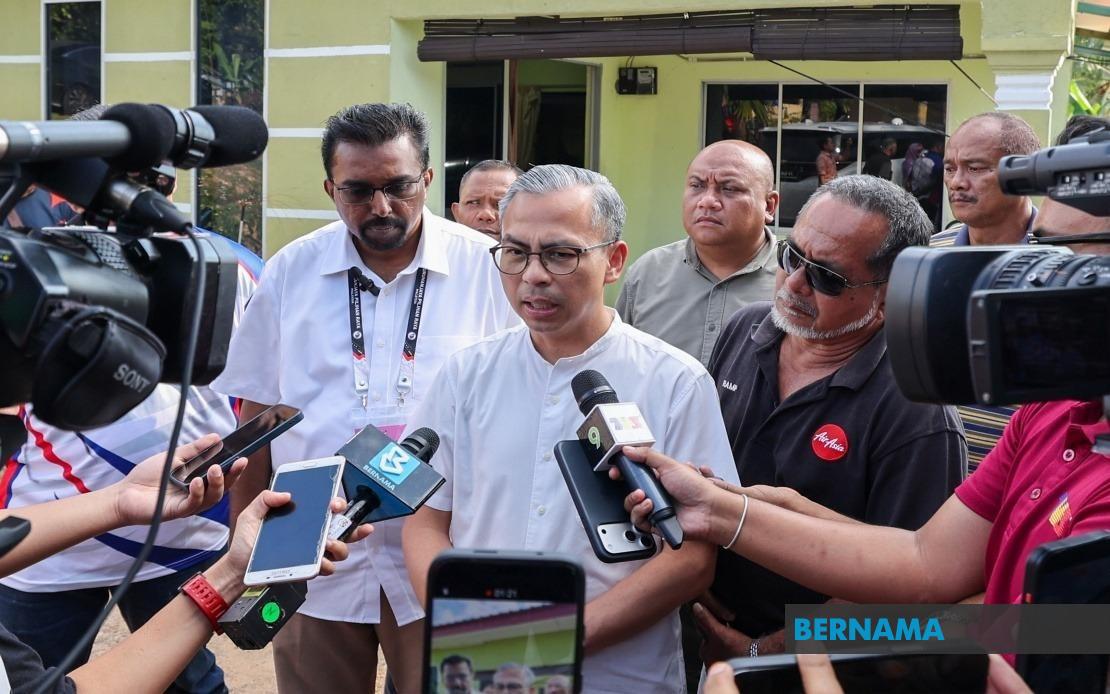
The Negeri Sembilan state election campaign has so far proceeded without significant disruption on social media platforms, according to Communications Minister Datuk Seri Fahmi Fadzil, who reported that the Malaysian Communications and Multimedia Commission has fielded just 16 complaints since voting campaigning commenced. The relatively low complaint rate at this midway point suggests that political actors and the general public have largely adhered to responsible online conduct during the six days of campaigning that had elapsed at the time of his remarks, made during a ministerial visit to Felda Palong 1 in Jempol.
Breaking down the complaint figures offers insight into the nature of online disruptions during this election period. Fourteen of the 16 cases referred to the MCMC involved problems with telecommunications network infrastructure rather than deliberate rule violations or unethical conduct. The remaining two complaints centred on the creation and operation of fraudulent social media accounts, which represent a more direct challenge to the integrity of online electoral discourse. This composition suggests that technical problems have dominated official concerns rather than widespread disinformation campaigns or coordinated harassment, though this assessment covers only the first half of the campaign period.
Fahmi's guidance to the public on reporting mechanisms reflects the multi-layered approach now embedded in Malaysia's election oversight framework. Citizens who encounter content they believe violates election regulations or the terms of service established by social media operators should first contact the relevant platform directly—whether that is Facebook, Twitter, TikTok, or other services. Should the platform operator fail to take remedial action within a reasonable timeframe, affected parties can escalate their complaint to the MCMC, which possesses regulatory authority to compel compliance. This two-tier system distributes enforcement responsibilities between private companies and government agencies while emphasizing community participation in maintaining electoral integrity.
The minister's cautionary remarks about the final 72 to 96 hours of the campaign period reveal an appreciation for historical patterns in Malaysian electoral behaviour online. Prior elections have witnessed a demonstrable surge in social media activity as voting day approaches, with various political factions intensifying their messaging and supporters becoming increasingly engaged and vocal. This temporal concentration of online activity creates both opportunities and risks—campaigns can reach undecided voters more effectively, but the sheer volume of posts and content makes it harder for platform moderators and electoral authorities to identify and respond to false information, manipulated media, or other problematic material quickly enough to prevent its amplification.
The specific concern about false information in the final campaign days reflects growing awareness of how misinformation can suppress voter turnout or distort electoral outcomes. In Malaysia's context, where key demographic groups including rural voters, elderly citizens, and less digitally literate segments of the population increasingly consume news through social media platforms, the spread of unverified claims about polling locations, voting procedures, candidate records, or policy positions can have tangible effects on electoral behaviour. The MCMC and government agencies have invested significantly in monitoring capabilities and rapid-response teams designed to identify and counter false narratives during this critical final window.
Beyond the immediate electoral concerns, Fahmi's visit to Felda Palong 1 highlighted a separate infrastructure challenge that has broader implications for rural Malaysia's digital inclusion. The Communications Minister identified connectivity gaps along main access roads serving the Felda settlement, distinguishing this from coverage within residential areas themselves. This pattern—where roads serve as connectivity weak points—reflects the economics of telecommunications deployment in agricultural communities, where the dispersed nature of population and lower revenue potential make infrastructure investment less attractive to commercial operators. The safety dimension Fahmi emphasized is particularly relevant; poor road connectivity can delay emergency response in accidents or medical situations where real-time communication proves critical.
The memorandum of understanding on network sharing that telecommunications companies executed last year represented an attempt to address fragmented coverage through infrastructure cooperation. However, the minister acknowledged that implementation progress has lagged significantly behind initial expectations. This gap between agreement and execution reflects common challenges in telecommunications regulation globally, where competing commercial interests can slow the rollout of shared infrastructure projects despite their broader public benefits. The slow pace suggests that regulatory incentives or enforcement mechanisms may need strengthening to translate cooperation agreements into visible network improvements for affected communities.
Fahmi outlined a multi-pronged strategy to address rural connectivity shortfalls, encompassing solutions at different timescales and cost points. New telecommunications tower construction represents the long-term fix, requiring significant capital investment and navigating land acquisition and planning approval processes. The optimization of existing infrastructure offers quicker wins by improving efficiency of currently deployed equipment through technical upgrades. As an intermediate measure, satellite-based internet services such as Starlink provide connectivity without waiting for ground infrastructure development, though their higher latency and data costs make them unsuitable as permanent solutions for most users. This tiered approach acknowledges that no single technology solution fits all circumstances and that a portfolio strategy maximizes coverage expansion within realistic budget constraints.
Enhancing telecommunications companies' complaint resolution systems through artificial intelligence represents an administrative innovation distinct from infrastructure expansion but equally important for consumer experience. AI-powered tracking systems allow customers to check complaint status in real time, reducing the opacity that often characterizes traditional customer service interactions. For rural users reporting connectivity problems, such transparency systems can improve confidence that concerns are being addressed rather than languishing in bureaucratic queues. The emphasis on leveraging technology to solve procedural problems reflects contemporary regulatory thinking that technological tools can improve governance effectiveness when properly deployed.
The Negeri Sembilan election, scheduled for August 1 with early voting on July 28, serves as a practical testing ground for Malaysia's electoral management systems as the country continues developing its approach to managing campaign activity across digital platforms. The relatively controlled environment reported by the Communications Minister at the midway point does not guarantee smooth sailing through the final intensive campaign phase, when unpredictable dynamics can rapidly emerge. How Malaysian authorities and platform operators navigate the final week will provide valuable lessons for managing future electoral contests in an increasingly digitalized political environment where social media simultaneously amplifies legitimate campaign messaging and creates vectors for electoral interference.

