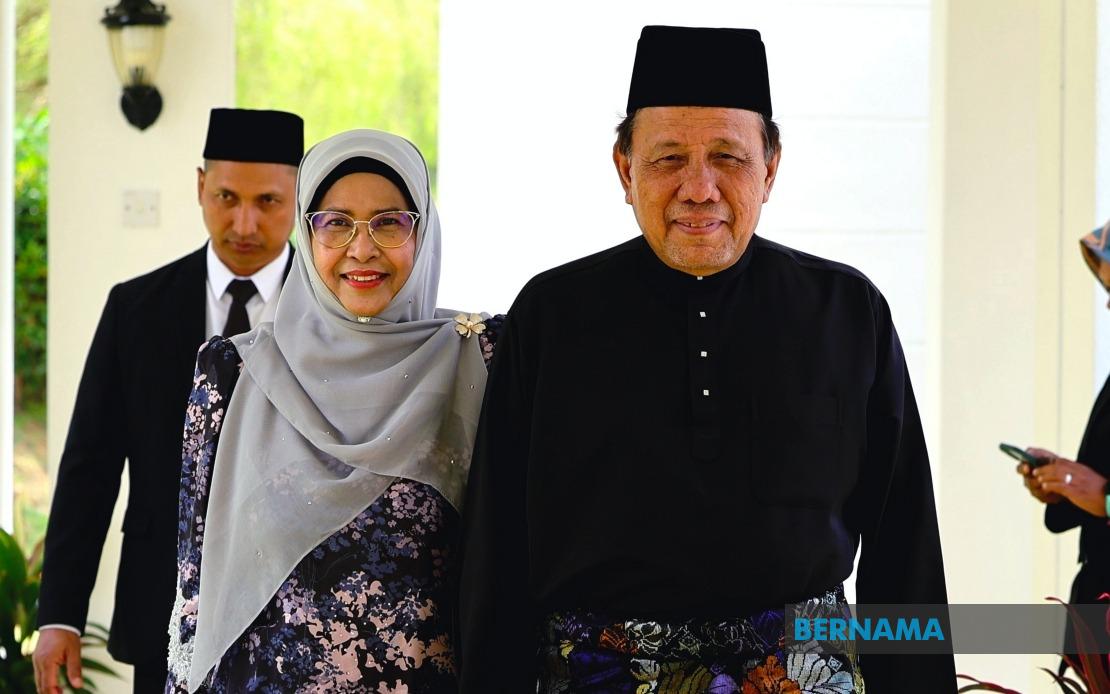
Negeri Sembilan's newly appointed Menteri Besar Datuk Ismail Lasim announced on August 2 that the state government would observe August 3 as an occasional public holiday, honouring the contributions of residents and various organisations involved in the successful completion of the 16th state election held the previous day. The declaration carries the explicit approval of Tuanku Muhriz Tuanku Munawir, the Yang Dipertuan Besar of Negeri Sembilan, underscoring the royal sanction for both the executive decision and the new administration itself.
During his inaugural press conference as Menteri Besar, held in Kuala Pilah following his swearing-in ceremony at Istana Besar Seri Menanti, Ismail articulated the rationale behind the holiday as recognition of the physical and emotional toll of electoral engagement on the state's population. He emphasised that despite the successful conclusion of voting procedures, many citizens remained fatigued from the campaign season and required respite. The additional day off would provide a breathing space for the general public to recuperate before resuming their regular duties, he explained.
Ismail, aged 67, was formally sworn in as Menteri Besar before Tuanku Muhriz at the royal residence in Seri Menanti. His remarks to journalists reflected a conscious effort to establish goodwill early in his tenure by demonstrating attentiveness to public welfare. The inclusion of royal consent in his public statement served to reinforce the constitutional legitimacy of both the government formation process and this initial administrative decision, binding together the monarchy and the elected executive in a collaborative gesture.
The electoral outcome that precipitated these developments saw a decisive shift in Negeri Sembilan's political landscape. Barisan Nasional captured 18 of the 36 contested state legislative seats, while Perikatan Nasional secured seven seats. This distribution afforded both coalitions sufficient representation to govern jointly with a commanding two-thirds supermajority in the State Legislative Assembly, a substantial political mandate that fundamentally altered the composition of state power.
The election involved 103 candidates competing across all 36 state constituencies, reflecting broad participation from various political formations vying for voter approval. The scale of the electoral exercise, combined with the months of campaigning that preceded voting day, created considerable organisational and social disruption that Ismail appeared keen to acknowledge and ameliorate through the holiday announcement.
For Malaysian observers and political analysts, the decision to declare an optional holiday immediately following elections carries symbolic weight beyond its practical implications. Such gestures frequently signal a new administration's communication style and its early priorities regarding public relations. By framing the holiday as appreciation rather than administrative necessity, Ismail positioned his government as responsive and people-centric from its opening hours in office.
The political arithmetic that emerged from voting represented a consolidation of Malaysia's broader coalition-based governance model, where different electoral streams must be accommodated within shared governmental structures. The two-thirds majority achieved by the combined BN-PN arrangement ensured that the new state government would possess substantial legislative latitude for its policy agenda without facing obstruction from opposition benches, a structural advantage that typically lasts until the next electoral cycle.
The timing of Ismail's announcement—immediately after his formal investiture and with express royal endorsement—demonstrated an understanding of ceremonial protocols and their importance in Malaysian constitutional practice. By obtaining the Yang Dipertuan Besar's formal consent before publicising the holiday, the Menteri Besar adhered to established conventions governing the relationship between executive and monarchy in state-level governance.
Looking forward, the declaration also set the tone for how the new administration would engage with its electorate during the initial months of governance. Gestures of appreciation and acknowledgement of public participation could establish expectations about administrative style, suggesting a government attentive to communication and symbolic politics alongside substantive policy-making. For Negeri Sembilan residents, the unexpected day away from work provided practical immediate benefit while serving broader political purposes of legitimation and relationship-building between newly elected officials and the constituents they represent.

