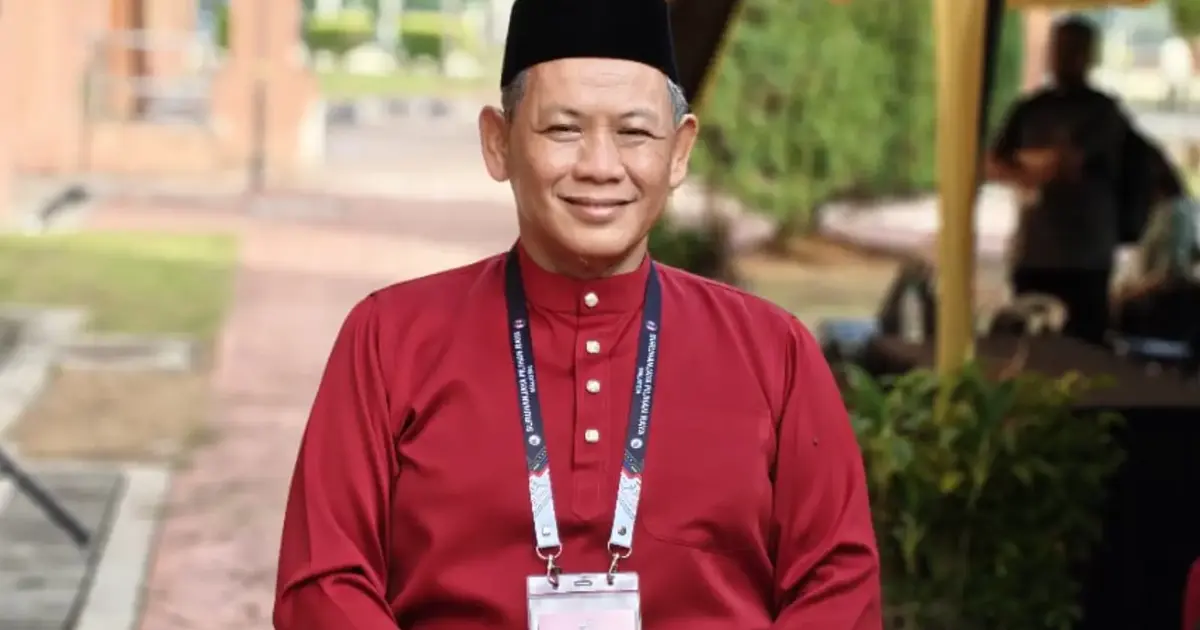
The race for the Linggi parliamentary seat has crystallised into an unpredictable three-way contest that reflects deepening fractures within Malaysia's Malay-Muslim political landscape. Negeri Sembilan Menteri Besar Aminuddin has thrown his considerable political weight into the arena, presenting a significant challenge to Barisan Nasional's Faizal Ramli, who claimed the constituency in the 2023 general election. Adding further complexity to the equation is a candidate fielded by Bersatu, the political vehicle controlled by former prime minister Mahathir Mohamad, signalling that the traditionally Umno-aligned seat has become contested ground in ways that would have seemed unthinkable merely years ago.
Linggi, located within Negeri Sembilan and characterised by its predominantly Malay Muslim demographic, has long functioned as a core constituency for Umno's political machinery. The seat's electoral mathematics have historically favoured the dominant Malay party, yet the emergence of multiple candidates reflects the fragmentation currently splintering the Malay-nationalist coalition. Faizal Ramli's 2023 victory offered Barisan Nasional validation of its continued appeal among core voters, providing the incumbent a platform of incumbency that typically confers meaningful electoral advantages. However, the decision by Aminuddin to contest signals that conventional political calculations may no longer apply with certainty.
Aminuddin's entry into the Linggi race carries particular significance given his position as chief minister of Negeri Sembilan, a portfolio that grants him administrative resources, media visibility, and a direct mandate from the state government machinery. His decision to step down from his seat to pursue this contest demonstrates calculation that the political stakes and potential returns justify the risk of contested competition at the state level. This manoeuvre reflects broader patterns observed across Malaysian politics, where state-level leaders increasingly leverage their executive platforms to contest federal constituencies, blurring traditional distinctions between state and federal political arenas.
The presence of a Bersatu candidate introduces a third dimension that complicates the electoral arithmetic substantially. Bersatu has positioned itself as an alternative within the Malay-Muslim political space, particularly among voters disenchanted with Umno's handling of governance and corruption concerns. The party's participation in the Linggi race suggests strategic calculations that this constituency presents an opportunity to expand its parliamentary footprint beyond its existing bases. For Bersatu, a strong performance in Linggi would validate its broader appeal across the peninsular heartland and signal that its political project extends beyond niche constituencies or reliance upon leadership personalities.
The three-cornered dynamic introduces unprecedented uncertainty into a seat that Umno long treated as reliably retainable territory. Vote splitting becomes the operative concern for all three camps, with none able to assume that securing a plurality of votes guarantees victory. This particular vulnerability shapes campaign strategies, as each candidate must calculate whether to pursue a consolidation approach targeting specific voter demographics or a broader appeal designed to accumulate votes across multiple communities. Historical precedent offers limited guidance, as Malaysian parliamentary politics at this level rarely features genuinely competitive three-way contests where all three candidates maintain credible victory scenarios.
The electoral implications extend beyond Linggi's immediate boundaries to influence broader perceptions regarding the viability of Umno's political project and Barisan Nasional's capacity to retain strongholds against determined challenges. A defeat for Faizal Ramli would represent a significant symbolic loss, suggesting that incumbency offers limited protection in an environment where voter loyalty has become more fluid and conditional. Conversely, if Barisan National retains the seat despite the three-cornered challenge, it would reinforce narrative suggesting that the coalition maintains residual strength within traditional constituencies, albeit with narrowing margins.
For Aminuddin personally, the Linggi contest represents a significant political gamble with implications for his trajectory within his own party and state politics. A successful challenge would elevate his national political profile, positioning him as a rising figure capable of winning federal contests and potentially expanding his political influence beyond Negeri Sembilan's borders. Conversely, defeat would raise questions regarding his political viability and might necessitate tactical adjustments to his state-level strategy. The contest thus functions simultaneously as a local electoral contest and as a referendum on competing visions for Malay-Muslim political representation and leadership within contemporary Malaysian politics.
The Linggi race also reflects broader trends within Malaysian electoral politics regarding the devolution of political competition into previously settled constituencies. Constituencies that once functioned as reliable delivery vehicles for particular parties increasingly find themselves contested, as regional leaders build platforms enabling them to challenge established federal players. This development complicates campaign planning, resource allocation, and coalition maintenance, as parties must contest on multiple fronts simultaneously and manage complex negotiations regarding candidate selection and seat allocation.
From a regional perspective, the Linggi contest offers insights into how Malaysian politics has evolved in the post-2018 era. The fluidity evident in three-cornered contests involving state-level figures contesting federal seats suggests that electoral outcomes have become less predictable and that traditional power bases require active defence rather than passive management. The stakes involved in the Linggi race extend to shaping perceptions regarding which political formations possess momentum and legitimacy among core constituencies, with ramifications that ripple across subsequent electoral contests and coalition formation negotiations.

