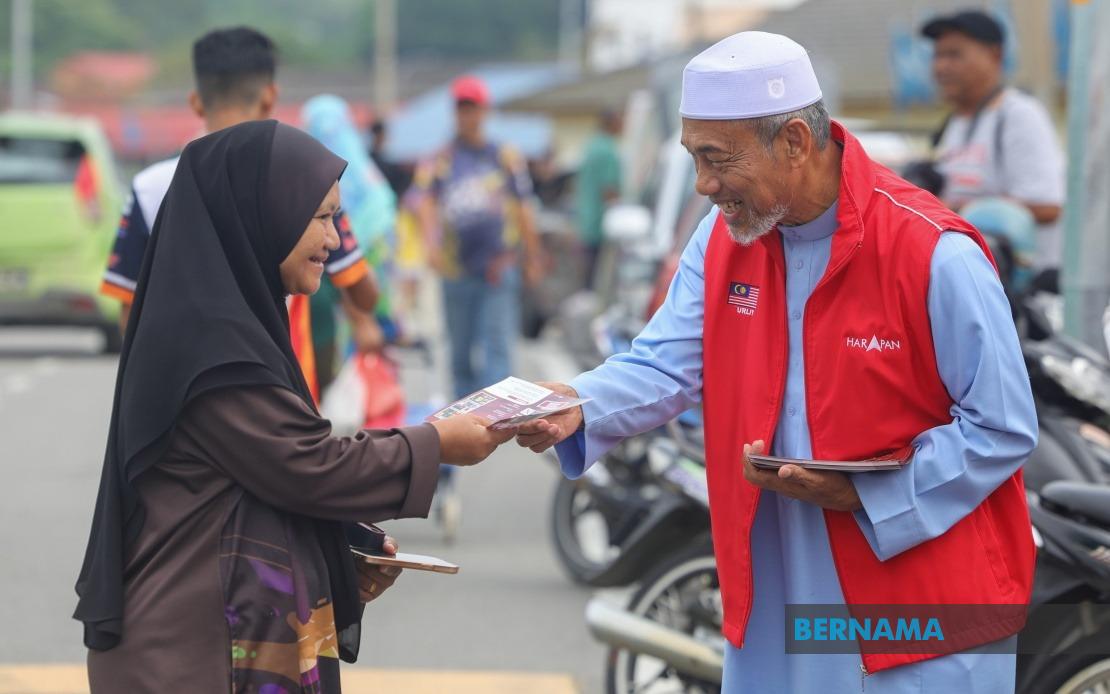
Candidates across Negeri Sembilan shifted into high gear on the second day of campaigning for the 16th state election, flooding their schedules with breakfast sessions, market walkabouts, and community engagements designed to build personal connections with voters ahead of the August 1 polling day. With just 12 days remaining in the formal campaign period, contenders from competing coalitions are executing increasingly ambitious daily itineraries that underscore the intensity of ground-level political mobilisation in the state.
The scale of activity reflects a deliberate strategic choice by campaign teams to prioritise face-to-face voter interaction over mass rallies or media-heavy approaches. Several candidates have organised up to nine separate programmes in a single day, fragmenting their time across multiple neighbourhoods, market districts, and community spaces to maximise geographic coverage and demographic reach. This granular approach allows campaigns to identify and address localised concerns while building the perception of candidate accessibility and availability.
Menteri Besar Datuk Seri Aminuddin Harun, defending his Linggi state seat while serving as Negeri Sembilan PKR chairman, exemplified this intensive model. He opened his day with dawn prayers at Masjid Jamek Pasir Panjang, then proceeded through a succession of residential areas including Pasir Panjang town, Taman Setia, Taman Kekatong, and waterfront communities around Telok Pelandok. The sequencing of activities—blending religious observance with secular community engagement and targeted minority outreach such as his session with Indian community members—demonstrates how campaigns now interweave multiple voter groups and constituencies within single campaign days.
Aminuddin's messaging during these encounters emphasised direct responsiveness to constituents. He framed walkabouts not merely as campaign events but as listening sessions where personal encounters would inform his understanding of voter priorities. His statements referenced development benefits and future-oriented promises, suggesting that campaign discourse in this election centres on tangible service delivery rather than ideological positioning. As both Port Dickson Member of Parliament and a PKR vice-president, his prominence in the Negeri Sembilan contest underscores how state elections now attract senior federal figures seeking to consolidate support across administrative levels.
The Pakatan Harapan coalition maintained consistent momentum through multiple candidates pursuing identical tactical scripts. DAP secretary-general Anthony Loke, contesting the Chennah seat, opened with a high-profile market walkabout at Seremban's central commercial district before transitioning to an evening dinner engagement, a pattern mirroring how campaigns now bridge morning grassroots activity with evening community gatherings. Similarly, Kamarul Ariffin Wafa, the PH candidate for Seri Menanti, assembled eight distinct programmes incorporating market interactions and geographical tours across his constituency boundaries.
These PH activities suggest a deliberate strategy of candidate visibility and accessibility designed to counter any incumbent advantage held by Barisan Nasional representatives. By flooding the media space with daily activity reports and photographs from multiple locations, campaigns generate continuous local news cycles that sustain voter awareness without requiring large advertising expenditures. Market walkabouts particularly serve this function, as they occur in high-traffic public spaces and generate spontaneous interactions that campaigns can later amplify through social media and WhatsApp distribution networks.
The Barisan Nasional camp deployed comparable grassroots intensity, though with different emphasis points. Datuk Seri Mohamad Hasan, the incumbent Rantau assemblyman and BN deputy chairman, conducted operations from a polling district centre, suggesting more structured coordination through existing party infrastructure. Jalaluddin Alias, heading the Negeri Sembilan UMNO Liaison Committee, incorporated youth sporting events and Orang Asli community visits into his campaign schedule, indicating efforts to engage demographic groups that historically respond to BN-aligned community development initiatives.
The inclusion of indigenous community outreach by BN candidates reflects broader electoral arithmetic in Negeri Sembilan, where Orang Asli populations in constituencies like Serting represent potentially decisive voter blocs. By integrating such communities into campaign calendars early and visibly, BN seeks to reinforce longstanding patronage relationships and counter perceptions that opposition parties focus exclusively on urban voter bases. This bifurcated approach—simultaneous engagement with urban market districts and rural indigenous settlements—characterises how modern Malaysian state elections now require multilocal campaign strategies.
Campaign intensity is further shaped by the electoral mathematics governing this contest. The state election will attract 889,490 registered voters, comprising 867,151 ordinary voters alongside 16,884 military personnel and their families eligible for early voting on July 28, plus 5,455 police voters. Early voting windows represent concentrated opportunities for campaigns to mobilise uniformed personnel, necessitating early and repeated contact with military and police communities. This explains the prominence of breakfast sessions and informal gatherings—they provide non-threatening environments where candidates can engage security force families without triggering concerns about political pressure in hierarchical institutions.
The 12-day campaign window remaining before polling day creates temporal pressure that shapes candidate behaviour. Unlike general elections, which typically extend over three weeks, state election campaigns compress activity into shorter timeframes, forcing candidates to make rapid decisions about resource allocation and venue selection. The August 1 polling date was set following the state assembly's dissolution on June 5, giving the Election Commission approximately two months to organise logistical elements while affording campaigns only two weeks of formal interaction time. This compressed schedule paradoxically incentivises more frequent daily activities, as candidates recognise diminishing returns from single-venue engagement and opt instead for high-frequency, multi-location daily circuits.
The grassroots campaign model adopted across all coalitions reflects deeper transformations in Malaysian electoral politics. Traditional campaign rallies, while still conducted, no longer dominate candidate schedules as they did a decade ago. Instead, campaigns have decentralised into countless micro-engagements designed to generate individualised voter contact and social media content. Each breakfast session, each market walkabout, each community organisation visit produces photographs and video clips that campaigns immediately distribute through digital networks, creating cumulative impressions of candidate presence and activity that can equal or exceed the reach of single large-scale gatherings.
The implications for Malaysian electoral patterns extend beyond Negeri Sembilan itself. This state election functions as a mid-term barometer of federal political sentiment, occurring more than two years into the current Pakatan Harapan-led federal government. The intensity of grassroots mobilisation by both coalitions suggests considerable at-stake perception among party leadership regarding what the Negeri Sembilan results will signal about broader public mood. High campaign activity levels typically correlate with high-stakes electoral contests where leading parties anticipate competitive outcomes rather than assured victories, implying that both BN and PH view the state election as genuinely competitive rather than predetermined.
The organised nature of campaign schedules—with candidates maintaining daily programme bulletins and media advisories—demonstrates how contemporary Malaysian political campaigns have formalised grassroots engagement into measurable, documentable activities. This professionalisation serves multiple functions: it allows party headquarters to monitor field activity levels, enables local media to anticipate candidate locations and generate coverage, and permits rival campaigns to track opponent movements and design counter-programming. The result is a highly choreographed electoral environment where spontaneity appears reduced and strategic calculation intensified, even as campaigns maintain rhetoric emphasising informal, genuine community connection.

