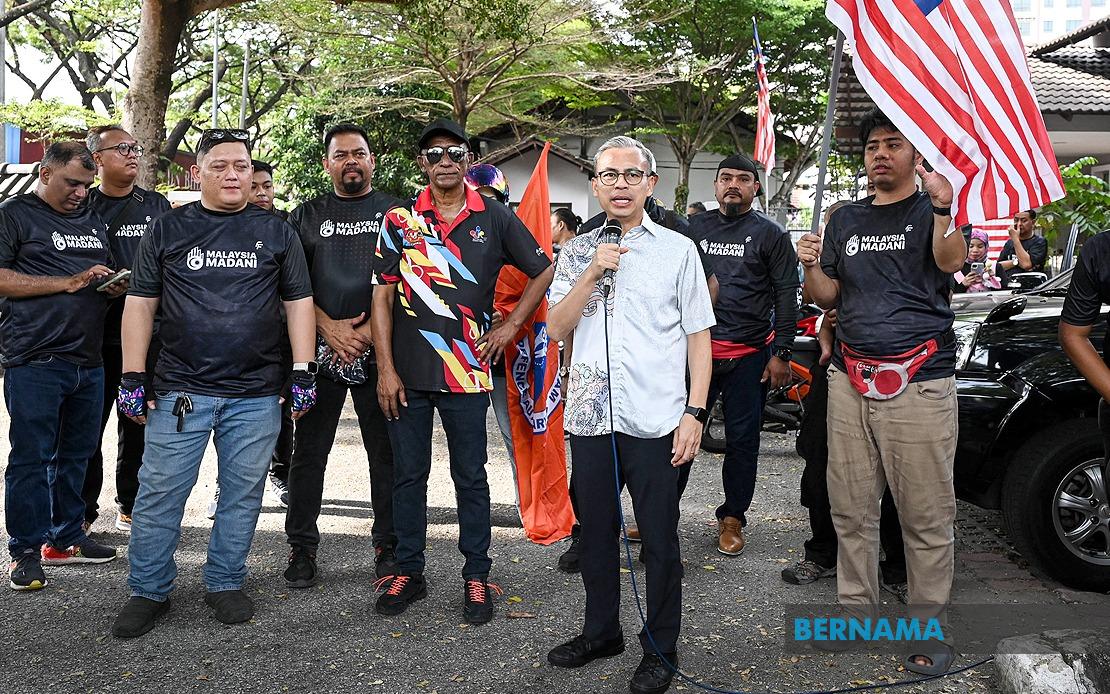
Ahead of Malaysia's independence day celebrations, nearly 300 motorcyclists converged on the Lembah Pantai constituency for a community convoy designed to celebrate national identity and reinforce bonds of unity among residents. The Kembara Merdeka Convoy took place on August 30, with Communications Minister Datuk Seri Fahmi Fadzil serving as the event's principal figure, using the occasion to emphasise the importance of solidarity across Malaysia's multicultural landscape.
Fahmi, who represents the Lembah Pantai parliamentary seat, framed the convoy as an opportunity for residents to demonstrate the essence of Malaysian citizenship—a shared commitment transcending ethnic and religious boundaries. In his remarks at the gathering, the minister highlighted how the constituency's demographic diversity, while presenting unique challenges, also represented a tremendous asset for building a cohesive society. He stressed that residents of Lembah Pantai maintain friendships across different backgrounds, and the convoy provided a tangible platform to reinforce these relationships during a period of national reflection.
The underlying message resonated with broader national discourse on unity and social cohesion, themes particularly significant during Merdeka commemorations when Malaysians traditionally reflect on their shared history and collective identity. By mobilising motorcyclists—a large and visible segment of the community—the event achieved considerable visibility and demonstrated grassroots participation in patriotic activities. The motorcycle convoy format enabled participants to traverse multiple neighbourhoods, amplifying the reach of the unity message beyond the immediate event location.
The convoy's route was carefully structured to ensure comprehensive coverage of the constituency. Beginning from Taman Seri Sentosa, the motorcade progressed through five designated pit stops, including Kampung Pasir, IWK Eco Park, and Vista Angkasa in Kampung Kerinchi, ultimately concluding at Bangsar LRT station. This geographical span ensured that diverse sections of Lembah Pantai experienced the convoy firsthand, from established residential areas to newer developments. The choice of endpoints—a popular park, community neighbourhood, and public transport hub—reflected an intention to engage residents across different socioeconomic segments and daily routines.
A particularly symbolic element of the convoy involved the distribution of Jalur Gemilang national flags at each pit stop. These flags were presented to representatives of Resident Representative Councils and community organisations, transforming the convoy from a mere procession into a structured mechanism for delivering patriotic symbols to grassroots bodies. This approach ensured that the spirit of the event extended beyond the motorcyclists themselves, reaching residents through their neighbourhood representatives and local institutions. The flag distribution served as a material manifestation of the conveyed message, providing households with physical reminders of national identity and togetherness.
Fahmi articulated a vision extending beyond the single event, expressing hope that the connections forged through the convoy would translate into sustained community engagement. He invited residents to participate in future initiatives encompassing not only patriotic celebrations but also practical community development activities. This commitment to continuity reflects a strategic approach where one-off events serve as catalysts for deeper, more permanent changes in community behaviour and civic participation. The minister's emphasis on ongoing collaboration suggests recognition that genuine unity requires continuous reinforcement through multiple channels and activities.
The timing of the convoy—on the eve of Merdeka Day—held particular significance, allowing residents to channel their patriotic sentiments into collective action. Merdeka commemorations traditionally stimulate heightened national consciousness, creating an opportune moment for politicians and community leaders to mobilise this sentiment toward constructive ends. By organising the convoy at this juncture, the Lembah Pantai leadership capitalised on the heightened awareness of national identity, embedding patriotic messages within celebratory activities rather than framing them as impositions.
For constituencies like Lembah Pantai, which encompasses both established middle-class neighbourhoods and diverse migrant communities, unity initiatives carry particular weight. The area's composition—reflected in the reference to multiple villages, parks, and estates—creates both opportunities and challenges for political leadership. Community convoys and flag distribution ceremonies serve as visible demonstrations of inclusive governance, signalling to all residents that their presence in the constituency is valued regardless of background. Such gestures, while symbolic, carry practical implications for social cohesion and political legitimacy.
The event also highlights how grassroots participation in patriotic activities remains a significant feature of Malaysian civic culture. The mobilisation of nearly 300 motorcyclists suggests robust community interest in national celebrations, though it also raises questions about demographic representation and accessibility of such activities. Motorcycle ownership and participation skew toward particular age and socioeconomic groups, meaning that while the convoy captured substantial numbers, it may not have engaged all constituency segments equally.
The Lembah Pantai convoy represents one of numerous pre-Merdeka activities occurring across Malaysia's constituencies, collectively shaping the national mood during independence commemorations. Such events, orchestrated through combinations of government initiative and community participation, contribute to the annual renewal of national identity narratives. They provide platforms for elected representatives to demonstrate commitment to unity while simultaneously allowing residents to express patriotic sentiment through structured, supervised activities.
Looking forward, the success of this convoy may influence how other constituencies approach Merdeka celebrations and community engagement more broadly. The model—combining visible pageantry with grassroots symbolic participation and extending invitations for future collaboration—offers a template that balances celebratory appeal with substantive community involvement. Whether such initiatives generate lasting changes in inter-community relations or primarily serve ceremonial functions remains an ongoing question for Malaysian politics and governance.

