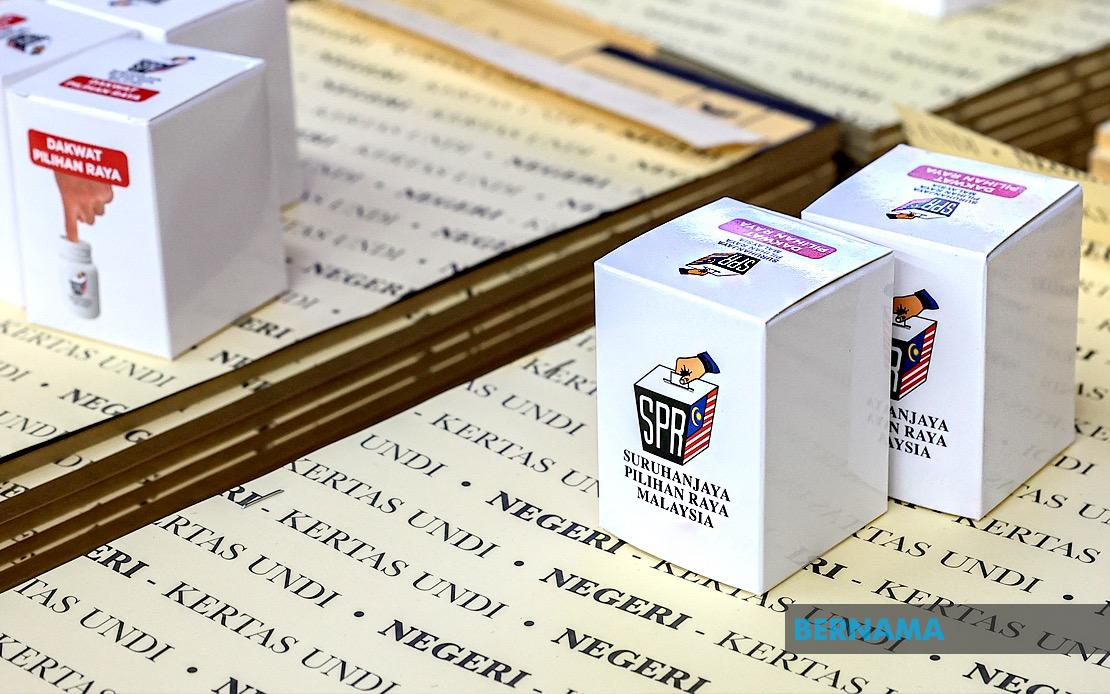
Johor's election machinery is entering a critical phase as nearly 25,000 security and enforcement personnel and their families prepare to vote ahead of the state's 16th general election. The 24,751 early voters—split between military and police forces—represent a significant bloc whose participation underscores the logistical complexity of managing elections in a state that stretches across multiple constituencies and geographical zones. This early voting window, scheduled for tomorrow, will operate across 64 designated polling centres statewide, reflecting the electoral commission's commitment to accommodating the operational schedules of uniformed services who may be unavailable during the main polling day on July 11.
The early voter contingent comprises two distinct groups with different operational requirements. Military personnel and their spouses account for 12,041 of the total, while police personnel and their spouses make up the remaining 12,710. This division reflects the administrative separation between Malaysia's defence and law enforcement hierarchies, each with distinct deployment patterns and availability constraints. The military component will vote at 11 designated centres, whereas the police-affiliated voters will utilise 53 centres spread across the state. Both categories of facilities will commence operations simultaneously at 8 am tomorrow, ensuring coordinated and transparent electoral processes.
Within the police voting segment, the commission has made provisions for diverse participation methods tailored to operational realities. Of the 12,067 police personnel and family members expected to cast votes in person at their designated centres, another 643 will exercise their franchise through postal ballots. This dual mechanism acknowledges that some uniformed officers may be stationed far from their registered polling locations or deployed on duties that preclude their physical presence. The postal voting option thus preserves democratic inclusivity while respecting the operational demands placed upon frontline security forces during an election period.
Deploying security infrastructure to safeguard the early voting process itself requires substantial human resources. The police department alone will position 3,565 personnel across all early polling centres, encompassing 647 commissioned officers, 2,806 rank-and-file constables, and 112 civilian administrative staff. Their multifaceted responsibilities extend well beyond simple crowd management; they must secure the immediate polling environments, escort ballot boxes from centres to counting venues, regulate traffic flows to prevent congestion, maintain preventive patrols against opportunistic crime, staff operations command centres for real-time coordination, and ensure law enforcement coverage across all affected areas. This layered security approach reflects the heightened sensitivities surrounding electoral integrity in Malaysia's competitive political landscape.
Operational logistics for the early voting centres reveal the granular attention required in managing distributed democratic processes. The facilities will close in staggered fashion between noon and 6 pm tomorrow, with closing times calibrated to each centre's voter registration numbers and anticipated participation rates. Three centres—Buloh Kasap Police Station in Segamat, Tenang Police Station in Labis, and Bandar Penawar Police Station—are scheduled to close at midday, reflecting minimal registered voter populations ranging from six to 28 individuals. This efficiency-focused approach prevents unnecessary prolongation of operations at centres with light expected turnout.
At the opposite end of the scale, certain facilities anticipate substantially higher voting volumes. The Federal Reserve Unit Hall No 2 at Johor Police Headquarters represents the largest police early voting centre, with 1,338 registered voters casting ballots for the Stulang state constituency. Close behind stands the KEMAS Preschool facility at the 6th General Operations Force Battalion in Bakri, which will serve 927 voters contesting the Bukit Naning seat. These high-volume centres require enhanced staffing and resource allocation to manage queuing, maintain voting secrecy, and ensure orderly progression throughout the operational day.
Weather conditions may influence early voter turnout patterns across different regions. The Malaysian Meteorological Department has indicated that morning rain is forecast for the Batu Pahat, Muar, Pontian, and Tangkak districts, while generally fair conditions are anticipated throughout the remainder of the state. Rainy weather in the affected districts could suppress some early voting participation, though security personnel's operational flexibility—combined with the importance of exercising their franchise—may mitigate weather-related absences. Fair conditions elsewhere should facilitate smoother traffic flows to polling centres.
The early voting process occurs within the broader context of Johor's 16th state election, a significant political event for Malaysia's southernmost peninsular state. A total of 172 candidates are contesting the 56 available state assembly seats, reflecting intense competition across multiple constituencies. The main polling day, scheduled for Saturday, July 11, will determine the outcome of this high-stakes electoral contest. Early voting for security personnel essentially represents the opening salvo of this campaign's conclusion, allowing a crucial demographic to participate before their duties on election day may restrict their availability.
For Malaysian observers of electoral processes, this early voting mechanism illustrates how the Elections Commission navigates the inherent tension between operational imperatives for uniformed services and democratic principles requiring universal access to franchise. By accommodating security and defence personnel through separate early voting facilities, the system acknowledges their unique circumstances while maintaining the integrity and transparency expected of Malaysian electoral processes. The deployment of substantial enforcement resources to oversee early voting itself signals the government's determination to ensure security and order throughout the election period, a reassurance for observers concerned about maintaining stable democratic institutions amid intense political competition.
The scale of the early voting operation—nearly 25,000 voters across 64 centres with thousands of coordinating personnel—demonstrates the considerable administrative machinery now required to conduct state elections in contemporary Malaysia. What might appear as routine procedural activity actually reflects decades of accumulated electoral experience, refined procedures, and institutional capacity. As Johor prepares for its election climax on July 11, these early voting operations serve as both practical necessitation and symbolic affirmation of Malaysia's commitment to inclusive democratic participation, even when accommodating the complex scheduling requirements of the nation's security apparatus.

