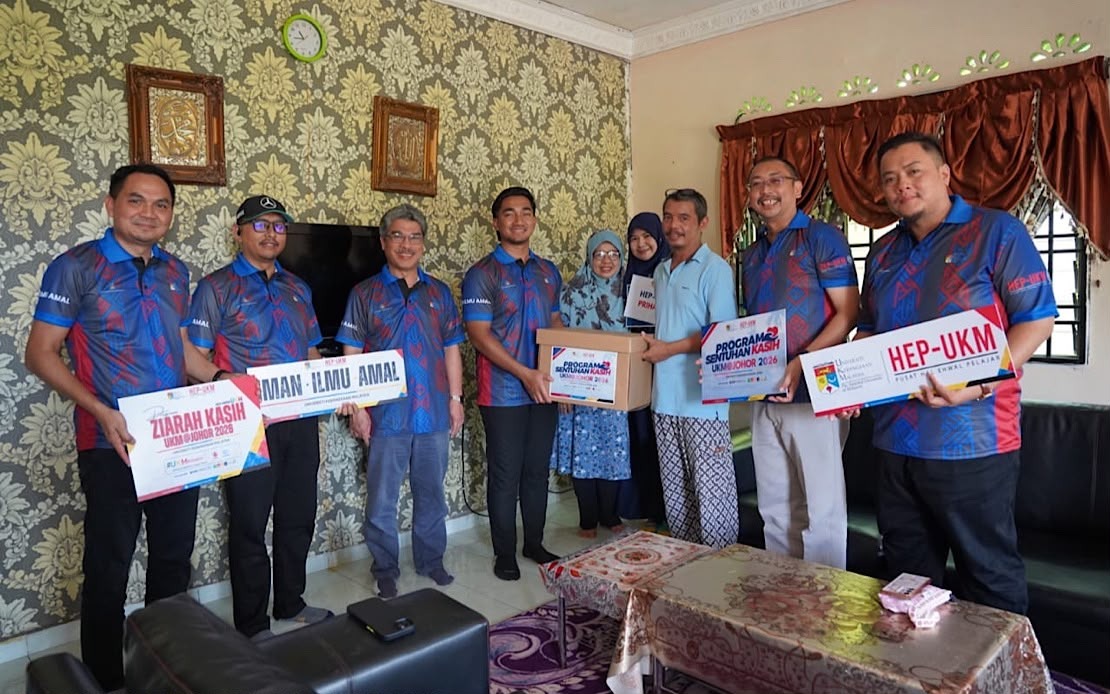
Universiti Kebangsaan Malaysia (UKM) mobilised nearly 1,000 members of the local community across four Johor locations over a recent weekend to participate in its Sentuhan Kasih UKM@Johor programme, a comprehensive outreach initiative designed to deepen institutional ties with society and demonstrate the university's commitment to service beyond its campus boundaries. The Student Affairs Centre (HEP-UKM) orchestrated the activities across Kota Masai and Pasir Gudang in addition to Kampung Baru Sri Aman and Taman Jaringan in Skudai, mobilising 78 members of the university community to facilitate engagement with residents across multiple socioeconomic backgrounds.
Themed "Dari Kampus ke Komuniti, Menyebar Kasih dan Bakti" (From Campus to Community, Spreading Love and Service), the programme reflects an institutional philosophy that universities bear responsibility to strengthen societal bonds through purposeful engagement. Rather than limiting institutional presence to academic delivery, UKM structured the weekend initiative to encompass diverse activities including community service projects, welfare visits, health screening focused on mental wellbeing, and recreational activities that brought students and residents into sustained contact. The breadth of activities reflected recognition that meaningful community engagement requires multiple touchpoints addressing both immediate community needs and opportunities for reciprocal learning.
Associate Professor Dr Darfizzi Derawi, director of HEP-UKM and programme chairman, articulated the educational rationale undergirding the initiative, emphasising that student participation in community-based activities provides developmental opportunities unavailable within conventional classroom settings. He contended that confining universities to their physical campuses represents a significant underutilisation of institutional capacity and human resources. Direct interaction with communities, he argued, cultivates essential professional competencies including adaptability, interpersonal communication and emotional intelligence that constitute critical components of graduate preparedness but remain difficult to teach through conventional instruction. The programme therefore serves dual purposes: meeting genuine community needs whilst simultaneously providing experiential learning that complements academic curricula.
UKM indicated that Sentuhan Kasih represents an expandable framework rather than a localised initiative, with explicit plans to extend the programme periodically to additional states as part of a nationwide community engagement strategy. This expansion approach suggests institutional recognition that sustained social impact requires systematic deployment across multiple regions rather than sporadic interventions. For Southeast Asian universities generally, such coordinated outreach models offer potential templates for strengthening town-and-gown relationships whilst addressing the persistent tension between academic excellence and community responsibility that characterises tertiary education in the region.
Herman Ismadi Ismail, the Kota Delima Zone Community Leader, provided insight into how residents perceived institutional engagement, suggesting that the programme succeeded in raising local awareness of UKM's initiatives and educational opportunities. His observation that approximately 80 percent of area residents work in industrial sectors, typically limiting their weekend availability, contextualises the achievement of substantial participation. The encouraging community response despite competing occupational demands indicates that residents recognised meaningful value in the university's presence, suggesting that well-designed outreach can overcome practical barriers to engagement. This finding carries implications for Malaysian universities seeking to strengthen connections with working-class communities where weekend programmes must compete with employment obligations and family commitments.
Complementing the broader community activities, UKM conducted targeted welfare visits to seven families of university students residing in the Tiram and Puteri Wangsa areas, demonstrating that the outreach strategy extended to supporting students' family contexts. This element of the programme reflects growing institutional recognition that student welfare cannot be adequately addressed through campus-based services alone, particularly for students whose families experience economic constraints. By extending institutional care into students' home communities, UKM acknowledged that educational success depends substantially on conditions beyond university control, including family stability and access to local resources.
UKM Vice-Chancellor Professor Datuk Dr Sufian Jusoh positioned the initiative within broader institutional commitments to holistic graduate development, arguing that universities bear responsibility for nurturing not merely academic excellence but also personal integrity and social consciousness. He characterised student support as extending far beyond financial assistance programmes, instead conceptualising welfare investment as fundamental to enabling students to pursue studies with confidence and competitive advantage. This framing reflects contemporary understanding that university education constitutes not merely technical skill development but moral and civic formation. For Malaysian higher education more broadly, such articulations of institutional purpose carry significance as universities navigate evolving expectations regarding their societal contributions beyond knowledge production.
Higher Education Minister Datuk Seri Dr Zambry Abd Kadir's participation in the programme signalled government endorsement of UKM's community engagement model, suggesting alignment between institutional initiatives and ministerial priorities. Ministerial attendance at community-based university programmes carries symbolic weight, indicating recognition that universities function as agents of broader national development objectives extending beyond their traditional academic missions. This governmental affirmation may encourage other Malaysian institutions to adopt comparable outreach frameworks.
The programme's emphasis on mental health screening reflects contemporary recognition that psychological wellbeing constitutes an integral dimension of community health, particularly in industrial areas where residents face occupational and economic pressures. By integrating mental health awareness into community engagement activities, UKM positioned psychological support as a legitimate component of institutional service rather than a specialised concern accessible only through formal healthcare systems. This approach carries implications for how Malaysian universities conceptualise their public health roles in contexts where mental health services remain understaffed and underutilised across much of the country.
The Sentuhan Kasih programme exemplifies an institutional model that situates universities as anchors of community development rather than isolated knowledge repositories. By deploying student resources systematically to address community needs whilst simultaneously providing students with transformative engagement experiences, UKM demonstrated how universities can simultaneously advance educational missions and strengthen societal bonds. As Malaysian universities increasingly face expectations to justify their public investment through tangible community contributions, programmes such as Sentuhan Kasih offer evidence that such dual objectives need not represent contradictory institutional commitments but rather complementary elements of coherent educational philosophy.

