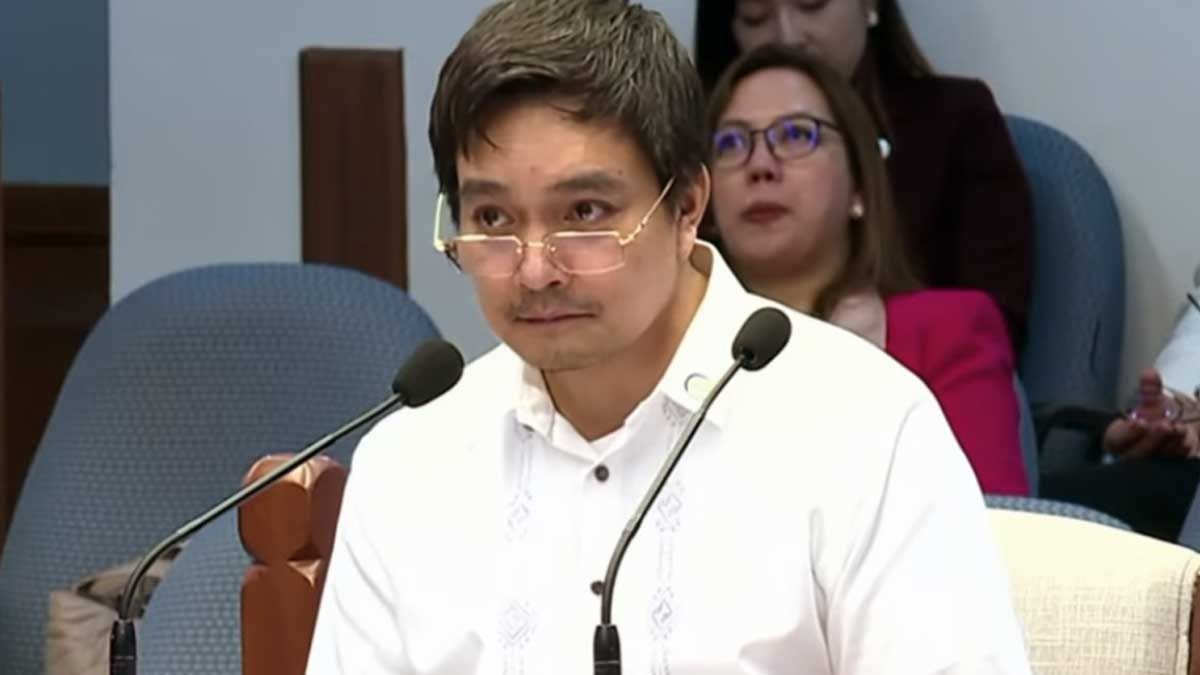
The National Bureau of Investigation's lead investigator into Vice President Sara Duterte's alleged assassination threats has conceded he possesses no firsthand knowledge of her directly contracting a killer, yet maintains that evidence gathered by his agency establishes a connection between the vice president and the purported plot. NBI Regional Director Jeremy Lotoc's testimony during Duterte's impeachment trial on Tuesday revealed the tension between the investigative agency's conclusions and the evidentiary foundation supporting them, raising questions about the sufficiency of circumstantial evidence in such an extraordinary allegation against the nation's second-highest official.
Lotoc, who headed the NBI's Crime Division during the initial investigation, grounded his team's belief on assembled evidence rather than direct testimony or confessions. When pressed by Duterte's defence counsel Mark Vinluan during cross-examination, Lotoc repeatedly acknowledged the absence of personal knowledge whilst simultaneously asserting confidence in conclusions derived from their investigative work. This distinction proved central to the defence strategy, which sought to expose the inferential nature of the prosecution's case and distinguish between what investigators believe and what they can substantiate through direct evidence.
The investigation originated from remarks Duterte made during a public online media briefing on November 23, 2024, in which she appeared to reference contracting someone to kill President Ferdinand Marcos Jr., First Lady Liza Araneta-Marcos, and former House Speaker Martin Romualdez. These statements became the foundation for the fourth article of impeachment filed against her, transforming what many observers initially interpreted as rhetorical hyperbole into formal state charges. The allegations represent an unprecedented constitutional crisis, given that impeachment against a sitting vice president remains extraordinarily rare in Philippine democratic history.
During questioning by Vinluan, tensions escalated between the defence and prosecution teams over the interpretation and significance of Duterte's various statements in the same video where she allegedly threatened the assassination plot. When Lotoc confirmed the existence of Duterte's utterances regarding corruption allegations against certain individuals, Vinluan seized upon the acknowledgment to argue that the NBI director had inadvertently validated all of her claims. This prompted a sharp objection from private prosecutor Amando Ligutan, who accused the defence lawyer of deliberately distorting the witness's testimony to create misleading implications. The exchange illustrated how the trial proceedings have become increasingly contentious, with both sides competing for rhetorical advantage through witness examination.
Presiding Officer Senator Francis "Chiz" Escudero intervened multiple times to restore decorum, at one point chastising both legal teams for conducting themselves as though participating in a "college debate" rather than a serious constitutional proceeding. Escudero's frustration reflected broader concerns about the trial's trajectory, as procedural disputes and strategic posturing have sometimes overshadowed substantive examination of the evidence. The senator's interventions also underscored the presiding officer's authority to shape how testimony unfolds and which lines of questioning proceed, a power that could influence the ultimate finding of guilt or innocence.
When asked directly whether he possessed personal knowledge that Duterte contracted an assassin, Lotoc answered affirmatively, but qualified his response by grounding it in the evidence his team had accumulated. This formulation allowed Lotoc to maintain his investigative conclusions while remaining technically honest about the absence of direct knowledge, a distinction that highlights the epistemological challenges facing the tribunal. For Malaysian observers familiar with similar high-stakes political trials, the difficulty of establishing guilt beyond reasonable doubt in cases involving circumstantial evidence and inferences from political rhetoric is well recognised.
Senate President Sherwin Gatchalian later probed what specific evidence demonstrated Duterte's capability to execute such threats. When Lotoc initially suggested that her office as vice president itself constituted evidence of capability, Gatchalian immediately challenged this reasoning, correctly noting that holding high office does not automatically confer the ability or willingness to commit murder. This exchange proved revealing, as it suggested that even sympathetic senators questioned whether the investigators had assembled sufficiently concrete evidence. Lotoc subsequently invoked the International Criminal Court case against Duterte's father, former President Rodrigo Duterte, regarding alleged extrajudicial killings during the war on drugs as circumstantial evidence of the vice president's own capacity for violence.
The reference to the senior Duterte's ICC proceedings introduced a deeply contentious element into the impeachment trial, as it relied upon guilt by association rather than direct evidence of Sara Duterte's intentions or actions. Critics of the impeachment effort have argued that the prosecution's case rests fundamentally on this kind of indirect reasoning, extrapolating from family background and political rhetoric to construct allegations of murder conspiracy. Supporters counter that the vice president's own statements, combined with her access to state resources and position of authority, create a plausible foundation for serious investigation, even if conclusive proof remains elusive at this stage.
For Southeast Asian political analysts, the Duterte impeachment trial represents a critical test of institutional checks on executive power in the Philippine system. The proceedings will ultimately determine whether circumstantial evidence, witness testimony, and contextual factors suffice to remove from office the nation's vice president, or whether the prosecution must establish a higher evidentiary threshold. The trial's outcome will have implications beyond the Philippines, potentially influencing how other democracies in the region approach impeachment proceedings against senior officials accused of extraordinary crimes.
The credibility and persuasiveness of Lotoc's testimony will likely prove decisive in the trial's final judgment. His acknowledgment of investigative limitations whilst maintaining confidence in conclusions reached through circumstantial evidence places senators in an uncomfortable position, requiring them to evaluate whether investigators have crossed the threshold from reasonable suspicion to probable cause, or whether they have merely constructed an inferential narrative that fills evidentiary gaps with assumption. As the impeachment trial continues, this tension between investigative conviction and evidentiary sufficiency will remain central to the constitutional process unfolding in Manila.

