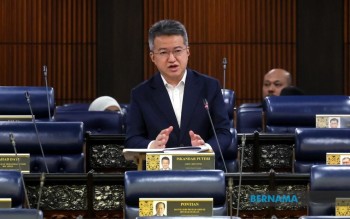
Malaysia has taken a significant legislative step toward building a permanent sovereign wealth mechanism, with the National Trust Fund Bill 2026 formally introduced for first reading in the Dewan Rakyat on July 14. The legislation represents an attempt to institutionalise long-term financial stewardship by establishing the National Trust Fund, or KWAN in Malay, alongside a dedicated governing body—the National Trust Fund (Incorporated)—to manage, administer and invest accumulated reserves on behalf of current and future Malaysian citizens.
Deputy Finance Minister Liew Chin Tong presented the bill with plans to move swiftly into second reading during the current parliamentary session, signalling government determination to advance this framework. Once enacted and operational—pending a proclamation date to be announced by the Finance Minister in the Gazette—the legislation will create a legally binding system for channelling portions of national revenue into a protected financial reserve, mirroring similar models used by resource-rich nations seeking to prevent short-term fiscal pressures from eroding long-term wealth.
The funding architecture outlined in the bill establishes multiple mandatory contribution streams that ensure consistent capital accumulation. The Federal Government must allocate annually a minimum of 0.1 per cent of its projected revenue to the fund, creating a baseline commitment tied directly to overall fiscal performance. Beyond this floor, the government is obligated to channel at least two per cent of all dividends received from Petronas—a substantial portion given Malaysia's continued reliance on petroleum revenues—into KWAN for each financial year. A third revenue source involves no less than two per cent of export duties collected on depleting natural resources, after deducting any duty assignments already committed to state governments, ensuring that resource wealth contributes systematically to generational financial security.
These contributions represent a recognition of Malaysia's vulnerability to commodity price fluctuations and finite resource stocks. By institutionalising transfers into KWAN, the framework attempts to insulate long-term wealth accumulation from political pressure to spend resource revenues on immediate priorities. Each transfer will be itemised within the annual financial statement presented to parliament, building public accountability and transparency around fund mechanics. The government commits to completing all required transfers by the end of each financial year, establishing a predictable schedule that allows fund managers to plan investment strategies effectively.
The bill extends contribution opportunities beyond federal channels, explicitly inviting state governments to deposit royalties derived from petroleum or other depleting resources. This federalism dimension acknowledges Malaysia's constitutional arrangement whereby natural resource exploitation involves both federal and state actors. By opening KWAN to state contributions, the legislation creates incentive structures for resource-rich states to participate in intergenerational wealth preservation, though participation appears voluntary rather than mandatory. This flexibility may address concerns from petroleum-producing states regarding revenue-sharing arrangements while broadening the fund's capital base.
Investment governance emerges as a critical operational element within the proposed structure. The National Trust Fund (Incorporated) board—whose composition, appointment procedures and accountability mechanisms are presumably detailed elsewhere in the bill—must develop a comprehensive strategic asset allocation framework specifying long-term investment direction. This requirement resembles practices adopted by global sovereign wealth funds, which typically adopt multi-decade investment horizons spanning equities, bonds, real estate and alternative assets rather than limiting reserves to conservative fixed-income instruments. The board's fiduciary responsibility to articulate and regularly review this strategy provides a governance anchor ensuring professional fund stewardship.
Transparency mechanisms embedded within the legislation require the National Trust Fund (Incorporated) to furnish the Finance Minister with regular returns, detailed accounts, comprehensive reports and whatever additional information the minister deems necessary regarding fund assets and activities. This reporting obligation creates accountability loops connecting fund management to political oversight while maintaining sufficient operational independence for the board to execute investment decisions without micromanagement. The framework balances the legitimate public interest in understanding how national wealth is deployed against the pragmatic reality that professional investment management requires insulation from short-term political interference.
The bill also addresses the operational costs essential to effective fund administration, explicitly authorising KWAN's deployment for board member remuneration, officer compensation, staff reimbursement and other expenses necessary for managing and investing accumulated reserves. Without this provision, administrative costs might erode fund performance or create perverse incentives for cost-cutting that compromises investment quality. The legislation's recognition that professional wealth management demands adequate resourcing suggests serious intent to establish a credible, well-staffed institution rather than a nominal vehicle.
For Malaysian stakeholders, this legislation carries implications extending beyond fiscal mechanics. The creation of KWAN represents implicit acknowledgement that commodity-dependent economies face long-term sustainability challenges requiring deliberate policy countermeasures. The framework demonstrates governmental commitment to prioritising intergenerational equity—ensuring that resource wealth benefits not merely current stakeholders but future taxpayers—a principle increasingly central to development economics discourse. Regionally, Malaysia's move mirrors similar initiatives across Southeast Asia and beyond, reflecting global recognition that sovereign wealth funds constitute legitimate policy tools for managing resource revenues and building fiscal resilience.
The second reading debate will likely scrutinise fund governance structures, contribution mechanisms and investment strategy frameworks. Parliamentary discussion may also address questions about fund size projections, expected investment returns, management independence and the timeline for reaching operationally significant asset levels. How the legislation ultimately performs will depend substantially on implementation quality—whether the National Trust Fund (Incorporated) attracts talented investment professionals, whether contribution commitments prove durable across electoral cycles, and whether the fund achieves returns sufficient to meaningfully supplement future government revenues without requiring unsustainable risk-taking.

