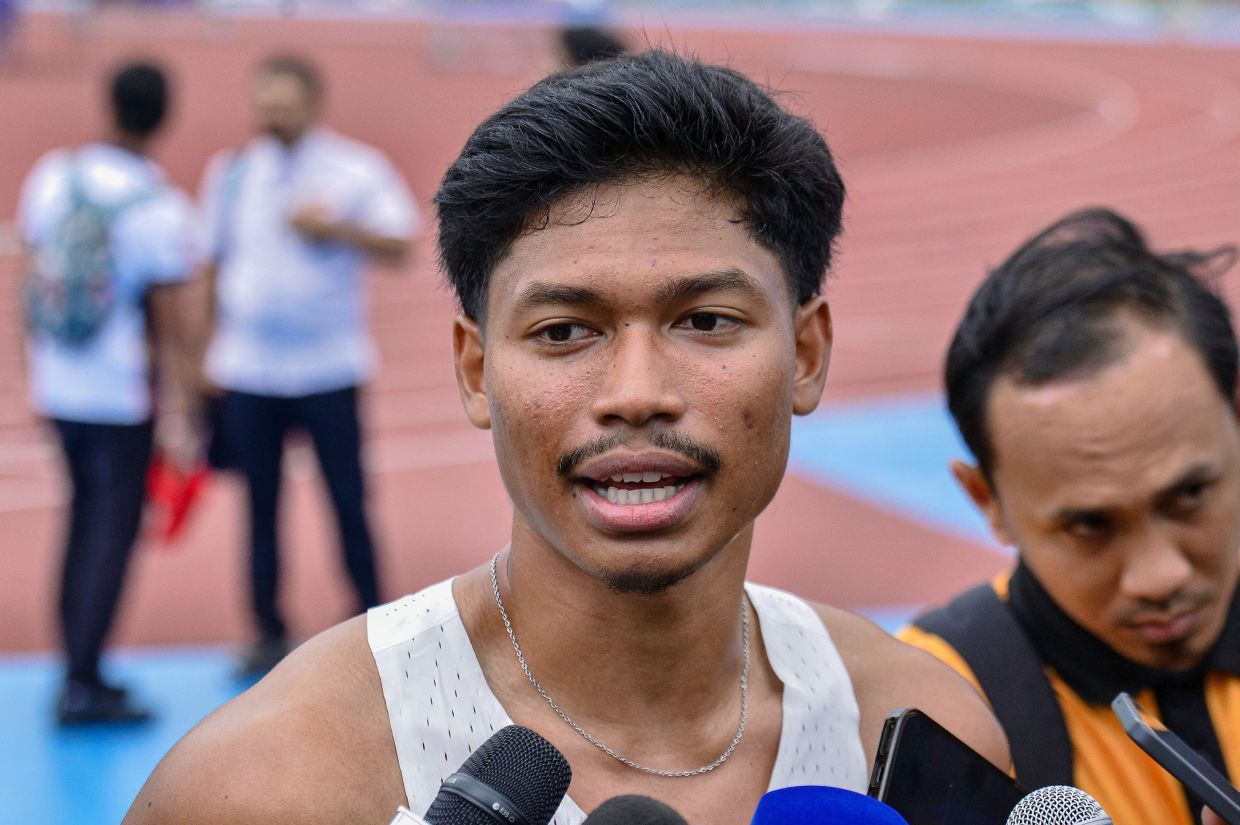
National sprinter Mohd Azeem Fahmi is embarking on the next phase of his academic journey, having confirmed plans to pursue postgraduate studies at Universiti Malaya (UM), Malaysia's oldest institution of higher learning. The move marks a significant milestone for the 21-year-old athlete, who has only recently completed his undergraduate degree at Auburn University in Alabama, where he balanced elite sporting ambitions with rigorous coursework in exercise physiology and kinesiology.
Azeem's transition back to Malaysia comes after a successful stint in the United States, where he spent over a year training and studying under the tutelage of renowned coach Ken Harnden. During his time at Auburn, he developed both his athletic capabilities and his understanding of exercise science, creating a foundation for more advanced study. The decision to return and continue his education domestically reflects growing confidence in UM's academic offerings, particularly within the Faculty of Sports and Exercise Sciences, which has cultivated a reputation for producing athletes who successfully integrate competitive sport with scholarly pursuits.
The athlete received a formal welcome at UM's administrative headquarters in Petaling Jaya, where vice-chancellor Prof Datuk Seri Dr Noor Azuan Abu Osman met with him to discuss his prospective enrollment. The vice-chancellor pledged institutional commitment to establishing optimal conditions for Azeem's master's studies, signalling UM's prioritisation of supporting national talent. The meeting also included the dean of the Faculty of Sports and Exercise Sciences, Associate Prof Dr Zulkarnain Jaafar, and Sports Centre director Afizal Abu Othman, underscoring the university's multi-departmental approach to athlete development.
UM has established itself as a preferred destination for Malaysia's elite athletes seeking to combine competitive excellence with formal education. The institution boasts an impressive roster of accomplished alumni from the sports sector, including Olympic diving medallists Datuk Pandelela Rinong, Ooi Tze Liang and Bryan Nickson Lomas, all of whom leveraged their time at the university to develop themselves beyond the playing field. Former national badminton player Vivian Hoo, who represented Malaysia in women's doubles, similarly graduated from UM with a Bachelor of Sports Science degree in 2019, demonstrating the university's track record in nurturing athletes capable of managing dual careers in sport and academia.
Azeem's recent performances have reinforced his status as one of Malaysia's most promising track and field prospects. At the Malaysian Open championship held last week at Universiti Putra Malaysia (UPM) Serdang, he demonstrated his competitive prowess by capturing gold in both the individual men's 100 metres sprint and as part of the four-person 4x100 metres relay team. His relay victory, achieved alongside teammates Danish Iftikhar Mohd Roslee, Pengiran Aidil Auf Hajam and Mohd Armin Zahryl, showcased the depth of talent within Malaysia's sprinting programme and highlighted Azeem's value as both an individual competitor and team contributor.
The convergence of recent sporting success with formal academic advancement reflects a broader trend among contemporary Malaysian athletes to establish credentials beyond athletics. Rather than viewing education and sport as competing demands, athletes like Azeem increasingly recognise the strategic advantage of building expertise in fields directly related to their sporting discipline. A master's degree in exercise science or a related field can enhance an athlete's long-term career prospects, opening pathways into coaching, sports management, physiology consultation or sports science research.
For UM, Azeem's enrolment represents another opportunity to strengthen its reputation as an institution that understands the unique requirements of elite athletes. The university's dedicated Sports Centre, combined with its strong academic faculty, positions it to offer comprehensive support that accommodates rigorous training schedules while maintaining educational rigour. This dual-track approach has proven effective for previous cohorts of athletes who have successfully graduated and transitioned into meaningful post-competitive careers.
Azeem's decision to study domestically also has implications for Malaysian sports policy and talent development. When high-performing athletes choose to complete their postgraduate education within Malaysia rather than abroad, it can contribute to knowledge retention and capacity building within the national sports system. His experience at Auburn, combined with his advanced studies at UM, positions him to potentially contribute to coaching, mentorship or sports science roles within Malaysia's athletics ecosystem as his competitive career evolves.
The formal pathway now established for Azeem at UM reflects institutional recognition of his potential not merely as a sprinter, but as an individual capable of making broader contributions to sports science and Malaysian athletics development. By pursuing advanced study in physiology and exercise science, he is investing in credentials that could influence how Malaysia approaches athletic training, biomechanics analysis and performance optimisation across multiple sports. His return from the United States represents not a withdrawal from international competition, but rather a consolidation of capabilities that may ultimately benefit Malaysia's entire sporting establishment.