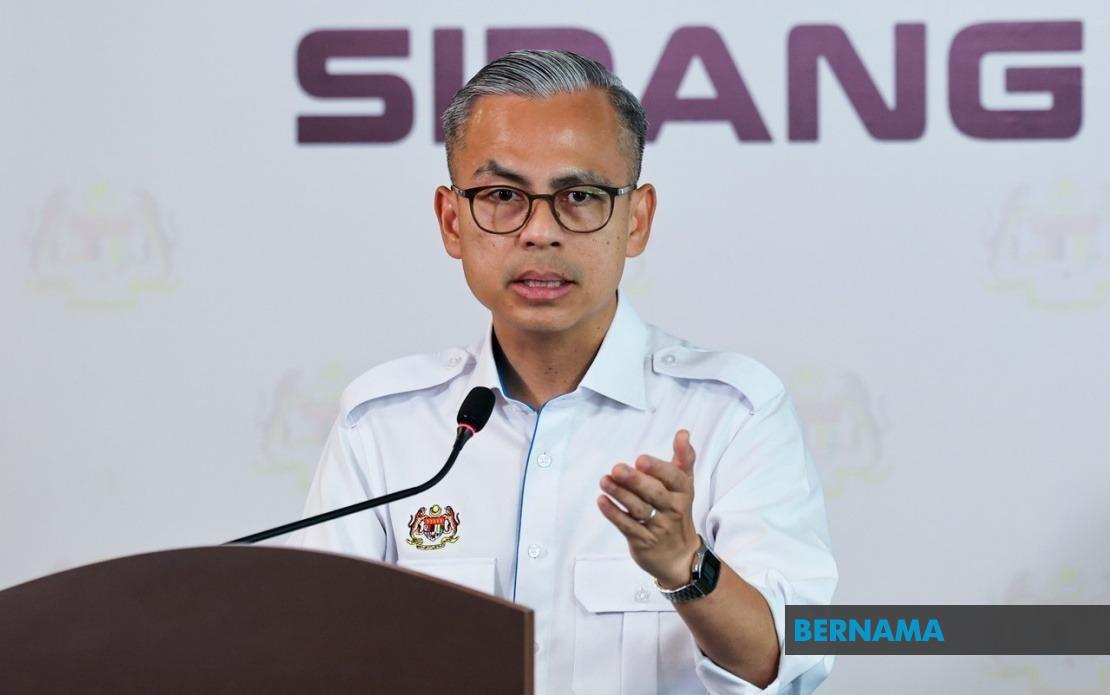
Malaysia is on track to deliver a polished 2026 National Day celebration at Dataran Putrajaya, with Communications Minister Datuk Seri Fahmi Fadzil confirming that preparations have reached approximately 100 per cent completion ahead of tomorrow's comprehensive dress rehearsal. The minister, who chairs the 2026 National Day and Malaysia Day Main Committee, conducted an inspection of ongoing rehearsals today and expressed confidence that only minor refinements remain before the full-scale parade unfolds.
The final tweaks involve recalibrating spacing and coordination between the various parade contingents, a crucial detail that determines whether the celebration achieves the precision and elegance expected of such a significant national event. Fahmi explained that some contingent movements currently fall too far apart from their preceding groups, disrupting the visual flow that television cameras and live spectators will capture. By orchestrating tighter transitions between each section, organisers aim to project an impression of seamless unity and careful orchestration that reflects broader national cohesion. This level of detail matters because National Day parades serve as propaganda opportunities, demonstrating governmental competence and national discipline to both domestic audiences and international observers.
The rehearsal proceeded smoothly today, aided by favourable weather conditions that allowed participants to execute their routines without the complications that tropical downpours might introduce. More impressively, the morale and commitment displayed by all participants—ranging from security personnel to schoolchildren drafted into the human graphics performance—remained visibly high despite the physical demands of repeated run-throughs under the Putrajaya sun. This enthusiasm, which Fahmi specifically praised, suggests that the grassroots elements of the celebration are well-prepared, even as organisers handle technical adjustments at higher levels.
The 2026 edition introduces several headline-grabbing elements designed to distinguish it from previous iterations. The Johor Military Force will make its inaugural appearance in a National Day parade, marking a symbolic gesture toward greater integration of state-level military assets into federal celebrations. More intriguingly, the Ibrahim-class boat—a maritime asset personally designed by His Majesty Sultan Ibrahim, King of Malaysia—will also debut during the festivities, adding both technological sophistication and royal prestige to the proceedings. These new components reflect an effort to refresh the parade's visual portfolio while weaving contemporary national priorities into traditional ceremonial frameworks.
The centrepiece of this year's human graphics performance will occupy a multi-level structure housing 1,500 students, down from the 2,000 participants in previous years. This reduction in scale came with a corresponding adjustment to physical infrastructure, yet organisers have faced public scrutiny regarding the structure's stability and alignment. Fahmi moved to reassure stakeholders that the Putrajaya Corporation has thoroughly assessed the structure's safety, and that the slight movement observers might notice falls entirely within permissible tolerance levels—necessary, in fact, to accommodate the rhythmic gymnastics and choreography that students will perform across its levels.
The structure's slightly off-kilter positioning reflects practical constraints rather than design deficiency. Because the parade route and the PPj administrative building do not share the same geometric axis, and because this year's contingent of 1,500 students creates different weight distributions than the previous 2,000, the structure's placement naturally deviates from perfect symmetry. Fahmi acknowledged that this asymmetry carries potential for negative visual perception, particularly in photographs and video recordings circulated through social media. He therefore instructed organisers to conduct comprehensive technical reviews before future celebrations, aiming to resolve these positioning issues so that subsequent National Day parades project flawless geometric alignment.
The structure itself has proven its durability across previous deployments, having been utilised twice before without incident—a track record that underscores its engineering soundness despite cosmetic irregularities. Safety certifications and structural inspections represent non-negotiable prerequisites for any installation holding hundreds of children, and Malaysian organisers appear to have prioritised this requirement. The tolerance for movement, rather than indicating instability, actually demonstrates sophisticated engineering that accounts for human weight distribution and dynamic motion rather than treating the structure as a rigid, immobile platform.
From a Southeast Asian perspective, Malaysia's investment in elaborate National Day pageantry mirrors practices across the region, where countries including Thailand, Indonesia, and Vietnam devote substantial resources to annual patriotic spectacles. These celebrations serve multiple functions simultaneously: they demonstrate governmental organisational capacity, provide entertainment and national pride to citizens, and generate media content for international distribution. The introduction of new military units and royal design elements reflects Malaysia's particular emphasis on institutional hierarchy and monarchical symbolism within its national identity framework.
The broader context of these preparations speaks to how Malaysian governance approaches major public events. The level of ministerial oversight, the coordination across military, education, and civil service sectors, and the willingness to conduct multiple rehearsals all suggest a bureaucratic culture that, despite perceptions of inefficiency in other domains, can mobilise resources effectively when national symbolism is at stake. The upcoming dress rehearsal tomorrow will serve as the final checkpoint before the actual celebration, allowing organisers to implement last-minute corrections discovered during full-scale run-throughs.
As Malaysia approaches the 2026 National Day, the parade represents more than ceremonial pageantry—it embodies the state's effort to project stability, capability, and forward momentum during a period when regional geopolitics remain fluid and domestic political cohesion requires constant reinforcement. The meticulous attention to spacing, safety, and visual impact reflects understanding that public celebrations communicate subtle messages about national governance to audiences at multiple levels, from schoolchildren participating in human graphics to international observers watching broadcast coverage. Tomorrow's dress rehearsal will likely reveal whether these preparations translate into the seamless, dignified celebration that Malaysian officials envision.

