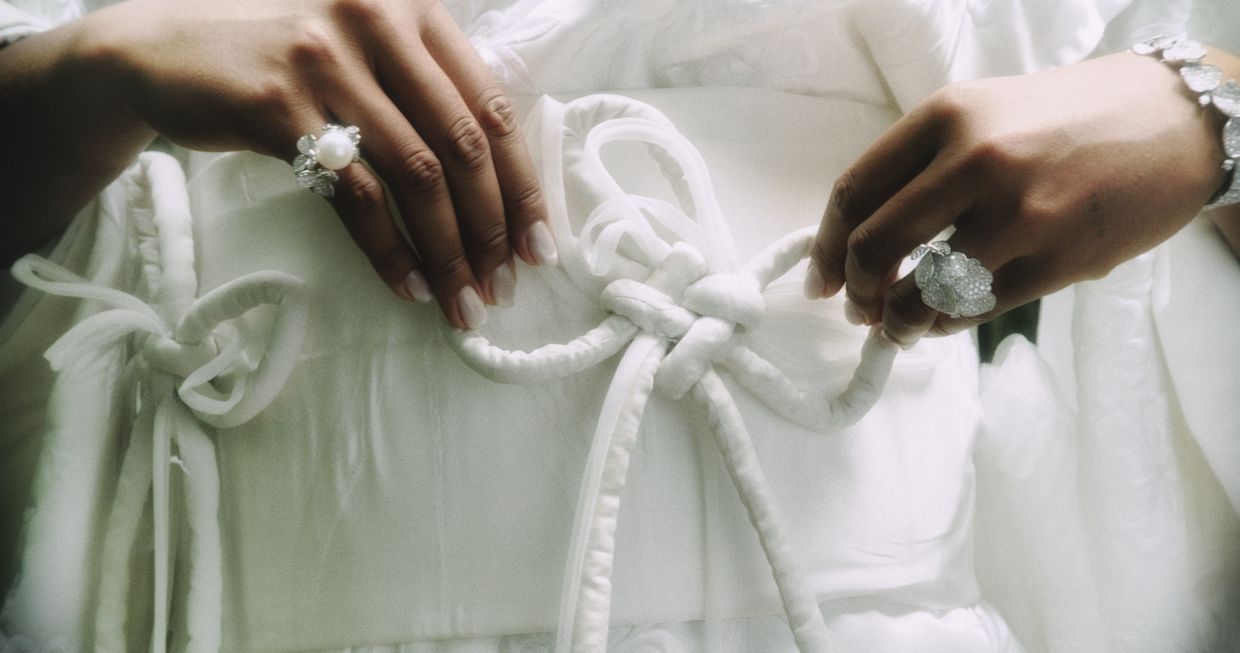
Naomi Osaka has quietly revolutionised how athletes approach the walk onto centre court, turning what was once a utilitarian moment into a carefully choreographed fashion statement that rivals the competition itself. At Wimbledon in late June, the 14th-seeded player and former world number one arrived in an all-white ensemble titled "Evolving Ceremony" by Hana Yagi, an independent Japanese designer, demonstrating once again that her approach to on-court style extends far beyond conventional sportswear.
The Wimbledon gown represented a sophisticated exploration of Japanese cultural heritage, drawing inspiration from the kimono and the junihitoe, a 12-layer formal dress worn by noblewomen during Japan's Heian period between 794 and 1185. Rather than creating something entirely new, Yagi constructed the gown from seven distinct textiles sourced from upcycled vintage kimonos, a traditional shiromuku wedding dress, and a deconstructed modern wedding dress. This approach transformed discarded garments into a statement about sustainability and respect for Japanese craftsmanship. Accompanying the main look was a Nike performance dress featuring Japanese kirigami-inspired floral appliques with micro-pleating and a curving hem that sold out before the tournament even commenced. The accessories—jewellery from Mikimoto, the legendary Japanese pearl house—reinforced the deliberate cultural narrative Osaka was constructing.
For Osaka, this Wimbledon appearance marked the culmination of a three-act story that began months earlier at the Australian Open. In Melbourne, she emerged from the tunnel in a Robert Wun jellyfish-inspired gown accompanied by a butterfly hat, symbolising transformation and her identity as a young mother. She later discarded the outer layer before play commenced, revealing both her competitive focus and the theatrical nature of the entrance moment. The French Open saw her adopt a black corset and ballgown skirt by Kevin Germanier, a piece adorned with references to the Eiffel Tower and constructed from her own discarded Nike competition kits. Each appearance suggested something more deliberate than simple aesthetic expression—instead, a carefully considered campaign about identity, heritage, and values.
Three distinct themes emerge when these three tournament moments are examined collectively. First, Osaka is prioritising sustainability through the upcycling of existing garments and materials, a critical choice in an industry historically criticised for its environmental footprint. Second, she is deliberately amplifying designers at earlier stages of their careers, giving what her stylist Marty Harper describes as a platform to "new kids on the block." Hana Yagi, who designed the Wimbledon look, remains in her 20s and founded her company in Tokyo following success in Italy's International Talent Support competition in 2019. By choosing emerging talent over established fashion houses, Osaka leverages her global visibility to create pathways for creative professionals who might otherwise struggle for exposure.
Third, and perhaps most strategically, Osaka employs fashion as a branding tool more effectively than virtually any other competitor currently active in professional tennis. While athletes like Jannik Sinner use ambassador relationships with luxury houses, and others have adopted fashion as a secondary concern, Osaka has integrated it into her overall competitive narrative. The tunnel walk has become inseparable from her identity, a moment where she controls her public image and sets the tone before a single serve is struck. In a sport where margins between competitors often appear negligible, this psychological dimension deserves recognition.
The logistical challenges underlying these elaborate entrances are far more complex than casual observers might imagine. Each costume must satisfy competing demands: it requires couture-level construction and custom tailoring to be visible from the highest stadium seats, yet it must be removable in roughly one minute—the time it takes other players to unzip basic warm-up jackets. Harper revealed that the team typically has three minutes to dress Osaka and less than one minute for her to undress before play begins. This timeline eliminates any possibility of elaborate fastening systems or complicated structural elements.
Yagi's solution demonstrated remarkable ingenuity. She engineered each of the nine segments of the Wimbledon dress to be completely detachable, allowing them to be removed sequentially and recombined in different configurations as the tournament progressed. The fabric itself came from delicate materials that required protection from environmental damage and wear. Velcro emerged as the key engineering solution, enabling rapid transitions while maintaining the garment's integrity. The dress also incorporated an adjustable 10-foot train that could be modified depending on which court Osaka would be playing on—a seemingly minor detail that actually reflects serious consideration of practical logistics, since the walk from the players' lounge to outer courts at Wimbledon is substantial enough to risk damaging intricate textile work.
This level of technical sophistication and attention to detail reveals how seriously Osaka and her team approach these moments. The construction process involved extensive experimentation to ensure smooth transitions as the dress "evolved" throughout the tournament. According to Yagi's statement, the central conceptual framework held that the look would develop and shift as Osaka progressed through rounds, mirroring her own journey through the competition. Nothing about this approach represents accident or spontaneity; instead, every element has been carefully considered, tested, and refined.
For Malaysian and Southeast Asian audiences, Osaka's approach carries particular resonance. The region hosts a thriving fashion community and emerging designer ecosystem not dissimilar to what Yagi represents in Japan. Osaka's decision to spotlight a young Asian designer demonstrates how elite athletes can weaponise their platform to support creative professionals across the region. This model potentially inspires Malaysian and regional fashion entrepreneurs to pursue collaborations with athletes and public figures who command global attention. Furthermore, the emphasis on heritage and cultural expression through fashion speaks to audiences across Southeast Asia, where fashion increasingly serves as a vehicle for exploring and celebrating local traditions in contemporary contexts.
Beyond the immediate fashion world, Osaka's strategy reveals evolving expectations about how elite athletes present themselves in the contemporary media landscape. The tunnel walk has transformed from a practical necessity into a genuine performance moment, one where personal branding, cultural identity, and artistic expression intersect. Osaka has recognised that controlling this narrative before competition even begins provides genuine competitive advantage—if only psychological. Whether she ultimately advances through tournament brackets matters far less to this particular story than the fact that she has won the attention championship before the first serve.
The broader implications extend to how women athletes in particular are permitted and encouraged to express themselves through their appearance and presentation. Osaka's autonomy in these decisions contrasts sharply with sport's historical restrictions on women's fashion choices. By transforming entrance moments into deliberate artistic statements celebrating heritage and supporting emerging creators, she expands the definition of what athletic competition can encompass. She demonstrates that style and substance need not exist in opposition—indeed, the most sophisticated athletic narratives integrate both seamlessly.
As tournaments continue throughout the calendar year, observers should watch whether other competitors begin adopting similar approaches. Osaka has effectively set a new standard for how entrance moments can serve purposes beyond basic presentation. She has shown that strategic fashion choices can communicate values, support creative communities, promote sustainability, and build personal brands in ways that conventional interviews and social media cannot replicate. The true measure of her innovation will appear not in Wimbledon results but in whether other athletes recognise the untapped potential of their own tunnel walks and begin crafting equally sophisticated entrances.

