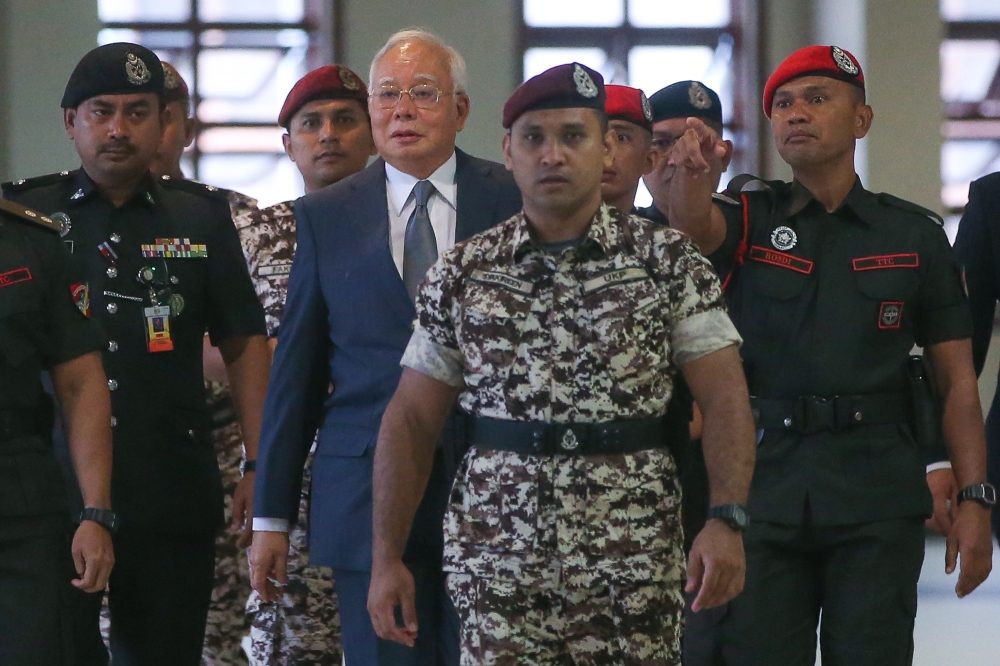
A High Court in Kuala Lumpur heard striking testimony that former Prime Minister Datuk Seri Najib Tun Razak decided to return US$620 million after the 2013 general election because he was uncomfortable maintaining possession of such substantial sums. The assertion, presented during ongoing proceedings, provides another perspective on the complex financial movements that have become central to investigations into state fund misappropriation during Najib's tenure as premier from 2009 to 2015.
The case underscores the continued judicial scrutiny of transactions involving massive capital flows during the latter stages of Najib's administration. High Court proceedings have repeatedly examined the origins, movement, and ultimate disposition of large sums connected to state institutions, particularly following Najib's loss of power in the May 2018 general election. The repatriation of the US$620 million represents one segment of a far broader pattern of financial activity that prosecutors and investigators have deemed questionable.
Najib's stated rationale for returning the funds—discomfort with holding them—stands in contrast to other explanations offered in various forums and documents throughout his legal defence. The testimony reflects how the former premier's team has constructed narrative frameworks around these transactions, though such psychological or emotional justifications have received considerable skepticism from those pursuing accountability. Understanding Najib's own account remains important context as the courts weigh evidence and competing interpretations of what transpired.
The timing of the return, immediately following the 2013 general election when Najib's government secured renewed political legitimacy at the ballot box, raises questions about what circumstances prompted reconsideration of the fund's retention. Political consolidation typically follows election victories; financial retrenchment less commonly characterises the aftermath unless external pressures or internal complications emerge. The apparent incongruity between a strong electoral mandate and sudden discomfort with substantial holdings invites scrutiny of what actually motivated the decision.
For Malaysian observers and the Southeast Asian region more broadly, the ongoing litigation maintains significance beyond individual accountability. The 1Malaysia Development Berhad (1MDB) scandal, from which investigations into these financial flows have extensively drawn, catalysed global discussions about governance standards, institutional safeguards, and capital controls in emerging markets. Malaysia's handling of domestic prosecutions sends signals about the rule of law and the consistency with which financial accountability applies across political hierarchies.
The High Court's examination of testimony regarding the US$620 million occurs within an increasingly complex legal landscape. Multiple court proceedings have examined overlapping aspects of the same underlying transactions, with international cooperation from jurisdictions including the United States, Switzerland, and others bringing additional layers of scrutiny. The convergence of domestic and transnational judicial processes reflects how thoroughly implicated global financial systems became in the flows at issue.
Najib's legal representation has consistently emphasised his version of events across numerous trials and proceedings. The assertion that emotional or psychological discomfort motivated the return of US$620 million represents the type of explanation that defence strategies often advance—grounded in subjective decision-making rather than documentary evidence that might prove easier to contest. Whether such reasoning satisfies judicial standards for resolving contested financial transactions remains an open question that the High Court must ultimately address.
The broader institutional landscape surrounding these cases includes Malaysia's Anti-Corruption Commission, financial regulators, and law enforcement bodies that have conducted extensive investigations. Their accumulated findings and evidence form part of the foundation upon which the High Court proceedings rest. The testimony heard in court thus represents just one component of a comprehensive investigative record that encompasses financial documentation, witness statements, and technical analysis of transaction flows.
For regional policymakers and governance advocates, Malaysia's judicial response to the 1MDB affair and associated financial irregularities carries implications for how other Southeast Asian nations approach similar challenges. The precedent established through these courts regarding standards of accountability, acceptable defences, and remedial measures influences perceptions of institutional credibility across the region. Nations facing their own governance challenges often observe how peers address comparable situations.
The contention that Najib felt uncomfortable holding the US$620 million introduces a distinctly personal, subjective element into proceedings ostensibly centred on institutional financial governance. This tension between individual psychology and systemic accountability structures has characterised many phases of the prosecution and defence efforts. The High Court must ultimately determine whether such subjective discomfort constitutes adequate explanation for the movement of state resources, or whether more rigorous standards apply to former public officials wielding control over national finances.
Moving forward, the High Court's rulings on the admissibility and weight accorded to such testimony will shape the remaining proceedings. Should the court find such explanations insufficient, it signals heightened expectations for documentary justification and institutional accountability. Conversely, acceptance of psychological or emotional rationales could establish different precedent for how similar transactions receive judicial scrutiny. The specific ruling on the US$620 million return thus carries significance extending well beyond Najib's individual case.

